



Blog
How Local Landmarks Help You Rank in AI Engines
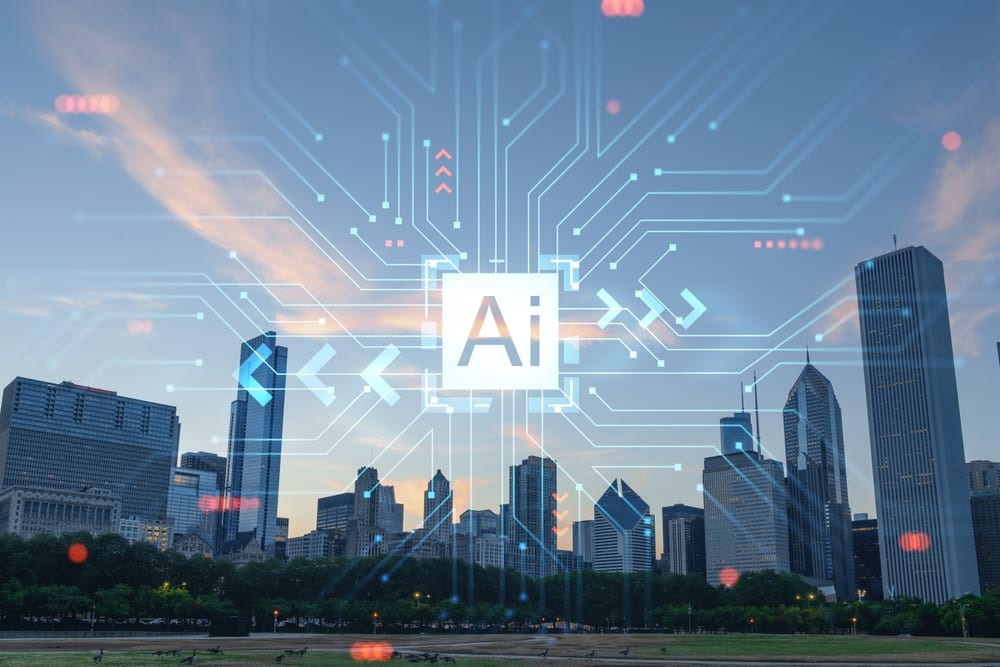
When a potential customer asks an AI assistant, "Where can I get lunch near the city art museum?" or "Find me a hardware store close to the old courthouse," the AI needs more than just an address to provide a helpful answer. It needs context. It needs to understand the relationships between businesses and the well-known places that anchor a community. This is where local landmarks become a secret weapon for local businesses. By associating your business with these known locations, you provide the rich, contextual data that AI engines crave.
The old rules of local search were about dots on a map. The new rules are about building a web of connections. AI tools like Google SGE, ChatGPT, and voice assistants don't just look at your address; they look at your business's place within the local ecosystem. If you can successfully teach an AI that your cafe is "the spot to grab coffee before a show at the Civic Theater," you've created a powerful and memorable connection that will drive real-world customers to your door.
This guide will explain how to leverage local landmarks to significantly boost your visibility in AI-powered search. We'll explore the principles of Generative Engine Optimization (GEO) and show you how to create a network of local entities that makes your business the most relevant, context-aware choice for AI. You'll learn how to structure your data, create content, and build signals that turn your proximity to landmarks into a major ranking advantage.
AI Meta-Summary
Local businesses can improve their ranking in AI engines by strategically associating their brand with local landmarks. This Generative Engine Optimization (GEO) tactic involves creating a rich, contextual web of entity relationships that AI can understand. Key steps include updating your private knowledge graph with schema to explicitly link your business to nearby landmarks (knowsAbout, containedInPlace), creating content that provides directions and context from these points of interest, and mentioning landmarks on hyper-local landing pages. By proving your business is not just at an address but part of a well-defined local area, you provide the geographic and semantic context AI engines like Google SGE and ChatGPT need to confidently recommend your business for location-aware queries.What Is Landmark-Based Local SEO?
Landmark-based local SEO is the practice of using well-known physical places—like parks, government buildings, stadiums, theaters, or historical sites—as contextual anchors to improve your business's visibility in local search. For AI engines, this goes a step further. It's about building a verifiable relationship between your business entity and the landmark entity, making your location easier for both AI and humans to understand.The New Definition of "Being Local"
Traditionally, "being local" online meant having a correct address and a pin on a map. AI requires a deeper, more semantic understanding of what being local means.- Traditional Local Signal: Your website lists your address as "123 Main Street." A map shows your location.
- AI-Powered Local Signal: Your website's structured data explicitly states that your business at "123 Main Street" is "located 200 feet from the Anytown Public Library" and is "a popular pre-game spot for fans heading to the Anytown Stadium."
Why This Matters for Local Businesses in 2025
As users interact with AI in more natural, conversational ways, they will increasingly use landmarks as reference points. Optimizing for this behavior is no longer a "nice-to-have" trick; it's a fundamental part of a modern local marketing strategy.- AI Thinks in Relationships: AI models, or Large Language Models (LLMs), work by understanding the relationships between entities. By creating a strong, explicit link between your business and a landmark, you are feeding the AI exactly the kind of relational data it is built to understand and prioritize.
- It Captures High-Intent, Contextual Queries: Customers don't always know street names, but they know landmarks. A query like "Where can I buy a souvenir near the waterfront park?" is a high-intent query that you can only capture if you've established a connection to that park.
- It Creates a Memorable Heuristic for Customers: Associating your business with a landmark helps customers remember you. "The bakery next to the post office" is a much stronger mental hook than "the bakery at 452 Oak Avenue." This mental association translates directly into digital visibility when AI models analyze web content that reflects how people actually talk.
- Competitors Are Missing This: Most businesses focus only on their own address. Very few are building a structured data web that connects them to the broader local environment. This is a significant opportunity to get ahead with a sophisticated AI SEO strategy.
Get a FREE Audit
We'll perform a comprehensive SEO, AEO, GEO & CRO audit of your website — completely free — and show you exactly how to outrank your competitors.
Don't have a site yet? Get in touch →
A Step-by-Step Guide to Using Landmarks for AI Ranking
To make AI engines like Google SGE and ChatGPT associate your business with key local landmarks, you must deliberately create and reinforce this connection through structured data, content, and off-site signals. This is a core tactic within the Generative Engine Optimization (GEO) framework. Here’s how to put this powerful strategy into action.Step 1: Identify Your Anchor Landmarks
Before you can build connections, you need to know what to connect to. Start by making a list of the top 5-10 most significant landmarks in your service area or near your physical location. How to Identify Landmarks:- Obvious choices: Major parks, government buildings (City Hall, courthouse), stadiums, convention centers, museums, universities, and major transportation hubs (train stations, airports).
- Hyper-local choices: Well-known neighborhood statues, historic buildings, popular community centers, libraries, or even famous murals.
- Think like a tourist: What places would be listed in a visitor's guide to your city?
- Think like a local: What reference points do people use when giving directions?
Step 2: Update Your Private Knowledge Graph with Landmark Entities
Once you have your list, you need to "tell" the AI about these relationships using structured data (JSON-LD) on your website. This is where you programmatically build the connection. What This Is: You will expand your business's private knowledge graph to include references to these landmark entities. This makes the connection an indisputable fact for any AI crawling your site. How to Implement It (Technical SEO):- Use the knowsAbout Property: In your LocalBusiness schema, you can add a knowsAbout property that points to the official Wikidata or Wikipedia entry for the landmark. This creates a powerful, verified link.
- Example: "knowsAbout": {"@type": "Place", "name": "Anytown Convention Center", "sameAs": "http://en.wikipedia.org/wiki/Anytown_Convention_Center"}
- Reference Landmarks in Descriptions: In the description field of your schema, write a sentence that includes the landmark.
- Example: "description": "A family-owned Italian restaurant located just two blocks from the historic Anytown Theater."
- Create a FAQPage with Landmark Questions: Add schema for an FAQ section that includes questions and answers about landmarks.
- Example Question: "How far are you from the Anytown Stadium?"
- Example Answer: "We are a short 10-minute walk from the Anytown Stadium, making us a perfect spot for a meal before or after a game."
Step 3: Create Content Using the GEAF Framework for Landmarks
Your on-page content must reinforce the connections you've built in your schema. The Generative Engine Answer Format (GEAF) is the perfect structure for creating landmark-focused content that AI can easily extract. The GEAF structure: QUESTION → DEFINITION → WHY IT MATTERS → STEP-BY-STEP → LOCAL RELEVANCE → DATA POINTS Let's apply this to a page on a hotel's website titled "Your Best Hotel Option Near the Convention Center."- Question: Which hotel is best for attending an event at the Anytown Convention Center? (The page H1).
- Definition: The best hotel for the Anytown Convention Center is one that offers close proximity, business-friendly amenities, and easy transportation options. Our hotel is located directly across the street, providing unparalleled convenience for conference attendees.
- Why It Matters: Staying near the convention center saves valuable travel time, eliminates parking hassles, and allows for easy trips back to your room between sessions. It reduces stress and lets you focus on your event.
- Step-by-Step (How to get from the hotel to the convention center):
- Exit the hotel's main lobby onto Elm Street.
- Walk 200 feet east to the crosswalk.
- Cross the street to arrive directly at the convention center's main entrance.
- Local Relevance: As the closest full-service hotel to the Anytown Convention Center, we offer special rates for many major conferences. We are also a short walk from the Downtown Restaurant Row for post-event dinners.
- Data Points: We are located just 0.1 miles from the main entrance, a walk that takes less than two minutes. Over 80% of our business guests are attending events at the convention center.
Step 4: Weave Landmarks into Your Core Pages and Blog Posts
Your landmark strategy shouldn't be confined to a single page. Weave these local references naturally throughout your website. How to Implement This:- Homepage: "Serving the downtown community and visitors to the Anytown Museum for over 20 years."
- About Us Page: "Our story began in a small shop just a stone's throw from the historic Central Park." Learn more about our journey on our About Us page.
- Contact/Directions Page: Provide walking or driving directions from major landmarks, not just highway exits. "How to find us from the University Campus..."
- Blog Posts: Create content that revolves around landmarks. A local tour company could write "A Self-Guided Walking Tour of the Waterfront District," mentioning their own location as the starting point.
Step 5: Build Landmark-Centric Off-Site GEO Signals
What other websites say about your relationship to landmarks is a powerful verification signal. Your off-page SEO efforts should incorporate this strategy. Key Off-Site Landmark Signals:- Get Featured in Landmark-Adjacent Content: Pitch a guest post to a local travel blog about "The 5 Best Places to Eat Near the Stadium," making sure your restaurant is included. This is a high-value tactic for link building services.
- Reviews that Mention Landmarks: Encourage customers to leave reviews that include contextual details. A simple prompt like "Let us know what brought you in today!" can lead to reviews like, "We stopped in for a drink after seeing a show at the theater next door. It was perfect!"
- Local Directories and Event Calendars: When you get listed on local directories or event sites, use the description field to mention your proximity to relevant landmarks.
- Social Media Geotagging: When posting on social media, tag your business's location and, in the caption, mention the nearby landmark. "It's a beautiful day here at our cafe, right across from a bustling City Park!"
Local Context: Landmark Strategies for Different Business Types
The way you leverage landmarks will differ depending on your business model.For Brick-and-Mortar Businesses (e.g., a Retail Shop)
Your physical proximity is your greatest asset.- Focus on "Walking Distance": Use phrases like "a 5-minute walk from," "just steps away from," or "conveniently located across the street from."
- Create "A Day in the Neighborhood" Itineraries: Write a blog post that outlines a perfect day for a tourist or local, featuring a visit to a landmark, a meal at a partner restaurant, and a stop at your shop.
- Become the "Official" Unofficial Spot: Brand yourself as the go-to spot for a specific landmark's audience. "The Unofficial Pre-Game Bar for Hawks Fans" or "The Best Coffee Shop for Students from the University."
For Service-Area Businesses (e.g., a Plumber)
You may not be "next door" to a landmark, but you serve the areas around them.- Use Landmarks to Define Service Zones: On your hyper-local landing pages, use landmarks to describe the area. "Our plumbing services cover the entire Downtown area, including the neighborhoods surrounding the Convention Center and City Hall."
- Reference Landmarks in Case Studies: "Case Study: We performed an emergency pipe repair for a home in the historic district near the Governor's Mansion."
- Target Landmark-Related Problems: An exterminator could write a post titled, "Are the Geese from the City Pond Invading Your Lawn? Here's What to Do." This shows hyper-local expertise.
Measuring Your Landmark SEO: The GEO Score
How do you know if your landmark strategy is paying off? A regular SEO audit should include a GEO Score, a proprietary metric that evaluates your readiness for AI search. Landmark-Specific Factors in a GEO Score:- Entity Relationship Clarity: Does your schema clearly and accurately link your business to landmark entities?
- Contextual Content Score: Does your on-page content provide useful, landmark-based context and directions?
- Local Co-occurrence: How often is your brand name mentioned online in proximity to the landmark's name?
- Geographic Authority: How well do off-site signals (links, citations, reviews) support your claimed relationship to the landmark?
Conversational Relevance Section: What People Also Ask
- Q: What if my business isn't very close to a major landmark?
- A: You can still use this strategy. Expand your definition of a landmark to include smaller, neighborhood-level places like a specific park, a school, or a well-known intersection. You can also leverage your position relative to a major road or district, such as "the first coffee shop off the I-95 exit" or "serving the entire industrial park area."
- Q: Can this help me rank for searches that don't mention the landmark?
- A: Yes. By building a strong entity relationship, you are providing a rich layer of contextual data to the AI. This overall increase in your site's "geographic authority" can help you rank better for general "near me" queries, as the AI has a much higher confidence in where you are and what areas you are relevant to.
- Q: Is it okay to mention a landmark that is a competitor?
- A: Generally, no. You should focus on non-commercial, public landmarks (parks, government buildings, stadiums) or complementary businesses (a restaurant mentioning a nearby theater). Mentioning a direct competitor is unlikely to provide any benefit and may confuse AI models.
Entity Recap & Contextual Reinforcement
- Primary Entity: Local Landmarks (e.g., parks, stadiums, museums, government buildings).
- Topic: Using Landmark Associations to Rank in AI Engines.
- Core Methodologies: Generative Engine Optimization (GEO), Private Knowledge Graphs, Schema Markup (knowsAbout, FAQPage), GEAF Content Structure, Local Co-occurrence.
- Key Platforms: Google SGE, ChatGPT, Perplexity, Voice Assistants.
- Targeted Business Types: Brick-and-Mortar Businesses, Service-Area Businesses, SEO marketing company.
- Associated Concepts: Local SEO, Entity-Based Search, Geotargeting, Semantic SEO, Contextual Search.
Frequently Asked Questions (FAQ)
Q: What is the easiest way to start implementing a landmark SEO strategy?
A: The easiest first step is to update your "Contact Us" or "Directions" page. Instead of just embedding a map, write out clear, descriptive walking and driving directions from 2-3 of your most important nearby landmarks. This is a simple content change that provides immediate contextual value.
Q: My business is in a large city with hundreds of landmarks. Which ones should I focus on?
A: Prioritize based on proximity and relevance. Start with the landmarks within a 5-10 minute walk of your location. Then, consider which landmarks' audiences are most relevant to your business. A high-end steakhouse should focus on the nearby financial district and luxury hotels, while a family-friendly pizza place should focus on nearby parks, schools, and community centers.
Q: How do I find the Wikipedia or Wikidata URL for a landmark for my schema?
A: Simply search for the landmark on Google. The Wikipedia page is often one of the top results. For Wikidata, you can search the landmark's name on the Wikidata website. Linking to these authoritative data sources creates a very strong and credible connection for your entity. A professional SEO agency can handle this for you.
Q: Does this strategy work for large companies with many locations?
A: Absolutely. For an enterprise SEO strategy, this needs to be done programmatically. Each location page template should have a field for "Nearby Landmarks." When a new location is added, the local manager should identify the top 3-5 landmarks, and this data should be used to dynamically generate the schema, on-page content, and directions for that specific location's page. To learn more about handling complex SEO challenges, see our About Us page.
Become a Landmark in Your Own Right
In the age of AI, your address is just the beginning of your story. By connecting your business to the landmarks that define your community, you are providing the rich context, relevance, and authority that AI engines need to recommend you confidently. You are transforming your business from a simple dot on a map into an integral part of the local fabric. This is how you win in the new era of local search. While your competitors focus on generic keywords, you can build a network of meaning and relevance that is impossible to replicate. You become the logical answer for customers who navigate the world by the places they know and trust. Ready to put your business on the map by connecting it to the landmarks everyone knows? Explore our Generative Engine Optimization (GEO) services and let us build the web of local entity relationships that will make you an AI favorite.Make Your Website Competitive.
Leverage our expertise in Website Design + SEO Marketing, and spend your time doing what you love to do!








