



Blog
The Complete Guide to SEO Packages: What’s Included & What’s Worth Paying For
Key Takeaways
- An SEO package is a structured, recurring plan that bundles technical, content, and authority-building services into one cohesive monthly offering.
- Bundling activities like audits, content, and link building creates a synergistic effect where each component amplifies the results of the others.
- Most packages combine five core deliverables: technical SEO, on-page SEO, content creation, link building, and reporting and analytics.
- Packages come in tiers for local, ecommerce, and enterprise businesses, so matching scope to your specific goals matters most.
- Focus on value over cost by learning what to pay for, spotting red flags, and measuring return on investment for long-term growth.
Investing in Search Engine Optimization (SEO) is no longer optional—it’s a critical component of a successful business strategy and a core element of comprehensive digital marketing services. But navigating the world of SEO services can feel overwhelming. You’ll encounter a wide array of options, from one-off projects to comprehensive monthly retainers. Among the most common offerings are SEO packages, which bundle together various services into a single, structured plan. This guide is designed to demystify these packages, providing the clarity you need to make an informed and confident investment, whether you're a local small business, a growing ecommerce brand, or a large enterprise looking to transition from broad visibility to targeted acquisition using strategies like Account-Based SEO.
Our goal is to pull back the curtain on SEO pricing, deliverables, and true value. We will explore why agencies often structure their offerings into packages, highlighting how this approach can deliver more cohesive and impactful results than standalone SEO services. By bundling key activities like technical audits, content creation, and link building, a well-designed package creates a synergistic effect where each component amplifies the others. We’ll focus on the difference between value and cost, helping you understand what you should be paying for and how to measure the return on your investment for sustainable, long-term growth.
This comprehensive guide will equip you with the knowledge to select the right SEO package for your specific goals. We break down the most common types of packages, from local to enterprise-level SEO, and detail the services typically included. You will learn what red flags to look out for, what questions to ask a potential provider, and how to evaluate proposals to ensure they align with your business objectives. With real-world case studies and a clear breakdown of pricing models, you’ll be prepared to build a powerful and profitable SEO strategy.
Here’s what we’ll cover:
- Understanding SEO Packages: What they are, why they exist, and how they difffer from ad-hoc services.
- Types of SEO Packages: A look at common offerings for local, ecommerce, and enterprise businesses.
- Common Inclusions: A deep dive into the core components, from technical audits to content and link building.
- How to Choose the Right Package: A framework for matching packages to your goals and spotting red flags.
- SEO Package Pricing: A transparent breakdown of costs, value, and how to calculate your potential ROI.
- Case Studies: Real examples of business growth achieved through strategic SEO packages.
Understanding SEO Packages
Search Engine Optimization is a complex, multi-faceted discipline. To deliver results, SEO requires a coordinated effort across technical, content, and authority-building activities. An SEO package is a structured, recurring plan offered by an agency that bundles these essential services into a single offering. Think of it as a comprehensive subscription for your website's organic growth. Instead of purchasing individual services piecemeal, you invest in a holistic strategy where every component works in concert.
What Is an SEO Package?
At its core, an SEO package is a pre-defined scope of work that an agency agrees to deliver on a consistent basis, typically monthly. It’s a productized approach to a service-based business. This structure is designed to address the foundational pillars of modern SEO in a systematic way. While specifics vary between providers, most packages include a strategic mix of core deliverables.
A typical package bundles the following key activities:
- Technical SEO: Ongoing monitoring and fixing of site health issues like crawl errors, site speed problems, broken links, and schema markup implementation.
- On-Page SEO: Optimizing individual page elements, including title tags, meta descriptions, headers, content, and internal linking to improve relevance and user experience.
- Content Creation: Developing new, high-quality content assets like blog posts, articles, flipbooks, or landing pages designed to target specific keywords and user queries.
- Link Building: Proactive outreach and strategy to acquire high-quality backlinks from relevant and authoritative websites to build your domain's authority.
- Reporting & Analytics: Regular performance reports detailing key metrics like organic traffic, keyword rankings, conversions, and the work completed.
These deliverables are performed on a set cadence, ensuring continuous progress. For example, a monthly package might include one new blog post, optimization of five existing pages, a technical health check, and a set number of new backlinks, all culminating in a performance review call. This programmatic approach ensures that no critical area of SEO is neglected.
Why Agencies Offer SEO Packages
Agencies structure their offerings into packages for several key reasons, all of which benefit both the client and the provider. Bundling services creates a more effective, predictable, and scalable way to deliver SEO results.
First, packages ensure a holistic strategy. SEO is not a series of one-off tasks; it’s an ecosystem where technical health, content quality, and domain authority are interconnected. A package guarantees that resources are allocated to each of these crucial areas. A technically flawless site with poor content won't rank, just as great content on a slow, broken site will struggle. Packages prevent this imbalance.
Second, they aid in forecasting and resource management. For the agency, packages allow for better planning of team capacity and workload. For the client, they provide a predictable monthly cost and a clear set of expected deliverables. This financial clarity simplifies budgeting and removes the guesswork associated with hourly billing or project-based work.
Finally, packages establish clear accountability. A well-defined Service-Level Agreement (SLA) is often part of the package, outlining the exact scope, deliverables, and reporting schedule. This creates a transparent framework for measuring progress and holding the agency accountable for its efforts, linking activities directly to performance outcomes.
The Difference Between SEO Services and Packages
While often used interchangeably, "SEO services" and "SEO packages" represent different ways of engaging with an agency. The primary distinction lies in scope and strategic integration.
SEO Services are typically discrete, one-time projects or ad-hoc tasks. You might hire an agency for a standalone technical SEO audit, a batch of 10 blog posts, or a three-month link building campaign. This approach is useful for businesses with strong in-house capabilities that only need to fill a specific gap. For instance, a company with a robust content team might only need a one-off service to fix technical site issues, while businesses looking for a comprehensive, ongoing strategy can explore professional organic SEO services.
SEO Packages, on the other hand, are comprehensive, ongoing retainers. They are strategic partnerships designed for sustained growth. The agency takes broader ownership of the entire SEO channel, managing all the interconnected parts on your behalf. This integrated approach ensures that content strategy informs link building, and technical optimizations support both.
Let’s consider a few examples:
- A local dental clinic would benefit most from a fixed-scope local SEO package. This would bundle Google Business Profile optimization, local citation building, and content targeting local keywords (e.g., "emergency dentist in [City]"). The scope is well-defined and the goals are clear: drive local traffic and appointment bookings.
- A national ecommerce brand would need a more flexible retainer. While core deliverables like technical SEO and category page optimization are constant, the strategy might need to pivot. One quarter could focus on a content and link building push for a new product line, while the next might prioritize CRO and internal linking to boost conversions for seasonal items.
- An enterprise SaaS company almost always requires a custom, flexible retainer. The complexity of a large site, the need for international SEO, and the challenge of competing on high-value keywords demand a dynamic strategy. The SEO team must work closely with product, engineering, and marketing teams, and the retainer provides the flexibility to adapt to new feature launches, algorithm updates, changes to the enterprise product catalog, and competitive pressures.
Ultimately, standalone services are tactical, while packages are strategic. Services solve an immediate problem; packages build a long-term competitive advantage.
Types of SEO Packages
Not all SEO packages are created equal. They are designed to address different business models, market sizes, and competitive landscapes. Understanding the primary types of packages helps you align your investment with your specific goals. An effective package for a local plumber will look vastly different from one for a multinational software company. Here, we break down the most common offerings: local, ecommerce, and enterprise, plus the crucial difference between a one-time project and an ongoing retainer.
Local SEO Packages
Local SEO packages are designed for businesses that serve a specific geographic area, such as plumbers, dentists, law firms, and restaurants. The primary goal is to increase visibility in local search results, like Google's Map Pack, and drive foot traffic or local service inquiries.
- Ideal For: Brick-and-mortar stores, service-area businesses, and single-location professionals.
- Core Focus: Dominating search results for queries that include geographic modifiers (e.g., "best pizza in Brooklyn") or have local intent (e.g., "plumber near me").
Typical Deliverables:
- Google Business Profile (GBP) Optimization: Comprehensive setup and ongoing management of the GBP listing, including completing all fields, uploading photos, managing Q&As, and generating posts.
- Local Citation & NAP Consistency: Building and cleaning up citations across local directories (like Yelp, Yellow Pages, etc.) to ensure the business's Name, Address, and Phone number (NAP) are consistent everywhere.
- On-Page Local SEO: Optimizing website pages with local keywords, creating city-specific landing pages, and embedding Google Maps.
- Review Management: Implementing a strategy to encourage customer reviews on Google and other key platforms.
- Local Link Building: Acquiring backlinks from other local businesses, community websites, and local news outlets.
Success Metrics: Improved rankings in the Map Pack, growth in phone calls from GBP, increased requests for driving directions, and more organic traffic from the target service area.
Common Pitfall: A frequent mistake is focusing only on the GBP listing while neglecting the associated website. Google uses the website's authority and relevance as a key ranking factor, so an optimized site is crucial for top local rankings.
Ecommerce SEO Package
Ecommerce SEO packages are built for online stores. Their main objective is to drive qualified traffic to product and category pages and, ultimately, increase online sales. These packages address the unique challenges of ecommerce sites, such as large numbers of pages, duplicate content issues, and the need for a seamless user experience.
- Ideal For: Direct-to-consumer (DTC) brands, online retailers, and businesses selling products through a digital storefront.
- Core Focus: Improving visibility for product-based keywords, optimizing the conversion funnel, and managing complex site structures.
For brands selling through Amazon, Amazon SEO services can complement broader ecommerce SEO by improving product visibility, keyword relevance, and organic discoverability within the marketplace.
Typical Deliverables:
- Category & Product Page Optimization: Enhancing title tags, meta descriptions, product descriptions, and image alt text for target keywords to attract purchase-intent traffic.
- Technical SEO for Ecommerce: Managing faceted navigation (filters), fixing duplicate and thin content issues, implementing robust product schema markup, and improving site speed.
- Content Strategy: Creating blog content, buying guides, and comparison articles that target top-of-funnel keywords to attract potential customers early in their research process. For example, a DTC apparel brand might create a guide on "how to choose the right denim fit."
- Strategic Link Building: Acquiring backlinks to key category and product pages from fashion blogs, product review sites, and industry publications.
- Internal Linking Optimization: Creating a logical link flow from the homepage down to product pages to distribute authority and help users and search engines navigate the site.
Success Metrics: Growth in organic revenue, improved rankings for commercial keywords, increased organic traffic to key product/category pages, and a higher organic conversion rate.
Common Pitfall: Ignoring the technical side. Many ecommerce sites suffer from index bloat and crawl budget waste due to poor handling of filtered navigation. An effective ecommerce SEO package must include technical expertise to manage these complexities.
Enterprise SEO Packages
Enterprise SEO packages are tailored for large, complex organizations, often with massive websites (tens of thousands or millions of pages), multiple business lines, or an international presence. These are not fixed-scope packages but flexible, high-touch retainers that function as strategic partnerships.
For SaaS companies, that scope is increasingly expanding beyond traditional search. A specialized GEO Agency can help identify the high-intent prompts buyers use in AI search, analyze which competitors are being recommended, and strengthen the content and authority signals needed to earn those recommendations.
- Ideal For: Fortune 500 companies, multinational corporations, large SaaS platforms, and major publishers.
- Core Focus: Scalable strategy, managing immense complexity, coordinating with multiple internal teams (IT, marketing, product), and competing for highly valuable, broad keywords.
Typical Deliverables:
- Advanced Technical SEO: Programmatic SEO implementation, log file analysis, crawl budget optimization, and managing complex site migrations.
- International SEO: Implementing and managing hreflang tags for different language and country versions of a site, ensuring a global SaaS platform correctly serves its EMEA and APAC audiences, for instance.
- Scalable Content & Link Building: Developing content frameworks and link acquisition systems that can scale across thousands of pages and multiple market segments.
- In-depth Reporting & Forecasting: Creating custom dashboards that tie SEO performance to high-level business KPIs, forecasting potential ROI from SEO initiatives, and presenting to executive stakeholders.
- Internal Training & Collaboration: Working directly with developers, content writers, and product managers to embed SEO best practices into their workflows.
Success Metrics: Growth in organic market share, securing top rankings for "head" terms, reducing website infrastructure costs through optimization, and demonstrable impact on the company's bottom line.
Common Pitfall: Lack of integration. Enterprise SEO fails when the agency operates in a silo. Success requires deep collaboration with internal teams and executive buy-in to prioritize and implement recommended changes.
One-Time SEO vs Ongoing SEO Packages
Beyond the business type, it's critical to understand the difference in engagement models.
One-Time SEO Projects These are finite projects with a clear start and end, focused on a specific deliverable. Examples include a comprehensive technical SEO audit, a keyword research project, or a one-off link building sprint.
- When to Choose: When you have a strong in-house team that needs help with a specific task, or when you have a limited, one-time budget to address a known problem (like a site migration).
- When to Avoid: If you expect sustained ranking growth. SEO is a long-term discipline; a one-time fix won't deliver lasting results against competitors who are continuously investing in optimization.
Ongoing SEO Retainers These are the standard structure for local, ecommerce, and enterprise packages. An ongoing SEO retainer is a monthly engagement that provides continuous optimization, monitoring, and strategic guidance.
- When to Choose: When you want to achieve and maintain competitive rankings, adapt to algorithm updates, and build a sustainable source of organic traffic and revenue. It treats SEO as an essential business function, not a one-and-done task.
- When to Avoid: If your business has no long-term growth goals or operates in a non-competitive niche where rankings are easily achieved and maintained (a rare scenario). For most businesses, ongoing SEO is the only viable path to meaningful, long-term results.
Common Inclusions in SEO Packages
While SEO packages are tailored to specific business needs, they are almost always built from a core set of fundamental services. These are the essential pillars that work together to create a successful SEO strategy. Understanding what these inclusions are, what they entail, and how they are measured is crucial for evaluating any proposal. A good package doesn't just list services; it details the process, deliverables, and expected outcomes for each component.
Technical SEO Audits
Technical SEO is the foundation upon which all other efforts are built. If search engines cannot efficiently crawl, render, and index your website, even the best content will fail to rank. A technical audit is a comprehensive health check designed to identify and fix these foundational issues.
- Scope: The audit examines everything from site architecture and crawlability to mobile-friendliness and security. It’s the first step in most ongoing SEO packages, with findings dictating the initial roadmap. When performing high-volume audits or scraping competitive data for these reports, using a residential proxy helps maintain access to websites without triggering automated IP blocks.
- Methods & Tools: Agencies use crawlers like Screaming Frog, Ahrefs, and Semrush to simulate how Googlebot sees a website. They also analyze Google Search Console data for direct feedback from Google and use tools like Google PageSpeed Insights to measure site performance. A Google Search Console tool can also help marketers monitor search performance, indexing, and SEO health from one place.
- Deliverables: The initial deliverable is often a detailed audit document, prioritized by issue severity (e.g., critical, high, medium). This is followed by an action plan. Ongoing technical monitoring is usually reported monthly, showing resolved issues and new flags.
- Sample Cadence: A deep, comprehensive audit is typically performed at the start of an engagement (Month 1). After that, technical health is monitored continuously, with weekly checks and a formal summary included in monthly reports.
Key activities often include:
- Fixing crawl errors (e.g., 404s, redirect chains).
- Improving site speed by optimizing images and code (addressing Core Web Vitals).
- Implementing or correcting structured data (schema markup).
- Ensuring the site is mobile-friendly and secure (HTTPS).
- Creating and optimizing XML sitemaps and robots.txt files.
Measurable Outcome: The primary KPIs for technical SEO are improved crawlability, better indexation rates, faster page load times, and a higher score in Google's Core Web Vitals assessment. These improvements lead to a better user experience and make it easier for search engines to reward your site with higher rankings.
On-Page Optimization
On-page optimization involves refining individual page elements to make them more relevant and authoritative for target keywords. It’s about signaling to both users and search engines what your content is about and why it deserves to rank.
- Scope: This includes optimizing visible content (text, images) and non-visible HTML elements (title tags, meta descriptions). It can be applied to existing pages or incorporated into the creation of new ones.
- Methods & Tools: SEO professionals use tools like SurferSEO or Clearscope to analyze top-ranking content and identify key topics and terms to include. Keyword research tools are used to map primary and secondary keywords to each page.
- Deliverables: A common deliverable is a spreadsheet mapping URLs to new, optimized title tags, meta descriptions, and H1s. For content rewrites, agencies may provide a Google Doc showing tracked changes. Progress is shown through rank tracking for the targeted keywords.
- Sample Cadence: High-priority pages (like the homepage and core service/category pages) are often optimized in the first month. After that, a set number of pages (e.g., 5-10 per month) are optimized as part of the ongoing package.
Key activities often include:
- Rewriting title tags and meta descriptions to improve click-through rates (CTR).
- Optimizing header tags (H1, H2, H3) to structure content logically.
- Improving internal linking to guide users and spread authority.
- Enhancing content to better match search intent.
- Compressing images and adding descriptive alt text.
Measurable Outcome: Success is measured by improved keyword rankings for the optimized pages, higher organic CTR from search results, and increased organic traffic to those specific URLs.
Content Creation and Optimization
Content is the vehicle for capturing demand. High-quality, relevant content attracts, engages, and converts your target audience. SEO packages almost always include a content component to build topical authority and target valuable keywords.
- Scope: This can range from writing blog posts and articles to creating landing pages, guides, or case studies. It also includes optimizing existing content to make it more competitive.
- Methods & Tools: The process starts with keyword research and topic ideation. Agencies often develop a "topic cluster" strategy, creating a central "pillar" page for a broad topic and surrounding it with "cluster" content targeting more specific sub-topics.
- Deliverables: The most common deliverable is a set number of new content assets per month (e.g., two 1,500-word blog posts). These are delivered as finalized copy, often ready for publishing, and many teams humanize AI drafts with the help of Stealth Writer before they go live to keep the tone natural for readers. A content calendar outlining topics for the coming quarter is also a standard deliverable.
- Sample Cadence: New content is typically delivered on a monthly basis. A content calendar is usually planned quarterly to ensure the strategy aligns with broader business goals and seasonality.
Key activities often include:
- Developing a content strategy and editorial calendar.
- Writing and editing SEO-optimized blog posts.
- Creating long-form pillar pages or ultimate guides.
- Refreshing and updating old, underperforming content.
If your agency uses AI-assisted drafting, ask whether the package includes editing for readability and brand voice. Getsolved’s AI humanizer can help refine robotic phrasing, while an editor checks accuracy, relevance, and consistency before publication.
Measurable Outcome: KPIs for content include keyword rankings for the target terms, growth in organic traffic to the new content, and conversions generated from those pages (e.g., lead form submissions, newsletter sign-ups).
Link Building Strategies
Backlinks—links from other websites to yours—are a powerful signal of authority and trust to search engines. A link from a reputable site acts as a vote of confidence. Link building is the proactive process of acquiring these valuable votes.
- Scope: Link building involves identifying relevant, high-authority websites and creating a compelling reason for them to link to your content. It requires creativity, outreach, and relationship-building.
- Methods & Tools: Common strategies include digital PR (creating newsworthy content and pitching it to journalists), guest posting on industry blogs, and broken link building (finding broken links on other sites and suggesting your content as a replacement). Tools like Ahrefs and Majestic are used to analyze backlink profiles and identify opportunities.
- Deliverables: The primary deliverable is a set number of new, high-quality backlinks acquired per month. Agencies should provide a report detailing the linking domains, their authority metrics (like Domain Rating), and the page they linked to.
- Sample Cadence: Link building is an ongoing, monthly activity. Due to its challenging nature, targets are often set quarterly to account for fluctuations in campaign success.
Quality Standards: A good agency focuses on quality over quantity. They will prioritize links from topically relevant and authoritative websites and avoid low-quality or spammy tactics that can harm your site's reputation.
Measurable Outcome: Key metrics include the number and quality of new referring domains, an increase in your site's overall Domain Authority/Rating, and improved rankings for the pages that acquire new links.
Reporting and Analytics
Reporting ties all the activities together and demonstrates the value of the SEO package. It provides transparency into the work being done and connects those efforts to tangible business outcomes.
- Scope: Reporting involves tracking, analyzing, and interpreting data from various sources to measure performance against goals.
- Methods & Tools: Agencies use Google Analytics, Google Search Console, and SEO platforms like Semrush or Ahrefs to gather data. This data is often compiled into a custom dashboard using tools like Google Looker Studio ofter supported by data visualization consulting to improve clarity and consistency across reports.
- Deliverables: The standard deliverable is a monthly performance report and a review call. The report should include an executive summary of performance, a detailed breakdown of key KPIs, a list of work completed that month, and the plan for the upcoming month.
- Sample Cadence: Formal reports are typically delivered monthly. More granular, real-time dashboards may be available 24/7. Strategy review meetings are often held monthly or quarterly to discuss progress and adjust priorities.
Key metrics to look for in a report:
- Traffic KPIs: Organic sessions, users, and pageviews.
- Ranking KPIs: Keyword ranking changes for a core set of target terms.
- Engagement KPIs: Bounce rate, time on page, and pages per session.
- Conversion KPIs: Organic goal completions (e.g., leads, sales) and conversion rate.
Measurable Outcome: The ultimate outcome is clarity. A good report provides a clear, data-backed narrative of how the SEO investment is translating into business growth, enabling stakeholders to see the direct ROI of their package.
Get a FREE Audit
We'll perform a comprehensive SEO, AEO, GEO & CRO audit of your website — completely free — and show you exactly how to outrank your competitors.
Don't have a site yet? Get in touch →
What’s Not Included (and Why It Matters)
Understanding what is included in an SEO package is only half the battle. Knowing what is not included is equally important for setting realistic expectations, managing your budget, and avoiding scope creep. SEO packages are designed to be comprehensive, but they cannot cover every aspect of digital marketing or web development. Recognizing these boundaries helps you plan for additional investments and ensures a smoother partnership with your agency.
Agencies exclude certain services to keep package pricing predictable and focused. SEO is a specific discipline, and services like paid advertising or extensive website development require different skill sets, tools, and resource allocation. By separating them, agencies provide greater transparency and allow you to build a marketing stack that suits your specific needs.
Add-On Services to Watch For
When you review an SEO proposal, pay close attention to the services that are explicitly listed as out-of-scope or available as an add-on. These are often crucial for success but fall outside the core monthly deliverables of a standard package.
Here are common exclusions to anticipate and budget for:
- Website Development & Implementation: Your SEO agency will provide technical recommendations, such as code changes to improve site speed or implementing schema markup. However, the actual implementation of these changes by a developer is often not included. Some agencies have in-house developers and offer a block of hours as an add-on, while others expect you to use your own development team.
- Why it matters: Recommendations are useless if they are never implemented. Ensure you have a resource ready to execute technical fixes, or budget for the agency’s development services.
- Conversion Rate Optimization (CRO): While SEO drives traffic to your site, CRO focuses on converting that traffic into customers. This involves A/B testing, user behavior analysis, and modifying page layouts to improve user experience and actions. It is a distinct specialization.
- Why it matters: Driving thousands of visitors to a site that doesn’t convert is a waste of investment. CRO is a natural next step to maximize the value of your SEO traffic.
- Lead Generation & Nurture Campaigns: An SEO package brings people to the site. What happens to the ones who are not ready to buy, meaning outbound sequences, LinkedIn outreach, email nurture, CRM setup and pipeline reporting, normally sits outside the retainer. It is handled in-house or by a specialist lead generation agency running email, paid and social alongside your organic traffic.
- Why it matters: Rankings are the top of the pipeline, not the whole of it. If nobody owns the follow-up, a strong traffic month still reads as a bad month in the CRM, and the SEO retainer gets judged on results it was never scoped to produce.
- Paid Media Management (PPC): SEO focuses on organic (unpaid) traffic. Pay-Per-Click (PPC) campaigns on platforms like Google Ads or social media are a separate service. While the two can work together powerfully, managing ad spend, bidding, and ad creative is not part of an SEO package.
- Why it matters: PPC offers immediate traffic and valuable keyword data that can inform your SEO strategy. Budget for it separately if you need quick wins while your long-term SEO efforts ramp up.
- Extensive Copywriting: An SEO package typically includes content like blog posts or service page optimization. However, it usually doesn't cover writing for your entire website, product descriptions for thousands of SKUs, or creating email marketing copy. These larger-scale copywriting projects require a separate Statement of Work (SOW).
- Why it matters: High-quality copy is essential for both users and search engines. Be clear on the volume of content included in your package and plan for any additional needs.
- Advanced Analytics Setup: While agencies provide reporting, a complex analytics setup—like implementing multi-touch attribution models, configuring event tracking in Google Tag Manager, or integrating CRM data—is often a separate, one-time project.
- Why it matters: A sophisticated analytics configuration gives you deeper insight into customer behavior and the true ROI of your marketing channels.
For these services, agencies will typically issue a change order or a new SOW. This ensures the additional work is properly scoped, priced, and tracked without disrupting the core SEO retainer.
Custom SEO Work vs. Fixed Packages
Most agencies offer a spectrum of engagement models, from standardized packages to fully custom retainers. Choosing the right one depends on your business's size, complexity, and internal capabilities.
Fixed SEO Packages are pre-defined bundles of services with a set price and clear monthly deliverables. They are designed to cover the fundamentals of SEO effectively and efficiently.
- Best for: Small to medium-sized businesses, local service businesses, or companies with straightforward websites and clear goals (e.g., a local plumber wanting more calls, a small ecommerce store needing more sales).
- Pros: Predictable costs, clear deliverables, and a proven process that addresses core SEO needs.
- Cons: Less flexibility to pivot strategy quickly; may not be suitable for highly complex or unique challenges.
Custom SEO Work (Retainers) are flexible, bespoke engagements built around your specific KPIs. The scope is fluid, and activities are prioritized based on what will drive the most impact at any given time.
- Best for: Enterprise-level companies, businesses with large and complex websites (e.g., international SaaS, major publishers), or companies facing unique competitive challenges.
- Pros: Highly adaptable, strategy can pivot to capitalize on new opportunities, and services are tailored precisely to your needs.
- Cons: Higher cost, requires more involvement from your team, and deliverables can be less predictable month-to-month.
Simple Decision Checklist:
Use this checklist to determine which model fits your business best:
|
Consideration |
Choose a Fixed Package if... |
Choose Custom Work if... |
|---|---|---|
|
Your Business Goals |
Your goals are straightforward (e.g., rank locally, sell more online). |
Your goals are complex (e.g., increase market share, launch in new regions). |
|
Your Website's Complexity |
You have a standard website (e.g., WordPress, Shopify). |
You have a massive, custom-built, or international site. |
|
Your Budget |
You need predictable, fixed monthly costs. |
You have a larger, more flexible budget to invest in a strategic partnership. |
|
Your Internal Team |
You have limited internal marketing resources to manage the strategy. |
You have internal teams (dev, content) to collaborate with the agency. |
|
Your Need for Flexibility |
You need a consistent, foundational SEO strategy executed monthly. |
You need to adapt quickly to market changes, algorithm updates, or product launches. |
Ultimately, the right choice is about alignment. A fixed package provides a clear and efficient path for most businesses to build a strong SEO foundation. A custom retainer offers the strategic agility required for large, complex organizations to win in highly competitive markets.
How to Choose the Right SEO Package for Your Business
Selecting the right SEO package is one of the most critical marketing decisions you will make. The right choice can generate a sustainable stream of leads and revenue, while the wrong one can waste time and money. The key is to move beyond price and evaluate which package truly aligns with your business size, goals, and needs. A thoughtful selection process involves self-assessment, asking incisive questions, and knowing what warning signs to look for.
Matching Packages to Business Size and Goals
The ideal SEO package is not one-size-fits-all. It should directly reflect your business's current scale and future ambitions. A local startup has vastly different needs than an established national retailer. Before you even look at proposals, define what success looks like for you. Are you aiming for more foot traffic, online sales, or enterprise-level market share? Clear goals will help you filter your options effectively.
Use this quick matrix to align package types with common business scenarios:
|
Business Scenario |
Primary Goal |
Best-Fit Package Type |
Key Inclusions to Prioritize |
|---|---|---|---|
|
Local Service Business (e.g., plumber, law firm, dentist) |
Generate local leads (calls, form fills) |
Local SEO Package |
Google Business Profile optimization, local citation building, review management. |
|
Small Ecommerce Store (e.g., niche Shopify brand) |
Increase organic sales and traffic |
Ecommerce SEO Package |
Product/category page optimization, technical SEO for faceted search, link building to product pages. |
|
B2B Service Company (e.g., marketing agency, consultant) |
Attract qualified leads via content |
Content-Focused SEO Package |
Topic cluster creation, blog writing, case studies, and link building via digital PR. |
|
Large, Multi-Location Franchise (e.g., restaurant chain) |
Drive foot traffic across all locations |
Multi-Location Local SEO (A specialized local package) |
Centralized GBP management, location page optimization, consistent NAP across all listings. |
|
Enterprise SaaS Company (e.g., platform with global users) |
Grow organic market share, support product launches |
Custom SEO Retainer (Enterprise-level package) |
Advanced technical SEO, international SEO (hreflang), scalable content strategy, deep analytics integration. |
When reviewing a proposal, check if the proposed scope matches your scenario. If an agency suggests a basic blog-writing package for your ecommerce store but ignores technical product page optimization, it's a poor fit. The deliverables should directly support your primary business goals.
Questions to Ask Your SEO Provider
The discovery and sales process is a two-way street. It's your opportunity to vet the agency's expertise, process, and communication style. Arm yourself with specific questions that go beyond the surface level. Their answers will reveal their depth of knowledge and transparency.
Here is a high-impact checklist of questions to ask any potential SEO provider:
About Strategy & Process:
- Based on our goals, what SEO activities do you believe will drive the most impact in the first 90 days?
- How do you conduct keyword research and determine which terms to prioritize?
- What is your approach to link building? Can you provide examples of links you've recently secured for other clients (without revealing confidential information)?
- How will you measure success for our campaign? What specific KPIs will you report on?
- Who will be my day-to-day point of contact, and what is their level of experience?
About Technicals & Deliverables: 6. How do you handle the implementation of technical SEO recommendations? Do you implement them, or do we need our own developer? 7. What is your process for content creation, including ideation, writing, and approval? 8. Can you show me a sample monthly report so I can see what to expect? 9. How do you adapt your strategy when we don't see the expected results or when a Google algorithm update occurs?
About the Business Relationship: 10. What are the terms of the contract? Is it a 6-month, 12-month, or month-to-month agreement? 11. How do you handle work that falls outside the package scope? 12. What do you need from my team to make this partnership a success?
A confident and experienced provider will welcome these questions and provide clear, direct answers. Evasive or vague responses are a major red flag.
Red Flags to Avoid
In an industry with a low barrier to entry, it's easy to encounter providers who overpromise and underdeliver. Being able to spot the warning signs early can save you from a costly mistake.
Watch out for these common red flags during the sales process:
- Guarantees of #1 Rankings: This is the oldest trick in the book. No one can guarantee a specific ranking on Google. SEO involves influencing a complex algorithm, not controlling it. A reputable agency will talk about methodology, progress, and growth, not impossible guarantees.
- "Secret Sauce" or Lack of Transparency: If a provider is unwilling to explain their methods, claiming they are proprietary, be wary. A good partner will be transparent about their strategies for on-page optimization, content creation, and link building. You should always know what work is being done on your behalf.
- Focus on Low-Quality Metrics: Be cautious if the sales pitch focuses heavily on metrics like "number of backlinks built" without discussing their quality or relevance. A package that promises 50 new links a month is likely using low-quality or automated tactics that can harm your site. The focus should be on quality, not just quantity.
- A One-Size-Fits-All Approach: If the provider presents the exact same package to you as they do to a completely different type of business, they aren't being strategic. A good agency customizes its recommendations based on your unique industry, competition, and goals.
- High-Pressure Sales Tactics: An agency that pushes you to sign a long-term contract immediately, without giving you time to evaluate their proposal and ask questions, is more interested in the sale than the partnership. A true partner is confident in their value and will respect your due diligence process.
Choosing an SEO package is about finding a strategic partner. By aligning the package with your goals, asking the right questions, and spotting red flags, you can build a relationship that delivers real, measurable business growth.
SEO Package Pricing Breakdown
Discussing the cost of SEO can feel like navigating a minefield of vague answers and wide-ranging quotes. However, pricing for SEO packages is not arbitrary. It is directly tied to the scope of work, the level of competition in your industry, and the expertise of the team performing the work. This section provides a transparent look at what you can expect to pay, how to evaluate proposals beyond their price tag, and how to measure the return on your investment.
Price Ranges by Package Type
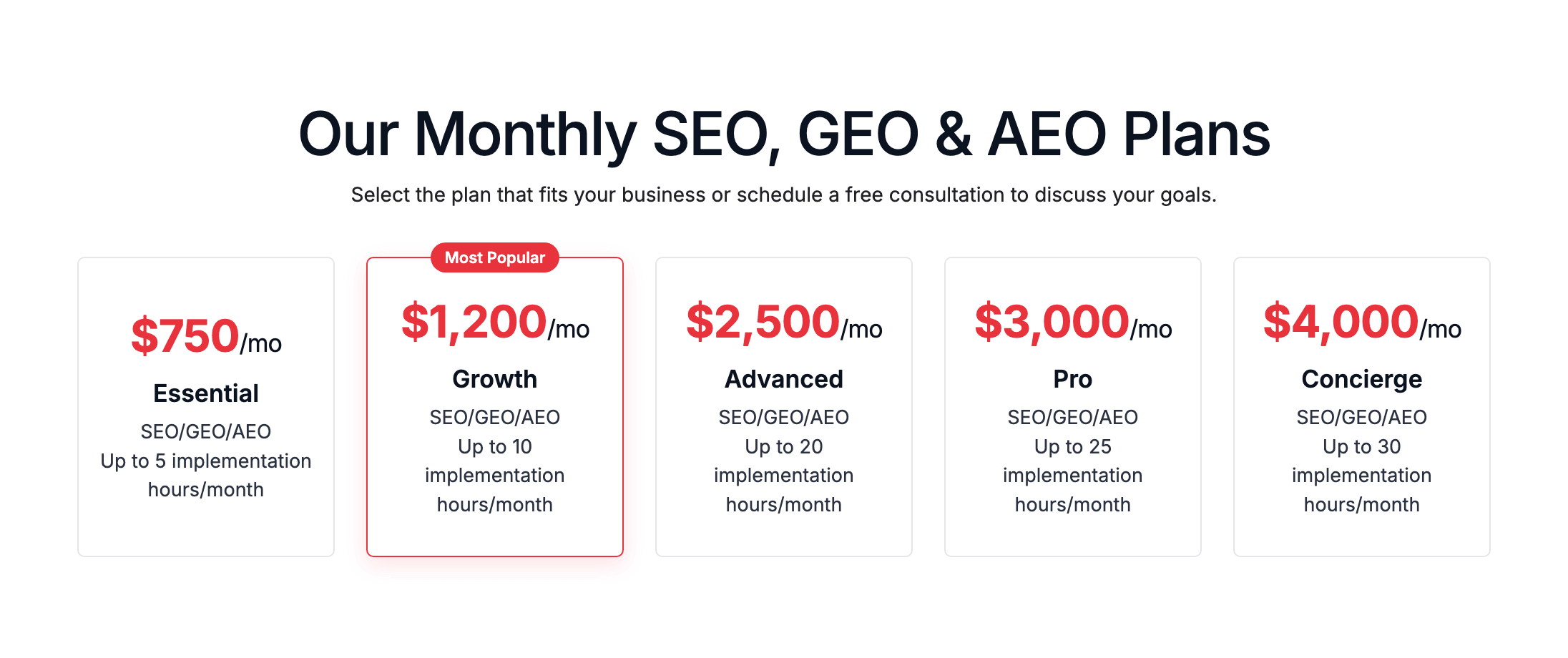
SEO package pricing can vary significantly, but most reputable agencies fall within predictable ranges. Be wary of providers offering services for just a few hundred dollars a month, as they are often cutting corners on quality, which can do more harm than good. The prices below represent typical monthly retainers for high-quality, professional SEO services.
- Local SEO Packages: $1,500 – $4,000 per month
- At the lower end, you can expect foundational work like Google Business Profile management, citation cleanup, and basic on-page optimization. Higher-end packages include more robust content creation (e.g., localized blog posts), strategic local link building, and multi-location management for franchises.
- Small to Mid-Sized Business (SMB) / Ecommerce SEO Packages: $4,000 – $10,000 per month
- This range typically covers a comprehensive strategy for businesses in moderately competitive markets. It includes regular technical monitoring, a consistent volume of content creation (e.g., 2-4 blog posts per month), product and category page optimization, and a dedicated link building campaign.
- Enterprise SEO Packages / Custom Retainers: $10,000 – $25,000+ per month
- Pricing at this level is almost always custom. It reflects the immense complexity of large, international, or highly competitive websites. This investment covers a senior-level team, advanced technical SEO (like log file analysis), scalable content strategies, international SEO management, and deep integration with internal marketing and development teams.
Factors that influence price:
- Competition: Ranking for "plumber in a small town" is far less difficult (and therefore less expensive) than ranking for a highly competitive national keyword like "life insurance."
- Scope & Deliverable Volume: A package that includes four long-form articles and ten high-quality backlinks per month will cost more than one with a single article and minimal link building.
- Team Seniority: You are paying for expertise. A package led by a team with a decade of experience will command a higher price than one executed by junior specialists.
- Complexity of Your Website: A 100,000-page ecommerce site with complex filtering requires significantly more technical oversight than a 10-page brochure site.
Comparing Value vs. Cost
The cheapest option is rarely the best one. A low-cost provider might be skipping crucial steps like technical audits or using low-quality link building tactics. A truly valuable SEO package delivers a strategic, transparent process that generates a positive return. To compare proposals effectively, look beyond the monthly price and assess the underlying value.
Use a simple value scorecard to make an apples-to-apples comparison. Grade each proposal on a scale of 1-5 across key areas.
Sample Value Scorecard:
|
Evaluation Criteria |
Agency A ($4k/mo) |
Agency B ($6k/mo) |
Notes |
|---|---|---|---|
|
Strategy & Customization (1-5) |
2 |
5 |
Agency A offered a generic plan. Agency B presented a custom 90-day roadmap based on our specific goals. |
|
Deliverable Quality & Volume (1-5) |
3 |
4 |
Agency A promises "20 backlinks," but is vague on quality. Agency B commits to 5 high-authority links with clear metrics. |
|
Team Experience & Point of Contact (1-5) |
2 |
5 |
Agency A has a junior POC. Agency B provides a dedicated senior strategist with 10+ years of experience. |
|
Reporting & Transparency (1-5) |
3 |
5 |
Agency A's sample report is basic. Agency B's includes a custom dashboard and ties KPIs directly to revenue goals. |
|
Cultural Fit & Communication (1-5) |
4 |
5 |
Both teams communicate well, but Agency B demonstrated a deeper understanding of our business model during the calls. |
|
Total Score |
14 / 25 |
24 / 25 |
In this scenario, Agency B's package costs 50% more, but the scorecard reveals it delivers far greater value in strategy, expertise, and transparency. This higher investment is more likely to produce a significant return, making it the better long-term choice.
How to Calculate SEO ROI
Ultimately, SEO is an investment, and you need a way to measure its profitability. Calculating the Return on Investment (ROI) helps justify the marketing spend and demonstrates the direct impact of your SEO package on the bottom line.
A simple formula to estimate SEO ROI is:
ROI = ( (Value of Organic Conversions - Cost of SEO Investment) / Cost of SEO Investment ) x 100
To use this, you need to know three things:
- Average Value of a Conversion: For an ecommerce business, this is your Average Order Value (AOV). For a lead generation business, this is your average Lead Value (Lead Value = Average Customer Lifetime Value x Lead-to-Customer Close Rate).
- Organic Traffic & Conversion Rate: How many visitors come from organic search, and what percentage of them convert?
- Cost of SEO: The monthly or annual cost of your SEO package.
Want a quicker way to see the value of your SEO investment?
While the ROI formula above gives you a clear picture of your returns, it can still be tricky to compare different investment scenarios over time. That’s where our Present Value Calculator comes in.
This free tool helps you determine the current worth of your future SEO returns. By factoring in the cost of your SEO package and the expected growth in leads or revenue, you can easily see whether your investment is delivering a positive net present value.
Worked Example: B2B Service Company
Let's imagine a consulting firm with the following metrics:
- Average Customer Lifetime Value (LTV): $20,000
- Lead-to-Customer Close Rate: 10% (1 in 10 leads becomes a customer)
- Average Lead Value: $20,000 x 10% = $2,000 per lead
- SEO Package Cost: $6,000 per month
Before starting SEO, the company generated 5 organic leads per month. After six months of SEO, it now generates 12 organic leads per month—an increase of 7 leads.
- Calculate the Monthly Value Gained:
- Additional Leads per Month: 7
- Value of Additional Leads: 7 leads x $2,000/lead = $14,000
- Calculate the Monthly ROI:
- ROI = ( ($14,000 - $6,000) / $6,000 ) x 100
- ROI = ( $8,000 / $6,000 ) x 100
- ROI = 1.33 x 100 = 133%
For every $1 invested in the SEO package, the company generates $2.33 in return. This simple calculation transforms the cost of an SEO package from an expense into a clear and profitable investment.
Case Studies: What Businesses Get from SEO Packages
Theory, deliverables, and pricing are essential, but the true measure of an SEO package is the results it produces. A well-executed strategy translates into tangible business growth, whether that means more phone calls, higher online revenue, or increased market share. The following case studies illustrate how tailored SEO packages can drive significant outcomes for different types of businesses over a realistic timeframe. These anonymized examples show what happens when a strategic investment in SEO is made.
Small Business Success Story
The Business: "Cityscape Plumbers," a family-owned plumbing company serving a major metropolitan area. They had a basic website but were virtually invisible on Google, relying almost entirely on word-of-mouth referrals. Their goal was to generate a consistent flow of inbound leads through their website.
The Situation: Before starting, Cityscape Plumbers ranked outside the top 50 for crucial keywords like "emergency plumber [City]" and received fewer than 100 organic visitors per month. Their Google Business Profile was incomplete, and their online directory listings were inconsistent, causing confusion for both users and search engines.
Actions Taken (6-Month Local SEO Package):
- Month 1-2: The agency performed a complete overhaul of the Google Business Profile, conducted a local competitor analysis, and cleaned up dozens of incorrect NAP (Name, Address, Phone) citations across the web. They also optimized the website's homepage and service pages for core local keywords.
- Month 3-4: A content strategy was launched, producing blog posts answering common customer questions like "how to fix a leaky faucet" and "signs of a burst pipe." This helped build topical authority.
- Month 5-6: The focus shifted to review generation and local link building. The agency implemented a simple SMS-based system to request reviews from happy customers and secured backlinks from a local hardware store blog and a neighborhood association website.
The Outcome: After six months, Cityscape Plumbers achieved a top-3 ranking in the Google Map Pack for their most important service keywords. Organic traffic to their website increased by over 300%, and most importantly, they were generating an average of 25 qualified phone leads per month directly from their online presence.
- KPI Recap:
- Timeframe: 6 Months
- Organic Traffic: +310%
- Keyword Rankings: From page 5+ to top 3 in Google Maps
- Business Impact: Averaging 25 new leads per month
Ecommerce Growth Example
The Business: "Artisan Pet Supplies," a direct-to-consumer ecommerce store selling high-end, natural pet food and accessories. They had a stylish Shopify site but struggled to compete against larger online retailers and Amazon. Their primary goal was to increase organic revenue.
The Situation: Artisan Pet Supplies had decent traffic to their blog but very little to their crucial category and product pages. Their organic conversion rate was low, and they ranked on the second or third page for valuable, purchase-intent keywords like "grain-free dog food" and "organic cat treats."
Actions Taken (12-Month Ecommerce SEO Package):
- Quarter 1: The engagement began with a deep technical audit that identified issues with faceted navigation creating duplicate content. The agency also optimized the store's highest-priority category pages, rewriting titles, meta descriptions, and on-page copy to better target commercial keywords.
- Quarter 2: A content and link building services plan was initiated. The team created a comprehensive "Pet Nutrition Guide" that served as a major content asset. They then promoted this guide to pet bloggers and industry publications, earning high-quality backlinks.
- Quarter 3-4: The focus was on expanding product page optimization and improving internal linking to pass authority from the blog and nutrition guide to the product pages. The agency also used CRO principles to A/B test a new product page layout, which improved the add-to-cart rate.
The Outcome: Over 12 months, Artisan Pet Supplies saw a 150% increase in organic traffic. More importantly, organic revenue grew by 225% as the right kind of traffic was now landing on their optimized category and product pages. They secured first-page rankings for several profitable, non-branded keywords.
- KPI Recap:
- Timeframe: 12 Months
- Organic Revenue: +225%
- Organic Traffic: +150%
- Business Impact: Achieved Page 1 rankings for key commercial terms, leading to sustainable sales growth.
Enterprise SEO Impact
The Business: "InnovateHR," a B2B SaaS company providing human resources software to large, multinational corporations. Their website was massive, with thousands of pages across different languages, but they were losing market share to newer, more agile competitors.
The Situation: InnovateHR's complex site suffered from significant technical debt, including slow page speeds and improper implementation of hreflang tags for international targeting. Their content was disjointed, created by different departments without a unified SEO strategy. Their share of voice for high-value "head" terms was declining.
Actions Taken (12-Month Custom SEO Retainer):
- Quarter 1: The agency functioned as a strategic partner, conducting a massive technical audit and working directly with InnovateHR's development team to prioritize and implement critical fixes. This included a project to optimize crawl budget and improve site speed.
- Quarter 2: A "topic cluster" model was developed for their resource center. The agency created a scalable framework for content that empowered InnovateHR's internal teams to create SEO-aligned assets. They launched a pillar page on "The Future of Employee Engagement," which became a cornerstone asset.
- Quarter 3-4: The focus turned to advanced digital PR and authority building. The agency used data from InnovateHR's platform to create an industry report that was pitched to major business publications, earning links from top-tier media outlets. They also fixed the international SEO issues, leading to better performance in EMEA and APAC markets.
The Outcome: Within a year, InnovateHR reversed its decline in market share. They saw a 70% increase in non-branded organic traffic and, more critically, a 95% increase in marketing qualified leads (MQLs) from organic search. The SEO program was identified as a key driver of new enterprise pipeline.
- KPI Recap:
- Timeframe: 12 Months
- Organic MQLs: +95%
- Non-Branded Organic Traffic: +70%
Business Impact: Regained organic market share and demonstrably increased enterprise sales pipeline.
Final Thoughts: Building a Sustainable SEO Investment
Choosing an SEO package is a significant step toward securing your business's digital future. As we've explored, the path to a successful partnership lies in clarity, alignment, and a focus on long-term value. The most effective approach is to view SEO not as a cost center or a one-time project, but as a continuous and essential business function, much like finance or operations. It is an investment in a durable asset—your website's authority and visibility—that pays dividends over time.
The key to making a wise investment is aligning the package with your specific business goals. A local shop needs a different strategy than a global enterprise, and a good proposal will reflect that understanding. Look for a provider who prioritizes transparency in their methods and reporting. A true partner will be open about their process for content creation, link building, and technical optimization, and they will welcome your questions.
Remember to look beyond the monthly fee and evaluate the true value being offered. An inexpensive package that relies on low-quality tactics can set your website back for years, while a strategic, well-executed plan will generate a significant return. By using a framework to calculate your potential ROI, you can transform the conversation from cost to profitability, making it clear how SEO directly contributes to your bottom line.
Ultimately, sustainable growth is achieved through a consistent, strategic effort. The right SEO package provides the framework for that effort, creating a predictable and powerful engine for attracting qualified traffic, generating leads, and increasing revenue. When you find a partner who understands your vision and has the expertise to execute it, you are no longer just buying services; you are building a competitive advantage.
If you are ready to explore how a strategic SEO plan can align with your business objectives, a great next step is to get a custom analysis. Understanding your current standing and opportunities is the first move toward measurable growth.
Frequently Asked Questions
What exactly is an SEO package?
What services are typically included in an SEO package?
Why do agencies bundle SEO into packages instead of selling standalone services?
How do I choose the right SEO package for my business?
Are SEO packages worth the investment?
Put this into action with eSEOspace
We help businesses grow with website development that actually performs. Explore the services behind this guide:
Get a FREE GEO/AEO/SEO Audit
We'll analyze your site's SEO, GEO, AEO & CRO — completely free — and show you exactly how to get found across Google and AI answers.
Don't have a site yet? Get in touch →
Great — your audit is on the way!
We'll send your free SEO/GEO/AEO/CRO audit within the next few hours. Where should we send it?
You're all set! ✓
Your free audit is being prepared — check your inbox in the next few hours. Talk soon!


On this page
- Key Takeaways
- Understanding SEO Packages
- Types of SEO Packages
- Common Inclusions in SEO Packages
- What’s Not Included (and Why It Matters)
- How to Choose the Right SEO Package for Your Business
- SEO Package Pricing Breakdown
- Case Studies: What Businesses Get from SEO Packages
- Final Thoughts: Building a Sustainable SEO Investment
- Frequently Asked Questions






