



Blog
Mapping the Customer Journey: A Step-by-Step Guide for 2026
Key Takeaways
- Customers experience your business as one messy, emotional, non-linear journey, so mapping it exposes friction and aligns teams around their perspective.
- In 2026 the journey spans awareness, evaluation, trust-building, micro-decisions, emotional reassurance, post-purchase validation, and long-term loyalty.
- AI-assisted decisions, channel fluidity, and emotion-first behavior have reshaped how customers move toward choosing you.
- Effective mapping starts with one clear goal, motivation-based personas, real touchpoints, and grounding every insight in actual customer data.
- A journey map is worthless without action and continuous updates, so assign owners, test changes, measure outcomes, and revisit it regularly.
After working with brands for over a decade across digital marketing, eCommerce, service businesses, and SaaS, one thing has never changed: customers don’t experience your business in silos. They experience it as a journey. Messy, emotional, sometimes confusing, and deeply personal.
That’s why customer journey mapping still matters in 2026. Not as a theoretical exercise or a fancy PowerPoint slide, but as a living, breathing blueprint of how people actually move toward trusting, and choosing you.
So let’s break it down, step by step, in a way that reflects how modern customers really behave.
Why Customer Journey Mapping Still Matters
Think about your own buying behavior. You might discover a brand on Instagram, Google it later, read reviews at night, abandon a cart, then finally purchase after a WhatsApp follow-up. That’s not linear. That’s real life.
Customer journey mapping helps businesses stop guessing and start understanding. When done right, it exposes friction, highlights opportunity, and aligns teams around one shared truth: the customer’s perspective.
And yes, using a solid customer experience journey template makes this process far more effective, especially when teams scale.
What the Customer Journey Really Means Today
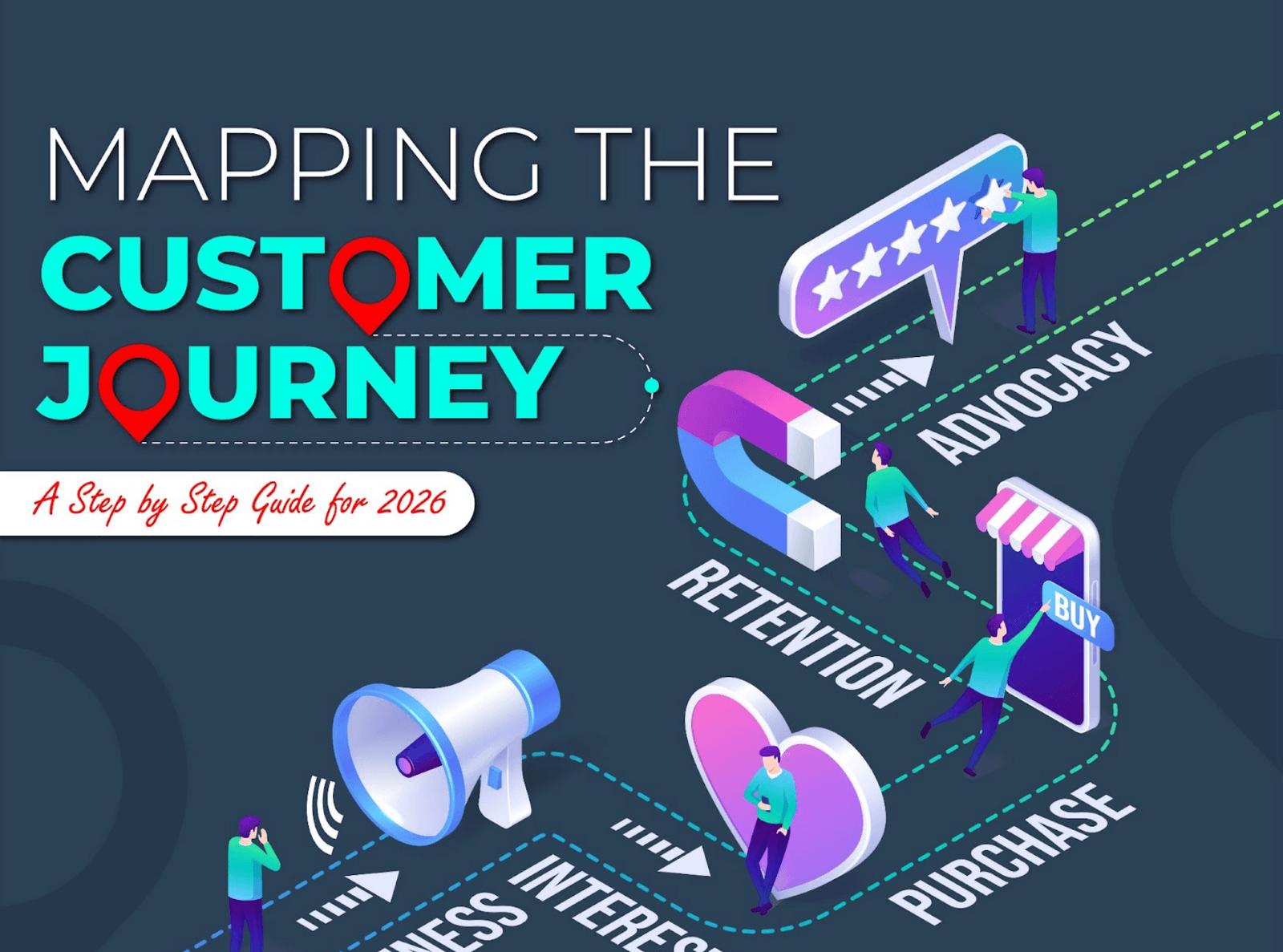
In 2026, a customer journey isn’t just awareness to purchase. It’s awareness, evaluation, trust-building, micro-decisions, emotional reassurance, post-purchase validation, and long-term loyalty.
Customers expect:
- Personalization without creepiness
- Speed without pressure
- Support without friction
They don’t want more options. They want clarity. Your journey map should reflect that.
What’s Changed with Customer Journeys in 2026
Three big shifts stand out:
- AI-assisted decisions – Customers use AI tools to compare, validate, and shortcut decisions.
- Channel fluidity – Online, offline, social, messaging apps - everything blends.
- Emotion-first behavior – Trust, tone, and timing matter more than features.
If your journey map still looks like it did in 2020, it’s already outdated.
Step 1: Define the Journey You Want to Map
Start small. Are you mapping:
- A first-time buyer journey?
- A repeat customer journey?
- A churn or drop-off journey?
Trying to map everything at once leads to vague insights. Pick one clear goal. Ask yourself: What decision am I trying to improve?
Step 2: Identify the Right Customer Personas
Forget generic personas like “25–45, urban.” Focus on motivation and mindset.
What problem are they trying to solve?
What are they afraid of?
What would make them hesitate?
A journey map without strong personas is like a GPS without a destination.
Step 3: Identify Key Touchpoints
List every meaningful interaction:
- Ads
- Website pages
- Social media
- Emails
- WhatsApp messages
- Customer support
- Billing or onboarding
Then ask: Is this touchpoint helping or hurting the decision?
Many brands are surprised by how many unnecessary steps they’ve added over time.
Step 4: Understand Customer Intent and Emotion
This is where most journey maps fall short.
At each touchpoint, ask:
- What is the customer trying to do?
- How do they feel at this moment?
Confused? Curious? Anxious? Confident?
Emotion drives action far more than logic. Always has.
Step 5: Use Real Customer Data
Opinions are dangerous. Data is grounding.
Use:
- Website analytics
- Heatmaps
- CRM notes
- Support tickets
- Reviews and DMs
- Sales call recordings
Patterns will emerge. Trust them.
Step 6: Map the Journey Visually
This is where a customer experience journey template becomes powerful.
Your visual map should include:
- Stages
- Touchpoints
- Customer actions
- Emotions
- Internal owners
Simple beats pretty. Clarity beats complexity.
Step 7: Identify Friction and Moments That Matter
Not every problem deserves attention.
Focus on:
- High-drop-off points
- Moments of hesitation
- Trust-building opportunities
- Emotional peaks (good or bad)
Sometimes removing one small friction point improves conversions more than a full redesign.
Step 8: Prioritize What to Improve
Ask two questions:
- What impacts the customer most?
- What’s realistic for the team to fix now?
Rank improvements by impact vs effort. Momentum matters.
Step 9: Turn Insights Into Action
A journey map without action is just documentation.
Assign owners. Set timelines. Test changes. Measure outcomes.
Did bounce rates drop?
Did conversions improve?
Did support tickets reduce?
If nothing changes, the map didn’t do its job.
Step 10: Review and Update Continuously
Customer behavior evolves faster than internal processes.
Revisit your journey map:
- Quarterly for fast-moving industries
- Bi-annually for stable ones
Treat it like a product, not a project.
Common Journey Mapping Mistakes to Avoid
- Mapping from the company’s perspective, not the customer’s
- Ignoring emotions
- Overcomplicating the visual
- Treating the map as a one-time task
- Not involving cross-functional teams
If sales, marketing, and support aren’t aligned, the customer feels it instantly.
The Future of Customer Journey Mapping
By 2026 and beyond, journey mapping will become:
- More predictive (AI-driven insights)
- More personalized (micro-segments)
- More real-time (live behavior signals)
But the core principle will stay the same: understand humans before optimizing systems.
Get a FREE Audit
We'll perform a comprehensive SEO, AEO, GEO & CRO audit of your website — completely free — and show you exactly how to outrank your competitors.
Don't have a site yet? Get in touch →
Final Thoughts
Customer journey mapping isn’t about diagrams. It’s about empathy. It’s about seeing your business the way customers experience it, confusion, excitement, doubt, and all.
When you get that right, conversions follow naturally.
And when you combine real insight with a practical customer experience journey template, you stop chasing customers, and start guiding them.
That’s the difference between businesses that grow and businesses that guess.
Frequently Asked Questions
What is customer journey mapping and why does it still matter in 2026?
What has changed about customer journeys in 2026?
How do I start creating a customer journey map?
Why is customer emotion so important in journey mapping?
How often should I update my customer journey map?
Put this into action with eSEOspace
We help businesses grow with website development that actually performs. Explore the services behind this guide:
Get a FREE GEO/AEO/SEO Audit
We'll analyze your site's SEO, GEO, AEO & CRO — completely free — and show you exactly how to get found across Google and AI answers.
Don't have a site yet? Get in touch →
Great — your audit is on the way!
We'll send your free SEO/GEO/AEO/CRO audit within the next few hours. Where should we send it?
You're all set! ✓
Your free audit is being prepared — check your inbox in the next few hours. Talk soon!


On this page
- Key Takeaways
- Step 1: Define the Journey You Want to Map
- Step 2: Identify the Right Customer Personas
- Step 3: Identify Key Touchpoints
- Step 4: Understand Customer Intent and Emotion
- Step 5: Use Real Customer Data
- Step 6: Map the Journey Visually
- Step 7: Identify Friction and Moments That Matter
- Step 8: Prioritize What to Improve
- Step 9: Turn Insights Into Action
- Step 10: Review and Update Continuously
- The Future of Customer Journey Mapping
- Frequently Asked Questions






