



Blog
10 Predictions for the Future of AI Search
Key Takeaways
- AI search marks the biggest shift in digital marketing in twenty years, replacing keyword-and-backlink SEO with a conversational, AI-driven paradigm.
- Search is becoming a continuous, multi-turn conversation, so content must map entire conversational journeys rather than target isolated keywords.
- By 2030, generative answer engines will replace the traditional SERP, making the old ten-blue-links results page a legacy feature.
- The goal shifts from ranking to being cited and positively mentioned inside AI-generated answers, or your brand becomes effectively invisible.
- Winning requires an interconnected content ecosystem and a clear, consistent brand voice the AI can accurately translate and surface.
The world of digital marketing is on the cusp of its most significant transformation in twenty years. The steady, predictable landscape of search engine optimization, governed by keywords and backlinks, is giving way to a new, dynamic, and conversational paradigm driven by artificial intelligence. For marketers, strategists, and business leaders, looking toward 2030 is not an exercise in abstract futurism; it is a critical strategic necessity. The AI search predictions we can make today are not wild guesses, but clear trajectories based on current technology, user behavior, and platform investments.
This article provides ten clear, data-informed predictions for the future of AI search. We will dissect what the GEO future holds, explore emerging search trends for 2030, and offer a practical playbook for not just surviving this shift, but leading it. Understanding these trends is the first step toward building a brand and a career that will thrive in the coming decade of AI-native marketing.
#1: Search Will Become Conversational, Not Transactional
Search is moving beyond the simple, transactional model of a query followed by a list of links. The future of search is a continuous, multi-turn conversation. Users will engage with AI search engines in an ongoing dialogue to explore topics, refine their needs, complete complex tasks, and make decisions, all within a single interface.
**What it means for marketers:** * Your content strategy must evolve from targeting single keywords to mapping entire conversational journeys. * The goal is to anticipate the user's next question and have the answer ready. * Success will be measured by your brand's ability to stay present and helpful throughout a multi-step user dialogue. * Siloed content pieces will fail; you need an interconnected ecosystem of information that guides a user from one logical step to the next. * Your brand's "voice" will be translated by the AI, making it crucial that your content's tone and expertise are clear and consistent. * The new user journey won't always involve a click to your website, as the conversation happens on the AI platform.
Action to take now:
- Start mapping out the top 5 conversational paths your customers take when solving a problem your product addresses.
- Audit your content: Is it structured to answer a sequence of questions, or is it a collection of disconnected articles?
- Begin building a topic cluster model that links your core content to related sub-topics and follow-up questions.
- Experiment with creating content in a Q&A format that directly mirrors a conversational flow.
#2: Generative Engines Will Replace SERPs
By 2030, the traditional Search Engine Results Page (SERP) with its "10 blue links" will be a secondary, legacy feature. The default interface for most informational and commercial queries will be a direct, synthesized answer generated by an AI. This answer engine will be the new "page one," and brands not included in its synthesis will be effectively invisible.
**What it means for marketers:** * The concept of "ranking" will become obsolete. The new goal is to be *cited* and positively mentioned within the AI-generated answer. * All the effort and budget spent on climbing from position #3 to #1 will become meaningless if the AI answer sits above both. * Your website's user experience becomes less about converting a click and more about providing a trustworthy source for the AI to reference. * The visual branding and messaging on your website become secondary to the structured, factual data it contains. * This shift will render many traditional SEO tools and metrics obsolete, requiring a new analytics stack. * Competition moves from a 10-player game on the SERP to a 2-3 player game within the AI-generated text.
Action to take now:
- For your top 10 commercial queries, manually analyze the current AI-generated answers. Who is being cited? What is the sentiment?
- Start shifting your reporting focus from "keyword rankings" to "share of voice in AI" and "citation rate."
- Educate your leadership team and clients about this new reality to manage expectations and justify strategic pivots.
- Re-evaluate your SEO tool stack. Do your tools help you understand answer engine trends, or are they still focused on link-based rankings?
#3: GEO Will Be the New SEO Standard
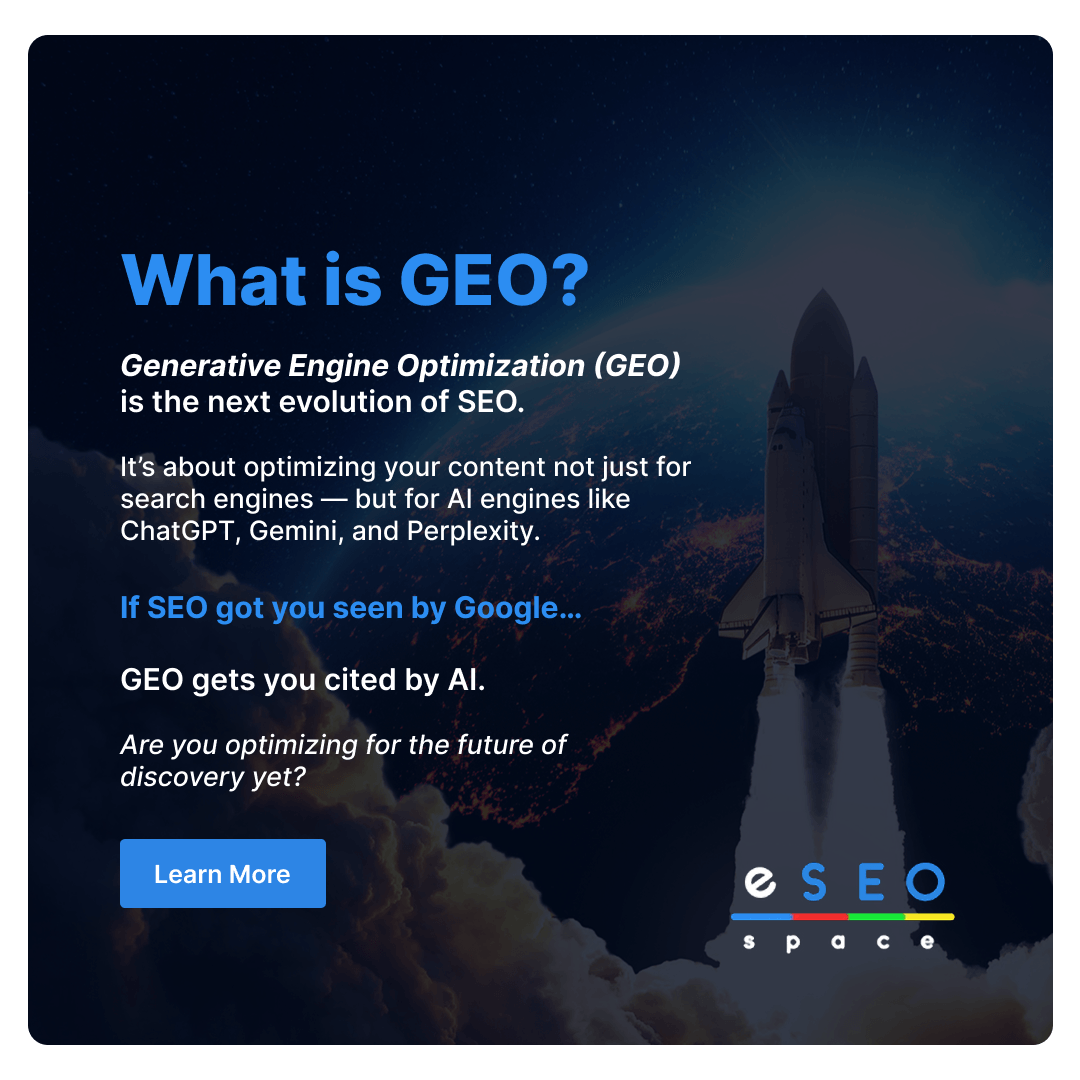
As SERPs are replaced by answer engines, the discipline of Search Engine Optimization (SEO) will fully transform into Generative Engine Optimization (GEO). GEO is the strategic framework for influencing AI models by building a machine-readable ecosystem of trust and authority. It will become the standard, non-negotiable discipline for digital visibility.
**What it means for marketers:** * The skills that defined a great SEO (keyword research, link building) will be table stakes, augmented by new GEO skills (entity management, knowledge graph architecture, schema). * SEO teams will need to be restructured into cross-functional "Visibility Pods" that include content architects and data analysts. * Agency services will shift from selling "SEO packages" to providing strategic GEO consulting and implementation. * Budgets will be reallocated from tactical SEO activities to foundational GEO work that builds long-term, defensible authority. * The line between SEO, content strategy, and brand management will blur completely. * GEO will be seen not as a marketing channel, but as a core business function responsible for managing the brand's digital identity.
Action to take now:
- Conduct a skills gap analysis of your current marketing or SEO team. Where do you lack GEO capabilities?
- Invest in foundational GEO training for your key team members.
- Start building the business case for a dedicated GEO budget, focusing on risk mitigation and narrative control.
- Rewrite job descriptions for marketing roles to include responsibilities related to AI optimization and structured data.
Get a FREE Audit
We'll perform a comprehensive SEO, AEO, GEO & CRO audit of your website — completely free — and show you exactly how to outrank your competitors.
Don't have a site yet? Get in touch →
#4: AI Models Will Personalize Search Results by User Intent
AI search engines will deliver radically personalized results based on a deep understanding of the user. This will go far beyond basic demographics, incorporating the user's expertise level, past conversational history, location, and inferred intent. The same query will yield different answers for a novice versus an expert, or for a user in the early research phase versus one ready to buy.
**What it means for marketers:** * The idea of a single, universal "ranking" for a query will be completely gone. * Your content must cater to multiple user personas and expertise levels. * You will need to create content for different stages of intent: foundational "what is" content for beginners and advanced "how to integrate" content for experts. * Local GEO will become hyper-critical, as the AI will heavily favor brands that have accurate and authoritative location data. * It will be nearly impossible to manually check your "performance," requiring sophisticated analytics that can simulate different user personas. * Your ability to structure your content to be easily adaptable by the AI for different contexts will be a key success factor.
Action to take now:
- Develop clear personas for your key audience segments, including their likely expertise level and common questions.
- Audit your content. Do you have material that serves every stage of the learning journey, from beginner to advanced?
- Create a "content layering" strategy, where foundational pieces link to more advanced concepts.
- Ensure your local business information (Google Business Profile, etc.) is perfectly accurate and rich with detail.
#5: Brand Authority Will Matter More Than Backlinks
While backlinks will remain a signal of authority, their importance will diminish relative to a more holistic, multi-faceted measure of brand authority. AI models will evaluate trust based on the consistency of information across the web, the verifiable expertise of a brand's authors, the depth of its structured data, and its citations in other trusted, non-linked sources (like academic papers or government reports).
**What it means for marketers:** * The obsession with domain authority scores and link quantity will be replaced by a focus on building a comprehensive "entity authority." * Investing in the personal brands and credentials of your in-house experts is now a core marketing activity. * Public relations and digital PR efforts will become even more critical, as mentions in authoritative publications (even without a link) will be powerful trust signals. * Your "About Us" page, author bios, and company history become critical assets for establishing trustworthiness. * Ensuring your brand's information is consistent across every platform (Wikipedia, directories, your own site) is paramount. * The value of a backlink will be judged less on the linking site's "authority" and more on its contextual relevance and the expertise of its author.
Action to take now:
- Conduct an audit of your brand's key entities (company name, CEO, top products). Is the information about them consistent everywhere?
- Create detailed author pages for your content creators, highlighting their credentials, experience, and publications. Mark them up with
Personschema. - Align your PR and content strategies. When you secure a media mention, ensure you have corresponding on-site content to provide deeper context.
- Shift some of your "link building" budget toward activities that build topical authority and expert credibility.
#6: Visual and Voice GEO Will Explode
Search will move far beyond the text box. By 2030, a significant portion of queries will be initiated via voice and visual inputs. Users will speak to their devices, their cars, and their smart homes, and they will use their phone cameras to search the physical world. Optimizing for these modalities will become a major component of the GEO future.
**What it means for marketers:** * Image SEO will evolve into Visual GEO, where optimizing image alt text, metadata, and structured data is crucial for being the answer to visual searches. * Your content must be structured for voice consumption—short, declarative sentences and a natural, conversational tone. * For local businesses, having well-optimized images of your storefront, products, and services will be critical for "near me" visual searches. * Video content will need to be structured with timestamps, chapters, and detailed descriptions to allow AI to extract specific segments as answers. * The rise of AR and smart glasses will create a new layer of "ambient search," where users get information about their surroundings in real-time. * Product companies will need to ensure their product packaging and design are "searchable."
Action to take now:
- Conduct a thorough audit of your website's images. Do they all have descriptive file names, alt text, and captions?
- Start marking up your key images and videos with appropriate schema (
ImageObject,VideoObject). - When creating new content, read it aloud. Does it sound natural and easy to understand for a voice assistant?
- Experiment with creating short, "snackable" video clips that answer a single question clearly.
#7: Traditional Ad Models Will Collapse Under AI Search
The traditional pay-per-click (PPC) advertising model, which relies on users clicking links on a SERP, is fundamentally incompatible with an AI-native answer engine. As fewer users click through to websites, this model will break. New forms of native, AI-integrated advertising will emerge, and ad budgets will be reallocated.
**What it means for marketers:** * Relying solely on Google Ads for lead generation will become an increasingly risky strategy. * New ad formats are already here: ChatGPT shows clearly labeled ads below answers (US, since February 2026), and Google runs ads in and around AI Overviews and AI Mode. * The line between organic and paid content will blur even further, raising new ethical considerations. * Paid placements already exist (ChatGPT began testing clearly labeled ads below answers in the US in February 2026), but OpenAI says ads do not influence ChatGPT's answers, so product data still has to earn its place organically. * There will be a flight of ad dollars from bottom-of-funnel search ads to top-of-funnel brand building and GEO initiatives that influence the AI's organic recommendations. * Attribution modeling will become even more complex, requiring marketers to measure the value of a "mention" in an AI answer.
Action to take now:
- Begin diversifying your customer acquisition channels away from a heavy reliance on traditional search ads.
- Invest more in building your organic brand authority and owned content assets through GEO.
- Stay informed on the new ad formats being tested by Google, Microsoft, and others.
- Start conversations with your finance team about developing new attribution models that can account for AI-driven influence.
#8: GEO Certification Will Become a Required Skill for Marketers
As GEO becomes the new standard for visibility, demonstrable expertise in the discipline will become a mandatory qualification for most senior marketing and digital roles. A formal, rigorous GEO certification will be the primary way for professionals to signal their competence and for employers to verify it, much like a CPA for an accountant.
**What it means for marketers:** * Job descriptions for roles like "Marketing Director," "Head of Growth," and "Digital Strategist" will explicitly list GEO skills or certification as a requirement. * Professionals who fail to upskill from traditional SEO to GEO will find their career progression stalled. * Agencies will need to have certified GEO strategists on staff to win and retain sophisticated clients. * Universities and business schools will begin incorporating GEO principles into their marketing curriculum. * A GEO certification will be a key differentiator in a competitive job market, unlocking higher salaries and more strategic roles. * The demand for high-quality GEO training and education will skyrocket.
Action to take now:
- Honestly assess your own skills against the requirements of GEO. Where are your gaps?
- Research and identify a top-tier GEO certification program that focuses on strategy and hands-on application.
- Make a professional development plan to acquire these skills in the next 12-18 months.
- If you are a hiring manager, start prioritizing candidates who demonstrate a forward-thinking, strategic understanding of the AI search landscape.
#9: Generative Analytics Will Redefine “Rankings”
The metrics we use to measure success will be completely transformed. The concept of a numerical "ranking" will be replaced by a more nuanced suite of "Generative Analytics" that measure influence and authority within the AI ecosystem. These will be the new power metrics for the C-suite.
**What it means for marketers:** * Dashboards will no longer show keyword positions but will feature metrics like "AI Share of Voice," "Citation Rate," "Sentiment Analysis," and "Entity Authority Score." * Tools will emerge that can track and analyze the content of AI-generated answers at scale. * The goal will shift from "improving rankings" to "improving our brand's narrative" as told by the AI. * Marketers will need to become adept at interpreting this new data and translating it into actionable strategic insights. * We will see the rise of "Competitive GEO," where brands actively track and work to displace competitors' citations within AI answers. * Attribution will focus on connecting increases in these influence metrics to downstream business outcomes like branded search lift and revenue.
Action to take now:
- Start manually tracking your brand's presence in AI answers for your top 5 queries in a simple spreadsheet. This will build your intuition for the new metrics.
- Begin educating your stakeholders on why "rankings" are a vanity metric and introduce them to the concepts of influence and citation.
- Explore emerging analytics tools that are built for the generative era.
- Define a "basket" of 20-30 critical queries that you will use as your benchmark for AI performance tracking.
#10: AI Search Will Democratize Knowledge Discovery
While presenting many challenges, the ultimate promise of AI search is a positive one: the democratization of complex knowledge. High-quality AI search engines will make it easier for people everywhere to get answers to complex questions in health, finance, education, and law, regardless of their background or expertise level. For brands, this means that being a source of truthful, helpful, and accessible information will be not just a marketing strategy, but a social responsibility.
**What it means for marketers:** * Brands that genuinely invest in educating their audience will be rewarded with high levels of trust and authority from both users and AI models. * Ethical GEO practices will become a major point of differentiation. Brands that attempt to manipulate or mislead the AI will face significant reputational and algorithmic penalties. * Accessibility will be key. Your content must be written in clear, simple language that can be understood by a broad audience and easily processed by an AI. * There will be a premium on creating content that serves under-resourced communities or answers difficult questions with clarity and compassion. * Your brand's mission and values, as expressed through your content, will become a tangible factor in how you are perceived by AI.
Action to take now:
- Review your content through an ethical lens. Is it genuinely helpful and truthful?
- Invest in creating foundational, educational content that serves your entire community, not just bottom-of-funnel buyers.
- Adopt a "plain language" policy for all your public-facing content.
- Ensure your GEO strategy is aligned with your company's broader corporate social responsibility (CSR) goals.
How to Position Yourself for These 10 Trends
The next five years will see a great bifurcation in the marketing industry. There will be those who adapt to these trends and lead, and those who cling to the old playbook and are left behind. Positioning yourself for success requires a deliberate, multi-year plan.
Your 12-24 Month Capability Roadmap:
- Months 1-6: Education & Audit. Invest in deep GEO training. Perform a comprehensive audit of your brand's current AI visibility to establish a baseline.
- Months 7-12: Foundation & Pilots. Build your foundational entity graph and schema architecture. Launch pilot projects focused on creating structured, "atomic" content for your most important products or services.
- Months 13-18: Scale & Integration. Take the learnings from your pilots and scale your GEO content program. Begin integrating GEO principles and analytics into your broader marketing operations.
- Months 19-24: Leadership & Innovation. Move from execution to strategy. Begin optimizing for visual and voice search. Lead your organization in developing a multi-engine AI strategy.
From an organizational design perspective, this means moving away from siloed teams and toward integrated "Visibility Pods" that bring together strategic, content, and technical expertise.
Join the Movement: Learn GEO Before the World Catches Up
These ten AI search predictions paint a clear picture of the future. The GEO future is not a distant possibility; it is an unfolding reality. The professionals and organizations who invest in mastering Generative Engine Optimization today will become the market leaders of 2030. A formal GEO certification is the most direct path to acquiring these critical skills, signaling your expertise, and securing your place at the forefront of this revolution.
The window of opportunity to gain a first-mover advantage is open now, but it will not last forever. If you are ready to move beyond the past and build the future of marketing, your journey begins today.
Frequently Asked Questions
What is AI search and how is it different from traditional SEO?
Will the traditional search results page disappear by 2030?
What does it mean for search to become conversational instead of transactional?
How should marketers prepare their content for AI search now?
Why does being cited matter more than ranking in AI search?
Put this into action with eSEOspace
We help businesses grow with website development that actually performs. Explore the services behind this guide:
Get a FREE GEO/AEO/SEO Audit
We'll analyze your site's SEO, GEO, AEO & CRO — completely free — and show you exactly how to get found across Google and AI answers.
Don't have a site yet? Get in touch →
Great — your audit is on the way!
We'll send your free SEO/GEO/AEO/CRO audit within the next few hours. Where should we send it?
You're all set! ✓
Your free audit is being prepared — check your inbox in the next few hours. Talk soon!


On this page
- Key Takeaways
- #1: Search Will Become Conversational, Not Transactional
- #2: Generative Engines Will Replace SERPs
- #3: GEO Will Be the New SEO Standard
- #4: AI Models Will Personalize Search Results by User Intent
- #5: Brand Authority Will Matter More Than Backlinks
- #6: Visual and Voice GEO Will Explode
- #7: Traditional Ad Models Will Collapse Under AI Search
- #8: GEO Certification Will Become a Required Skill for Marketers
- #9: Generative Analytics Will Redefine “Rankings”
- #10: AI Search Will Democratize Knowledge Discovery
- How to Position Yourself for These 10 Trends
- Join the Movement: Learn GEO Before the World Catches Up
- Frequently Asked Questions






