

Key Takeaways
- Google's E-E-A-T guidelines and HIPAA's privacy rules can seem contradictory, but successful healthcare marketing integrates both rather than choosing one.
- Trustworthiness is the shared foundation of both frameworks, making HTTPS, secure hosting, and HIPAA-compliant tools baseline requirements.
- Any tool that collects potential PHI must be HIPAA-compliant, meaning the vendor signs a Business Associate Agreement (BAA) with you.
- You can showcase expertise and authority through detailed author bios and credentials without ever sharing identifiable patient stories.
- Grounding content in reputable, peer-reviewed sources signals genuine medical expertise to Google while keeping patient privacy intact.
For healthcare providers, creating online content is a delicate balancing act. On one side, you have Google’s stringent E-E-A-T guidelines, demanding transparency, expertise, and proof of experience to rank well. On the other, you have the ironclad privacy rules of HIPAA, mandating the utmost confidentiality of patient information. These two forces can seem contradictory. How can you showcase real-world experience without violating patient privacy? How can you build trust with Google while upholding your legal and ethical duties?
Navigating this intersection is the defining challenge for modern healthcare marketing. Success requires a nuanced strategy that satisfies both Google’s algorithms and federal law. It’s not about choosing one over the other; it’s about integrating them seamlessly. This guide will explore what Google wants from medical sites and how you can deliver high-quality, E-E-A-T-rich content while remaining steadfast in your commitment to HIPAA compliance.
Understanding the Two Pillars: E-E-A-T and HIPAA
Before we can align them, we need to understand what each framework demands.
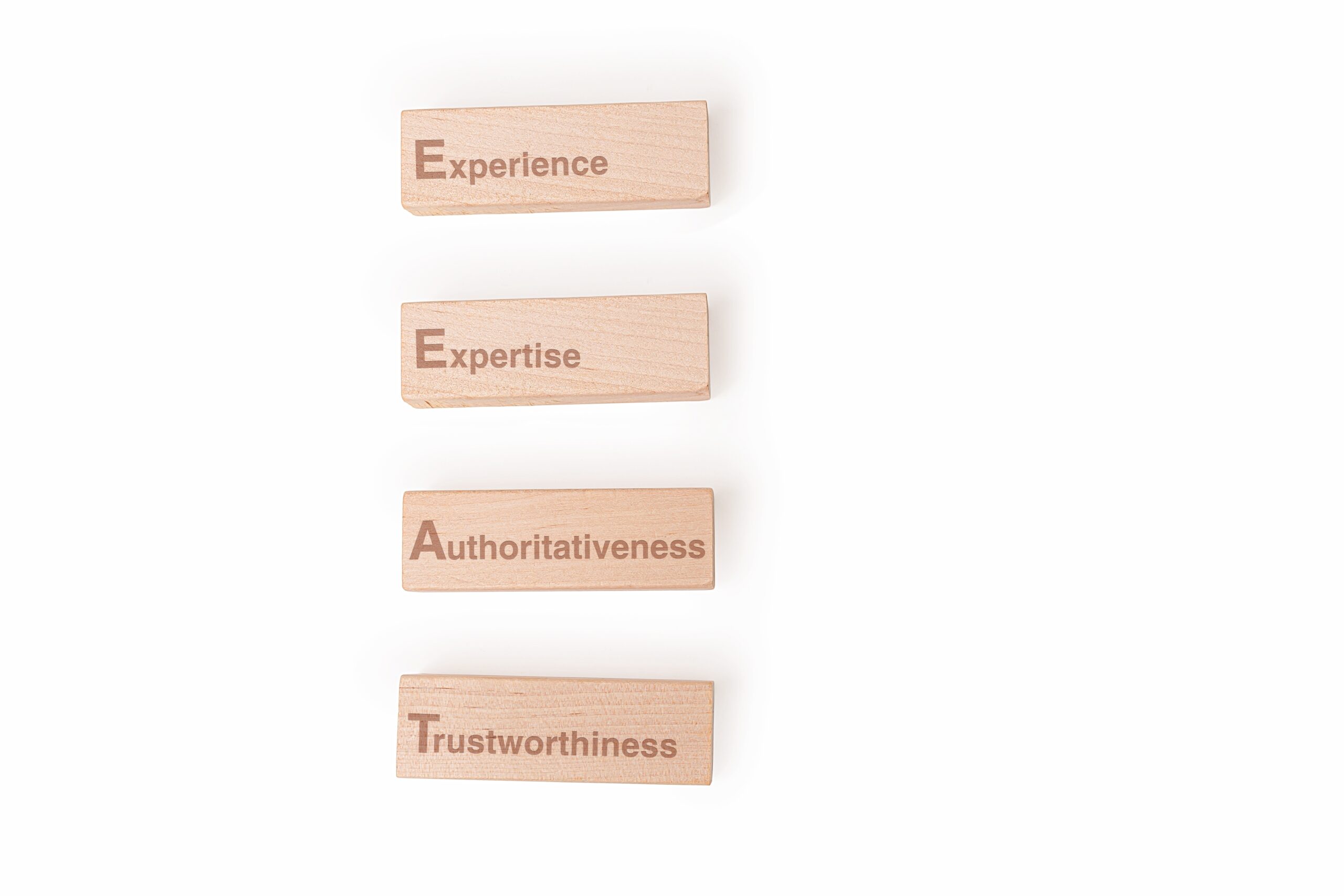
E-E-A-T (Experience, Expertise, Authoritativeness, Trustworthiness) is Google's quality framework for evaluating content, especially "Your Money or Your Life" (YMYL) topics like health and medicine.
- Experience: First-hand, lived experience with a topic. Did a doctor perform the procedure? Did a patient live with the condition?
- Expertise: The author's formal qualifications, credentials, and knowledge.
- Authoritativeness: The reputation of the author and website within the broader industry.
- Trustworthiness: The accuracy of the content, security of the site, and transparency of the organization.
HIPAA (Health Insurance Portability and Accountability Act) is a federal law that establishes national standards for protecting sensitive patient health information. It strictly governs the use and disclosure of Protected Health Information (PHI)—any data that can identify a patient in relation to their health.
The core tension is clear: E-E-A-T, particularly the "Experience" element, encourages sharing real stories. HIPAA strictly forbids sharing identifiable patient stories without explicit, documented consent.
Securing Trust: The Foundation of Both Frameworks
The most important element of E-E-A-T is Trustworthiness. For medical websites, this overlaps perfectly with HIPAA's core mission: protecting user data and building a safe environment. Before you even think about content, you must get the technical aspects of trust right.
Implement HTTPS and Secure Hosting
An SSL certificate (which enables https:// URLs) is non-negotiable. It encrypts the data exchanged between a user’s browser and your website, protecting any information they submit. This is a baseline requirement for both Google’s trust signals and HIPAA compliance. Your web hosting should also be secure, with firewalls and malware scanning to protect against data breaches.
Use HIPAA-Compliant Tools
Any tool on your website that collects potential PHI—from contact forms and appointment schedulers to live chat widgets—must be HIPAA-compliant. This means the vendor must be willing to sign a Business Associate Agreement (BAA) with you. Using a standard, non-compliant contact form for patient inquiries is a direct violation of HIPAA and a massive breach of trust.
As healthcare organizations expand their digital presence, managing regulatory requirements across multiple systems becomes increasingly complex. Many providers now rely on healthcare compliance management solutions to help monitor data security standards, streamline internal compliance processes, and ensure that patient-facing tools meet evolving regulatory expectations. Having these systems in place not only reduces operational risk but also strengthens the overall trust signals that both patients and search engines increasingly value.
Showcasing Expertise and Authority Without Violating Privacy
You can demonstrate deep expertise and build authority without ever mentioning a specific patient case. This is where you lean into the "E" and "A" of E-E-A-T.
Create Detailed Author Bios
Every article, blog post, or service page should have a clear author. This person must be a qualified medical professional. Create comprehensive author pages that showcase their credentials, education, board certifications, and publications. Link to their professional profiles (e.g., LinkedIn, Doximity) and any published research. For specialized fields like anesthesiology, niche career platforms such as AnesthesiaJobs.com also help validate a provider's professional standing and industry connections. This tells Google that your content is written by a genuine expert.
Cite Reputable Sources
Your content must be grounded in scientific evidence. Link out to authoritative sources like peer-reviewed studies on PubMed, guidelines from government health agencies (CDC, NIH), and position statements from major medical associations (AMA, APA). Citing high-authority sources demonstrates that your content is well-researched and aligned with the scientific consensus, a key E-E-A-T signal.
Publish Original Research and Data
If your institution conducts research, publish summaries and white papers on your website. Presenting original data is one of the most powerful ways to build authority. It positions your organization as a leader that is actively contributing to the advancement of medicine, not just commenting on it.
Navigating "Experience" with HIPAA in Mind
The "Experience" component of E-E-A-T is the trickiest to navigate. Google wants to see that you have real-world experience, but HIPAA rightly prevents you from freely sharing patient stories. Here’s how to do it ethically and effectively.
De-identify and Aggregate Patient Experiences
You can share insights from your clinical experience without identifying any single patient. This involves speaking in generalities and composites.
- Instead of: "I had a patient, John D., a 45-year-old who presented with..."
- Try: "In my experience treating hundreds of patients with this condition, a common challenge that emerges is..."
This approach showcases your first-hand experience and provides valuable insights while protecting patient identities completely. You are sharing the lessons from your experience, not the details of a specific case.
Obtain Explicit, Written Consent for Testimonials
If you want to use a specific patient story or testimonial, you must obtain explicit, written consent that is HIPAA-compliant. This is a high bar to clear. The consent form must be detailed, explaining exactly what information will be shared, where it will be used, and for how long. The patient must understand they have the right to revoke their consent. Because of the complexities and potential for perceived coercion, many institutions opt to avoid specific patient testimonials altogether.
Feature Your Clinicians’ Experience
The most straightforward way to demonstrate experience is to have your doctors, nurses, and other clinicians share their own professional journeys. A surgeon can write about their experience performing a new type of procedure. A physical therapist can describe their process for developing rehabilitation plans. This frames the experience around the provider, not the patient, making it safe from a HIPAA perspective.
The Synergy of HIPAA and E-E-A-T
When viewed correctly, HIPAA and E-E-A-T are not opposing forces. They are two sides of the same coin: trust. HIPAA builds trust through privacy and security. E-E-A-T builds trust through expertise and transparency. A website that excels at one often excels at the other.
A HIPAA-compliant site with secure forms and clear privacy policies is more trustworthy to patients, and HTTPS and clear policies are part of the trust signals Google's quality guidelines describe. A website that clearly attributes its content to credentialed experts and cites authoritative sources is more trustworthy to patients.
By building your content strategy on a foundation of technical security, showcasing your verifiable expertise, and sharing your experience in a de-identified and ethical manner, you can create a website that satisfies both Google and federal law. You will build a powerful online presence that not only ranks higher but, more importantly, serves as a safe and reliable resource for the patients who depend on you.
Actionable Next Steps:
- Audit Your Website's Security: Confirm you have an active SSL certificate and that all third-party tools are HIPAA-compliant with a signed BAA.
- Enhance Author Pages: Review your author bios to ensure they are detailed, credible, and clearly display expertise.
- Review Your Content: Check that your health articles are citing authoritative sources and have been reviewed by a medical professional. Add "last reviewed" dates to your posts.
- Train Your Content Team: Ensure your writers and clinicians understand how to share experience in a de-identified way.