



11 Brand Storytelling Secrets Big Brands Hide
11 Brand Storytelling Secrets Big Brands Hide
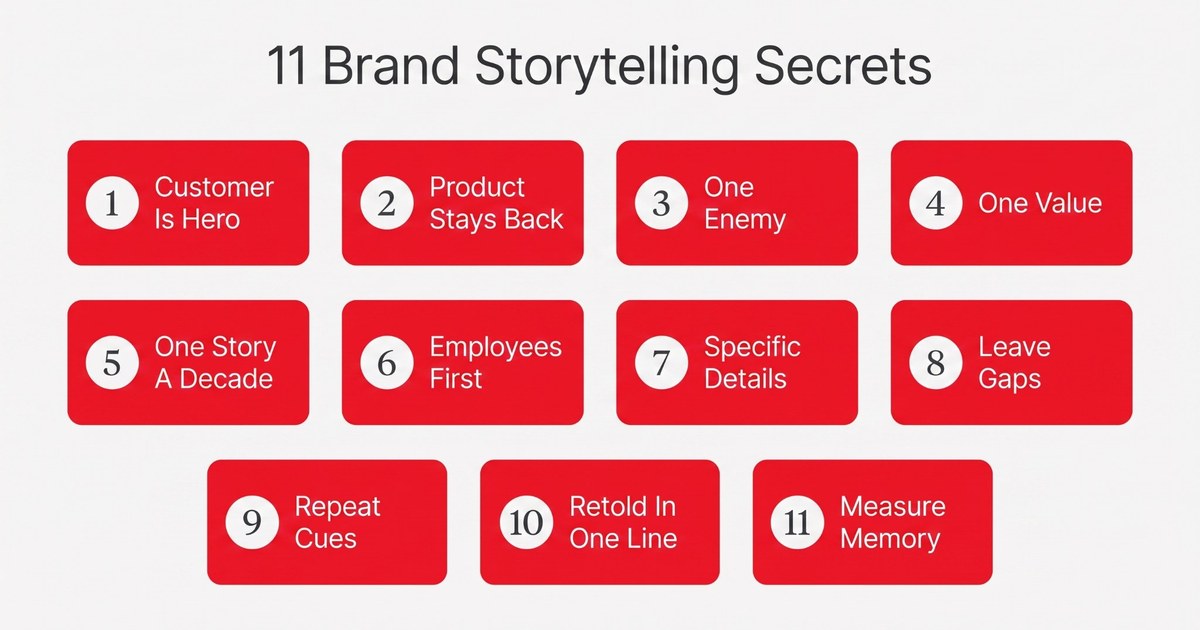
You have seen it happen. Some big brand runs a 30-second spot, and it actually gets to you. Meanwhile, your own brand storytelling reads like a spec sheet with feelings tacked on. It is tempting to blame their budget. The real difference is a handful of habits they rarely talk about, and not one of them costs millions.
So that is what this is. First, the four kinds of story brands actually tell, so you can work out which one is yours. Then 11 things the big names do and almost never say out loud. The best online brands weave a story through the whole storefront, and you can copy the method on any budget.
4 Major Types Of Compelling Brand Stories Behind Successful Businesses
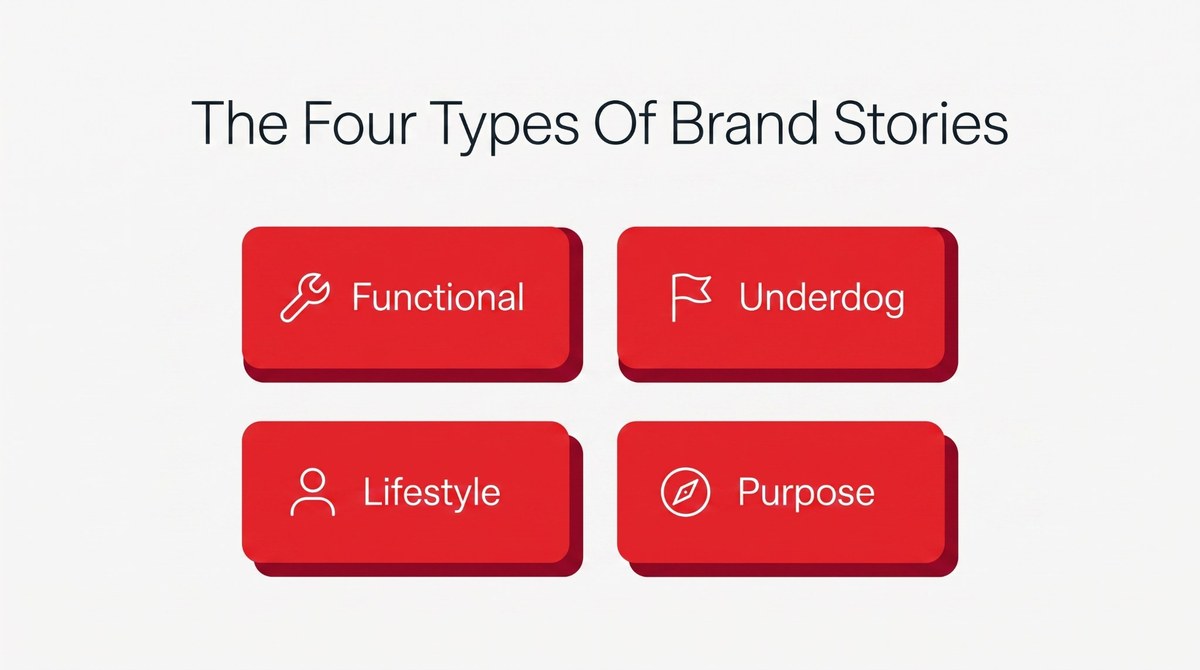
Before any of the clever stuff, you need to know what kind of story you are even telling. Most compelling brand storytelling comes down to four types, and picking the wrong one is why a lot of work goes nowhere. It matters more than it sounds, because 68% of people say brand stories sway their buying decisions.
| Story Type | What It Really Sells | Best Suited To |
|---|---|---|
| Functional | A problem solved | Tools and software |
| Underdog | A fight worth joining | Challengers and new entrants |
| Lifestyle | An identity to step into | Fashion and DTC brands |
| Purpose | A cause to belong to | Mission-driven brands |
1. Functional Stories
This is the down-to-earth one. You take a real problem, then show how your product makes it vanish. The arc is dead simple: life was annoying, then your thing showed up and fixed it. Tools and software lean on this because the value is obvious. The trap is listing features until it reads like a product catalog.
2. Underdog Stories
Here you pick a fight with something bigger than you. The whole story is that scrap, a small challenger going after a giant or a tired old way of doing things. People instinctively back the little guy, so attention comes fast. It only works when the fight is real, and you can name who you are up against.
3. Lifestyle Stories
This one sells who the customer gets to be, not the product itself. The product is a prop in a life they already want, and the story lets them see themselves there. Plenty of direct-to-consumer names run on this, which is why DTC storefronts read like magazines. Get it right, and people buy to become someone.
4. Purpose Stories
A purpose story puts a cause at the center and makes the brand the way people back it. Buy the product, join the movement. The hard part is that this one is near impossible to fake, since people check that you deliver. Mean it, and you earn fierce customer loyalty. Phone it in, and it turns on you fast.
11 Brand Storytelling Secrets Big Brands Don't Want You To Know
This is the part the big names would rather you not think about too hard, because none of these successful brand storytelling secrets need a fortune. They just need nerve. Each one tackles a different part of the job, so you can use all 11 without any of them stepping on each other.
1. The Customer Is The Hero, Never The Brand
When incorporating storytelling, most brands make themselves the star, and that is exactly why everyone else loses interest. Change it. Hand the starring role to your customer and take the sidekick job, the wise guide who helps them win. The story belongs to the person buying – what they want, and how they change. You are just the one who makes it happen.
And it works. 76% of buyers say they would pick a brand they feel connected to over a rival, and that human connection starts the second someone feels seen.
- Rewrite your homepage so the customer, not your company, is the subject.
- Open customer stories with the client's pain points, not your service description.
- Cut the sentences that start with we and point them back at you.
- Rework the whole homepage around the shopper and show their real before and after.
2. The Product Barely Appears In The Story
It is the opposite of traditional advertising, where the product usually leads. And founders hate this one because they love their product. But the item was never the story. The change it creates is. So the big names spend almost the whole time on the person and the emotional connection, then let the product show up at the end as the reason it all worked. Open with features, and the emotional response dies.
- Delay naming the product until the emotional point of the story arrives.
- Spend most of your ad copy on the customer's situation, not the specs.
- Use video storytelling to show the product actually doing its job, not listing what it includes.
- Let content carry the selling and keep the spec sheets on product pages.
3. Every Story Is Built Around One Enemy
A story with nothing to push against is just a press release. So the big names pick one enemy and aim everything at it. Maybe a lazy industry habit. Maybe the boring old way things have always been done. Name it out loud, and you give people something to fight beside you. And shared enemies bond faster than shared taste.
- Name the single enemy your brand exists to defeat in one sentence.
- Frame rival products as symptoms of that bigger enemy, not the enemy itself.
- Repeat the same enemy across marketing campaigns so your target audience learns the fight.
- Make sure the enemy is real and specific, never a vague strawman.
The tricky bit is finding an enemy big enough to care about but real enough to believe. Loads of brands reach for one, then lose their nerve and soften it, so they swing at fog. The sharpest examples come from categories where a habit is so normal nobody questions it, until a brand casts that habit as the bad guy.
There is a clean example hiding in, of all places, the bathroom-fixtures aisle. This high-end Swash 1400 bidet seat by Brondell is not really selling you a seat itself. It is making a case against dry toilet paper, the thing basically everyone grew up doing and never once thought about.
And every feature adds to that one argument. A warm-water wash does the job paper does badly. A warm-air dryer means you skip paper altogether, and a self-cleaning stainless nozzle covers the hygiene paper simply cannot. The seat is the happy ending, but the real enemy is that unquestioned old routine.
Steal the approach. Look for the thing your whole category does on autopilot and never defends, then make ending it your reason for existing. Once your enemy is something people repeat every single day, you barely have to write the story. Every feature becomes another jab at the same target. And that is what turns a product pitch into a compelling narrative.
4. One Brand Value Anchors The Whole Story
Shaky brands try to mean 10 things at once and end up meaning nothing. The confident ones pick one value and let it call every shot. That is what makes a brand easy to hold in your head. People remember one thing about you anyway, and one thing said over and over is basically a reputation.
- Write down the one value you refuse to compromise, then delete the rest.
- Test every new campaign against that single value before it ever ships.
- Turn down otherwise good ideas whenever they dilute your brand’s core value.
- Make the company’s value visible on the pages where people decide to buy.
Choosing the value is the easy part. Actually proving it is where most brands bail. A value only holds up the story if people can watch you enforce it, not just read it in the brand’s mission statement nobody trusts. That is toughest in competitive categories, where every competitor swears they are the highest quality and shoppers stopped listening years ago.
The supplement shelf is a great place to see this happen, because trust there is basically zero. But some brands do things differently. Let’s take Nootropics Depot, which pins everything to one value: proof you can verify, then does not leave it as a nice sentence.
Instead of promising you will feel amazing, the listings just show their work. Certificates of analysis and third-party lab results turn up next to each product, testing badges included. Even the copy focuses on exact compound percentages instead of adjectives, so the value reads as evidence rather than a pep talk.
Do the same with whatever your brand stands for. Say it once, then park the proof right where people hesitate – next to the buy button. Customer testimonials can reinforce that proof when they back up the same value. A value a customer can check for themselves beats one you merely announce, and it matters most in categories where brand identity is the whole game.
5. They Commit To One Story For A Decade
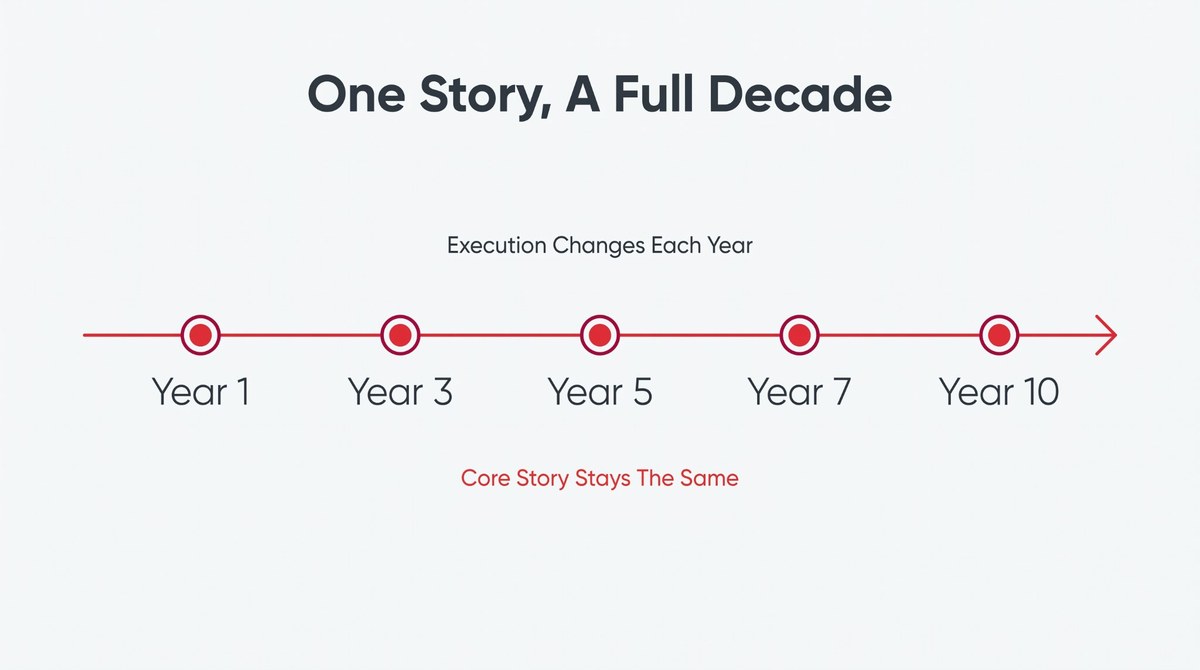
Marketers get sick of their own story years before anyone outside has even noticed it. The big names know this and refuse to chase shiny new directions. They run the same core brand narrative for a decade, swapping the execution but never the bones. Customers end up following the brand's journey instead of relearning who you are every year.
And it compounds because a compelling story sinks in through the repetition most teams quit way too soon. A long-term story is a marketing strategy, not just a creative choice.
- Define the one story spine that will not change for 10 years.
- Refresh the creative each year, but keep the core message completely identical.
- Resist any rebrand driven by internal boredom rather than real market change.
- Brief every new hire and agency on the story before anything else.
6. Employees Hear The Story Before Customers Do
Employees create stories every day through the way they serve customers. A brand story that only exists inside the marketing team is dead on arrival. The people answering the phone and taping up boxes make it real or blow it apart without meaning to. So the big names sell it inward first. By the time a customer hears it, everyone inside already believes it and acts on it.
- Teach the brand story during onboarding, before any software or process training.
- Give every team a plain-language version of the story they personally own.
- Reward employees who embody the story, not only those hitting their targets.
- Gather internal authentic stories that prove the brand’s message. Then share success stories across the company.
Telling it inward sounds easy until you are past a few dozen people. Suddenly the story needs somewhere everyone can find it, or it splits into a different version on every team. Most companies already have a hub on SharePoint, but an empty one nobody keeps up does nothing, and a good build usually waits on developers.
SharePoint does include built-in templates, but the selection is fairly limited, and they are designed as starting points rather than complete intranet experiences.
That is exactly the gap ready-made SharePoint site templates fill. A software like ShortPoint hands a non-technical comms person prebuilt intranet pages for onboarding and internal news, and they can brand them and drop in the content the same afternoon.
The specific tool barely matters. What matters is that the story gets one obvious home inside the company, kept fresh, where every team communicates the same message. A page holding the origin story and the exact words everyone should use keeps a growing team singing from one sheet.
Sort the inside out, and the outside mostly looks after itself, because the people telling the story day to day genuinely know it. Skip that step, and you get the classic split, marketing saying one thing and the front desk saying another.
7. Specific Details Do The Convincing
Fuzzy language is the tell of a weak brand. Words like premium and innovative slide right past people, because there is no picture attached. Specifics do the opposite. One exact number or a named material makes it believable, since made-up things stay vague while real things have edges. Detail is you proving you are not making it up.
- Replace every vague adjective in your story with a concrete number or fact.
- Name the exact materials and the real places instead of generic categories.
- Add one surprising but verifiable detail that most of your competitors leave out.
- Cut any sentence that could describe every other brand in your category.
The problem is that most teams mix up detail with description. They add more adjectives and call it specific, when real specificity means the granular, slightly nerdy knowledge an actual expert has. The fastest way to recalibrate is to go read how genuine experts write about something narrow, where every claim is exact enough that you could fact-check it.
Expert reference writing is a brilliant benchmark for this. Look at the way this serious culinary resource about wahoo (ono) writes up a single fish. It never once calls the fish nice. It gives you the scientific name and the exact number of blue bars running down the body.
Then it keeps going: the white flesh that stays white after cooking, the roughly ten-day shelf life. Every claim is something you could check. That is why you trust the page in about two seconds, and it is exactly what is missing when brand copy reaches for premium and calls it a day.
Treat your own story the same way. Describe your product or your brand's history with that kind of precision, and belief just shows up – no persuasion required. Detail is not a garnish. It is the evidence, and evidence is the difference between a story people nod along to and one they actually buy. And use the same precision when telling your company's history.
8. They Leave Gaps For The Audience To Fill
Explaining everything is how you kill a story. Spell out the meaning and hand over the moral, and nothing is left to do, so none of it engages customers. Leaving room for the audience to connect is a powerful tool when people already know the basics. The big names leave gaps on purpose, a question hanging or an ending you finish, because your brain clings to whatever it completes itself.
- End some campaigns on an open question instead of a tidy, neat resolution.
- Trust the audience to infer the meaning without any closing explainer line.
- Leave visual and narrative space for people to project themselves into it.
- Cut the final sentence whenever it over-explains what you already showed the reader.
9. They Reuse The Same Few Cues Everywhere
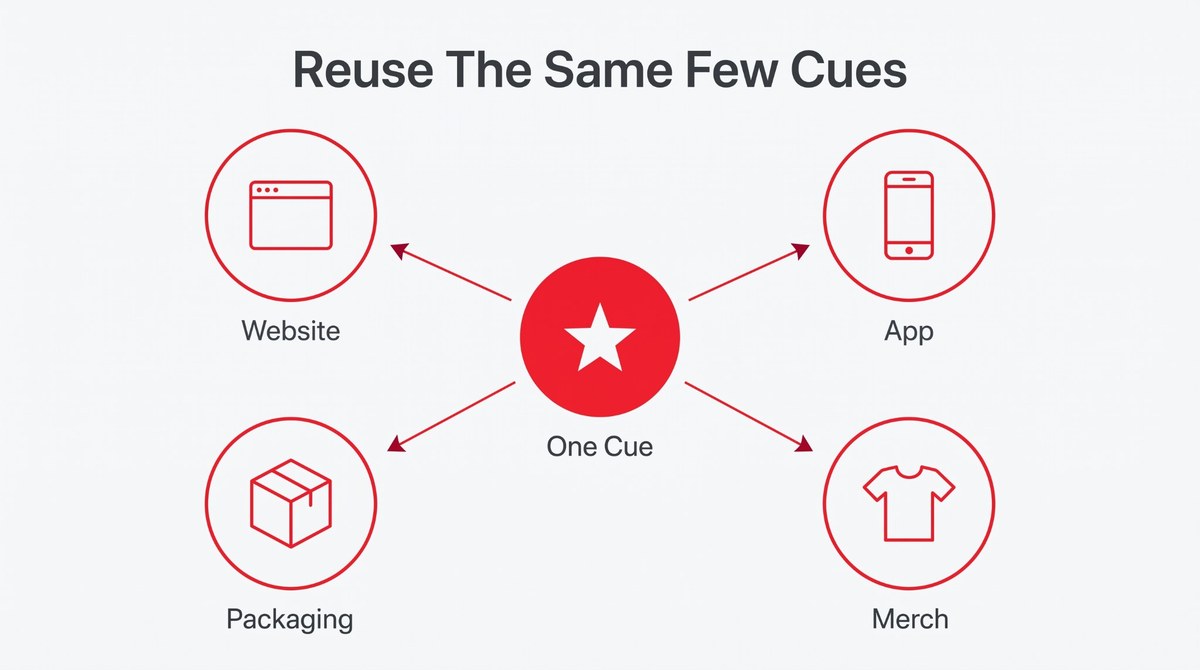
Recognition does not come from variety. It comes from repetition, which is what a deliberate brand strategy is for. The big names settle on a small set of cues, a color and one symbol, then hammer them across every marketing channel until the cue alone says the brand. Everyone else reinvents their look yearly and wonders why nobody remembers them. Repetition looks dull inside and reassuring outside.
The numbers here are almost funny. 95% of companies have brand guidelines, and only 25% actually enforce them, which is why so much identity work never pays off.
- Pick three brand cues you will repeat everywhere, then drop all the rest.
- Use the exact same color and logo mark across every single customer touchpoint.
- Resist a redesign until your current cues are genuinely everywhere and recognized.
- Extend those cues onto physical items too, not only your website, ads, and social media platforms.
Screens are where most brands quit. The color and logo turn up on the site and the app, then nowhere else, so the cue only reaches people who are already staring at you.
The ones you actually remember push those same cues into the real world, onto things people hold and wear when there is no screen in sight. The same principle applies to visual storytelling, where repeated cues become instantly recognizable.
Branded merch is the obvious example, and most of it is instantly forgettable, a logo stamped on a cheap pen. The stuff that works treats the object as one more place for the exact same cues. Apparel is a good shout, because people genuinely wear it, so your color and mark walk around town on their own.
You can see how deep the customizing goes with something like logo-knit performance socks, where a brand sets up to seven colors and prints its mark on both sides of the leg. That is not a throwaway freebie. It is your color and logo, repeated on something worn for hours in front of other people.
Same idea, straight back to the point. Take your two or three cues and get them onto things that leave the screen, as packaging or kit people hold onto. Every physical repeat teaches the same link again, and recognition is only ever repetition added up.
10. The Story Is Built To Be Retold In One Line
A memorable one-line story is a marketing tactic that scales surprisingly well, and it gives every piece of content you publish the same spine. If your story needs a paragraph to connect, it will never travel. The big names crush it to one line a customer can repeat at dinner without thinking. That line is the real deliverable, because word of mouth only carries what is short enough to remember. If people cannot say it back, your reach stops at your ad spend.
- Write your entire brand story as one sentence a stranger could repeat.
- Test it by asking real customers to describe you, then compare their answers.
- Strip out fancy language so the one line survives being repeated out loud casually.
- Put that one line everywhere until customers start saying it back to you.
11. They Measure Memory, Not Clicks
Most brands track whatever moves this week and ignore what pays off for years. Clicks are easy to tally, but a story works by lodging in memory. And memory does not show up on Monday's dashboard.
86% of people spend at least 6 hours a day on the internet, so your audience is exposed to thousands of messages every week. Standing out is no longer about getting one more click, though the story still has to turn attention into action. People remember brands first on an emotional level. So the big names watch whether people remember them and feel something, because that powerful marketing tool makes every future campaign cheaper.
- Run brand recall and recognition surveys, not only click-through and conversion reports.
- Track unaided brand awareness over time as your primary storytelling health metric.
- Ask whether people feel the intended emotion, not simply whether they recall facts.
- Judge each campaign on memory months later, not on clicks the first week.
Conclusion
If anything ties all 11 together, it is restraint. Small brands keep adding. Big ones keep taking away. They tell one story, repeat a few cues, and trust you to fill in the rest. The hard part of brand storytelling was never the ideas. It is the nerve to say less, for far longer than anyone finds comfortable.
That is the bit we spend our days on at eSEOspace. We build the site and the search presence that carry a story from Google to ChatGPT, so everything you just read reaches real people. After 1,284 launches and 150 five-star reviews, we know how to make a brand findable and memorable. Talk to us now.
Put this into action with eSEOspace
We help businesses grow with website development that actually performs. Explore the services behind this guide:
Get a FREE Audit
We'll perform a comprehensive SEO, AEO, GEO & CRO audit of your website — completely free — and show you exactly how to outrank your competitors.
Don't have a site yet? Get in touch →
Get a FREE GEO/AEO/SEO Audit
We'll analyze your site's SEO, GEO, AEO & CRO — completely free — and show you exactly how to get found across Google and AI answers.
Don't have a site yet? Get in touch →
Great — your audit is on the way!
We'll send your free SEO/GEO/AEO/CRO audit within the next few hours. Where should we send it?
You're all set! ✓
Your free audit is being prepared — check your inbox in the next few hours. Talk soon!








