



Choosing Spec Software for a Ten-Style Collection: The Features That Earn Their Keep
Choosing Spec Software for a Ten-Style Collection: The Features That Earn Their Keep
A ten-style collection sits in an awkward middle ground. It is too big to manage comfortably in spreadsheets and too small to justify enterprise software built for brands with hundreds of SKUs. Choosing the best tech pack generator at this size comes down to one question: which features save real hours across ten styles, and which ones only look good on a pricing page?
What a Ten-Style Collection Asks of Spec Software
The workload grows faster than the style count suggests. Ten styles offered in five sizes means 50 sets of graded measurements. Add three colorways per style and the bill of materials carries 30 color combinations, each with its own fabric, thread, and trim references.
Revisions multiply everything again. With two or three sample rounds per style, a single season can produce 20 to 30 versions of tech packs that all need to stay consistent. That volume is where software either pays for itself or becomes another tab to manage.
The Features That Earn Their Keep
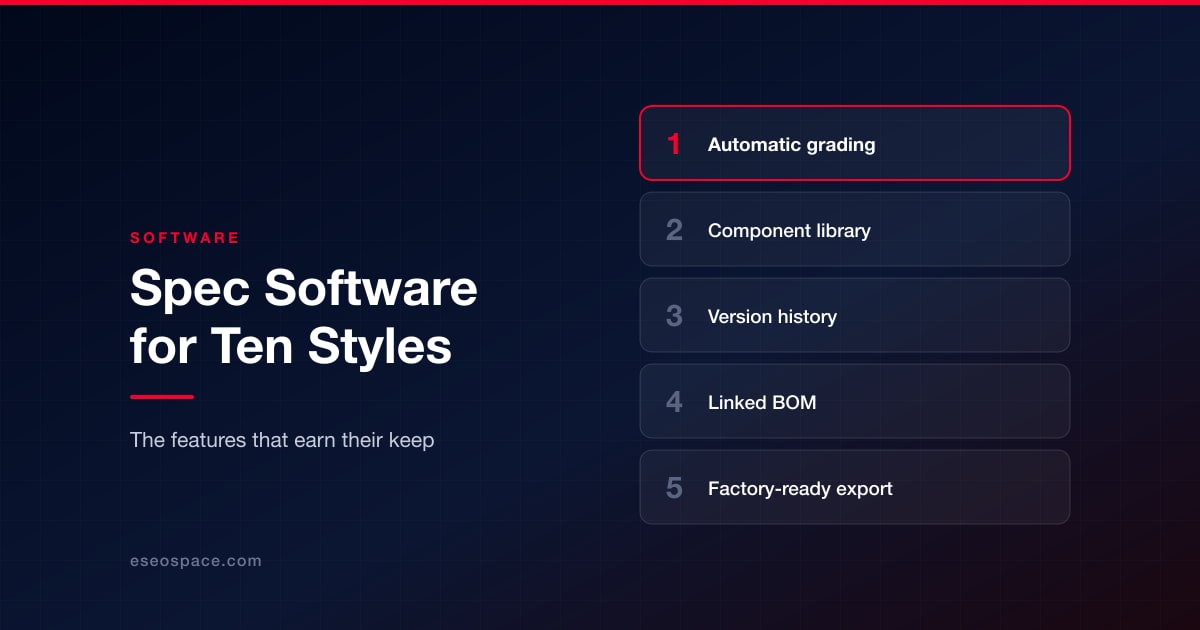
At ten styles, the features worth paying for are the ones that remove repetitive work and prevent version errors.
| Feature | Why It Earns Its Keep at Ten Styles |
|---|---|
| Automatic grading | Updates every size when one base measurement changes |
| Reusable component library | Stores labels, trims, and thread once for use in every style |
| Sketch-to-flat generation | Turns rough sketches into clean technical drawings quickly |
| Version history | Shows what changed, when, and in which file |
| Linked bill of materials | Keeps colorways, fabrics, and trims consistent across styles |
| Factory-ready export | Produces a clean PDF or shareable link without reformatting |
The reusable library deserves special attention. A brand using the same main label, care label, hangtag, and thread across ten styles enters those details once instead of ten times, and a supplier change updates everywhere at once. Small features like this save more time over a season than flashier tools, which is the practical case for AI-enhanced software in an e-commerce business.
Matching Price to a Ten-Style Workload
Spec software is typically priced per user seat, per document, or as a flat monthly subscription. For a founder or a two-person team producing ten styles a season, per seat pricing often costs more than it needs to, while per document or flat plans tend to match the workload better.
Published comparisons of the best tech pack generator options help build a shortlist quickly. The final decision should still come from running two or three real styles through each tool and pricing the plan against a full season, not a single test garment.
Features That Can Wait Until the Collection Grows
Some features matter for large teams and add little for a small one. Multi-step approval workflows, supplier portals, ERP integrations, and line planning tools for hundreds of SKUs all carry real value, but mostly for brands with dedicated product development teams. At that scale some brands move past off-the-shelf tools altogether and commission custom software built around their own workflow.
Paying for them at ten styles usually means a higher subscription and a steeper learning curve for capabilities that sit unused. A simple rule helps here: when a feature solves a problem the team does not have yet, it can wait. These features belong on the shortlist again once the collection, the team, or the factory network grows.
Frequently Asked Questions
Is a spreadsheet enough for ten styles?
Spreadsheets can work, but grading, colorways, and revisions across ten styles create many chances for inconsistent files. Dedicated software reduces that risk by linking related data together.
Which single feature matters most at ten styles?
Automatic grading usually saves the most time, because one change to a base size flows through every size without manual recalculation.
When should a brand move to full PLM software?
A move to full PLM makes sense once the brand has a dedicated product team, multiple factories, and a line plan large enough to need approval workflows.
Making the Final Choice
The right spec software for a ten-style collection removes repetition, protects consistency, and fits the budget of a small team. Grading, a reusable component library, version history, and clean exports earn their keep. Enterprise extras can wait. Keeping that filter in mind makes it far easier to pick the best tech pack generator for the season ahead. Brands ready to test those features can build their collection in Genpire, run their ten styles through grading and revisions, and choose with real results in hand rather than a feature list.
The hours a small team gets back are best spent on the side of the business customers see. For brands selling direct, that means the online store itself, and our roundup of the best Shopify developers for fashion brands is a useful place to start.
Put this into action with eSEOspace
We help businesses grow with website development that actually performs. Explore the services behind this guide:
Get a FREE Audit
We'll perform a comprehensive SEO, AEO, GEO & CRO audit of your website — completely free — and show you exactly how to outrank your competitors.
Don't have a site yet? Get in touch →
Get a FREE GEO/AEO/SEO Audit
We'll analyze your site's SEO, GEO, AEO & CRO — completely free — and show you exactly how to get found across Google and AI answers.
Don't have a site yet? Get in touch →
Great — your audit is on the way!
We'll send your free SEO/GEO/AEO/CRO audit within the next few hours. Where should we send it?
You're all set! ✓
Your free audit is being prepared — check your inbox in the next few hours. Talk soon!








