9 Best Link Building Agencies for AI Visibility in 2027
9 Best Link Building Agencies for AI Visibility in 2027
Most link building comparisons rank agencies by one thing: how many links they deliver. And that made sense when Google was the only destination that mattered.
But here's the deal: it isn't anymore.
An Ahrefs study of 75,000 brands found that branded web mentions correlate with appearing in AI Overviews at 0.664. That's more than twice the correlation of referring domain count (0.295).
Branded anchors came second at 0.527. Branded search volume came third at 0.392, and Domain Rating landed at 0.326.
So what does that ordering tell you? Where your brand gets mentioned now matters more than how many domains point at you.
That changes what a good link building agency actually does. And it's exactly the lens this comparison uses.
One quick note before we dive in: this list is written for brands and in-house teams buying placements for themselves.
If you're an agency reselling to clients, your priorities are different, so weigh this comparison accordingly.
Let's get started.
How These Agencies Were Compared
I used four criteria and applied them to every agency on this list.
1. Pricing transparency. Are rates published, or hidden behind a form? Published pricing lets you model a budget before a sales call, and in this market, that's the exception rather than the rule.
2. Qualification criteria. What does the provider guarantee about the sites it places on? Domain Rating alone is easy to manipulate, but traffic minimums alongside DR are much harder to fake.
3. Commercial model. Retainer, per-link, or pay-per-result. Each one suits a different buying situation and cash position.
4. Control. Do you choose anchors, landing pages, and domains? Or do you hand the campaign over entirely?
Those four criteria are specific to buying placements, though the underlying habit is the same one that applies to hiring an SEO expert, where what you ask before signing determines what you actually get.
How Do the Top Link Building Agencies Compare?
Here's a quick side-by-side before we get into the details:
| Agency | Model | Pricing as published by the vendor | Best for |
|---|---|---|---|
| Respona | Pay-per-placement | $100 to $500 per placement across five tiers | Brands wanting price and site criteria published together |
| uSERP | Retainer, per-link rates published | DR 60+ links $600 to $900 each, DR 20 to 59 links $250 to $375 | Funded SaaS prioritising high-authority placements |
| Siege Media | Content retainer | Not published, quote only | Brands treating content as the link engine |
| Editorial.Link | Per-link packages | From $1,750 for five editorial backlinks | Startups wanting editorial quality without a retainer |
| Outreach Monks | Per-placement | Not published, quote only | Tight budgets needing real outreach |
| LinkBuilder.io | Managed monthly plans | Reported from $5,999 per month for 16+ links | Teams needing predictable monthly volume |
| FATJOE | Self-serve catalogue | From around $82 per placement | Volume buyers comfortable self-serving |
| The HOTH | Productized packages | From $175 per link | Small businesses wanting simple ordering |
| Page One Power | Custom manual campaigns | Not published, quote only | Brands wanting a link building specialist |
1. Respona
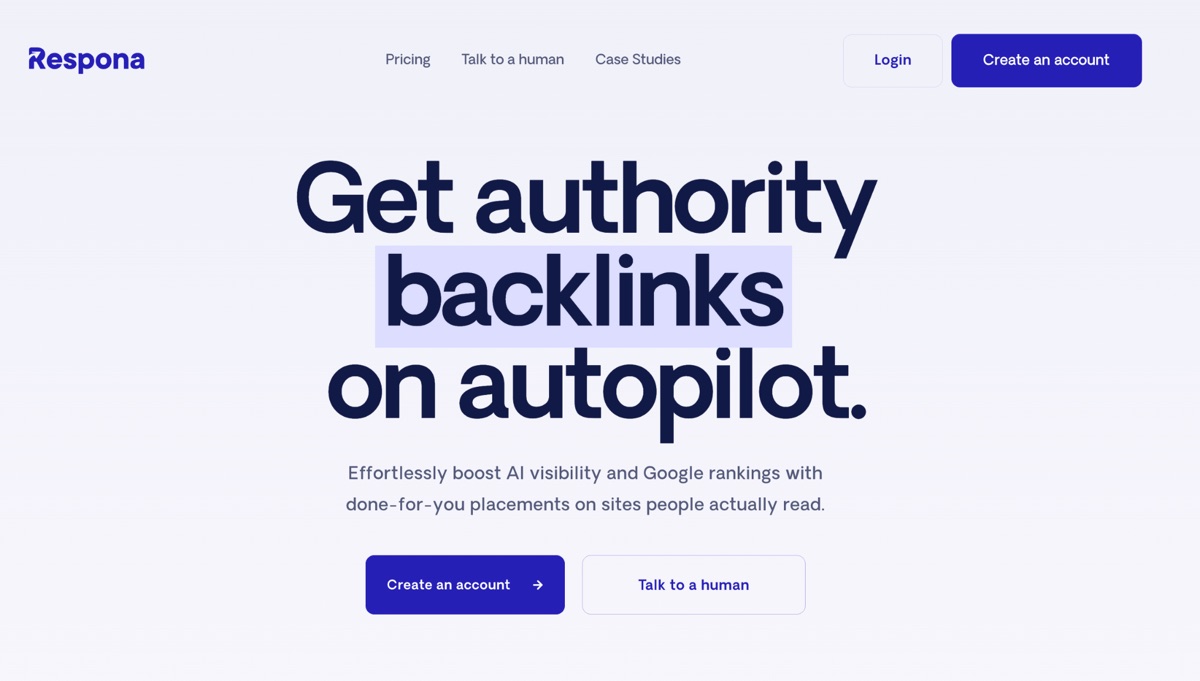
Respona sells placements, not campaign hours. It's also the only agency on this list that publishes price and site qualification criteria in the same table.
There are five tiers, and each one pairs a price with the exact site standard it buys:
| Tier | Price per placement | Publisher DR | Publisher monthly traffic |
|---|---|---|---|
| Starter | $100 | 20+ | 100 to 5,000 |
| Standard | $160 | 30+ | 100 to 10,000 |
| Authority | $240 | 40+ | 500 to 20,000 |
| Power | $400 | 50+ | 1,000 to 30,000 |
| Elite | $500 | 60+ | 1,000 to 100,000 |
Why does that traffic band matter so much? Because Domain Rating can be inflated, while monthly organic traffic is a lot harder to fake. (And most providers publish neither.)
The selection process is published step by step too. Your pages get scraped for their core keywords and themes, publishers ranking for those terms are identified, and the target term is picked for the lowest competition with the highest cost per click and volume.
Then top-ranking pages are studied to figure out which content type ranks best before a single word is written. Placements go on real sites with genuine traffic, commercially valuable rankings and topical relevance. No private blog networks.
Standard turnaround is 28 days, with a 14-day express option for a fee. Domain pre-approval is available for an extra fee if you want to vet sites first, volume discounts start from $1,500 a month, and placements are guaranteed live within the agreed timeframe.
Worth knowing: pay-per-placement suits ongoing programmes better than a one-off campaign burst. If you want a strategist on retainer, you'll find the model deliberately transactional.
Best for: brands that want to model cost per placement precisely and know the site standard in advance.
2. uSERP
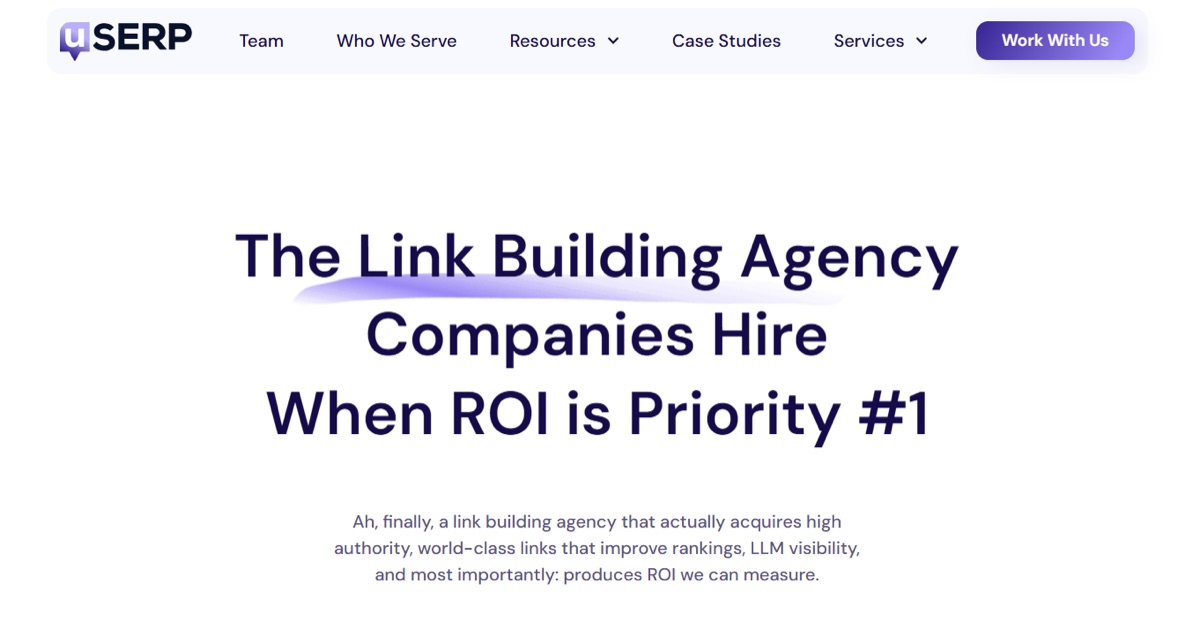
uSERP was founded in 2019 and operates remote-first from the US. It focuses on high-authority editorial placements for SaaS and B2B brands.
Its pricing page publishes per-link rates instead of package totals. DR 60+ high-authority links run $600 to $900 each, and DR 20 to 59 niche authority links run $250 to $375.
Engagements start with a three-month commitment paid quarterly, then roll month-to-month with a 30-day exit.
Its own site says typical programmes run $5,000 to $25,000 per month, and lost links are replaced within six months at equal or better metrics.
Worth knowing: this is the premium end of the market. If you need volume rather than authority, the cost per link will feel high, and real spend usually lands well above the entry point.
Best for: funded SaaS companies prioritising a small number of high-authority placements.
Worth knowing: quote-only pricing and a multi-month commitment make this one hard to trial.
Best for: established brands wanting a managed partner rather than a marketplace.
3. Siege Media
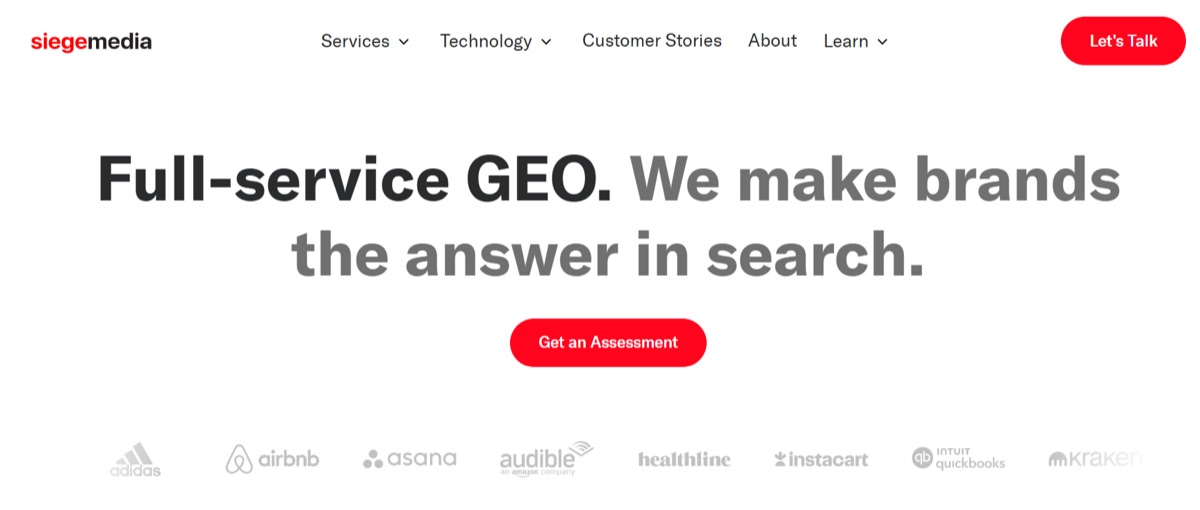
Siege Media was founded in 2012 and has offices in Austin and San Diego. It treats links as a by-product of content, not a product to buy.
The model is simple: build assets good enough that publications reference them, then amplify them through digital PR. Clients describe content shifting from a cost centre to their largest link source, with pieces earning references long after they're published.
Pricing isn't published. Third-party comparisons put content engagements in the mid-four figures monthly (with digital PR higher again), but the vendor quotes per programme, and sectors covered include SaaS, fintech, ecommerce and health.
The big difference from everyone else here? You're not buying placements at all. You're buying assets, and the links are what happens when those assets are worth citing.
Worth knowing: the compounding effect is real, but it's slow. This is a twelve-month strategy, not a quarter-one fix.
Best for: funded brands willing to invest in assets that keep earning links.
4. Editorial.Link
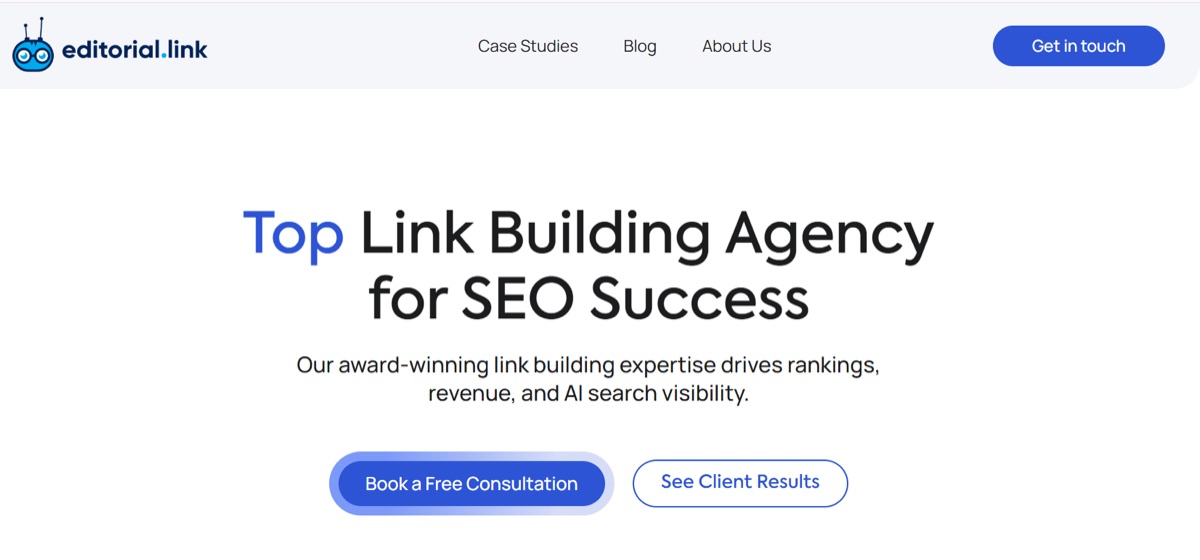
Editorial.Link publishes its package pricing openly, starting at $1,750 for five editorial backlinks per month. There's also a bespoke managed option priced on request.
Packages are flexible, too. According to the company, you can swap one or two editorial links for guest posts within the same price.
The focus is relationship-based outreach and editorial relevance rather than cheap volume. You get do-follow links and pre-approval of placements before they go live.
That pre-approval step is the detail to pay attention to. Seeing the target publication before your placement goes live removes the most common complaint about per-link buying: finding out afterwards where your brand ended up.
Worth knowing: the offering is narrower than a full-service agency. You're buying links, not strategy.
Best for: SaaS, fintech and B2B startups wanting editorial quality without an enterprise commitment.
5. Outreach Monks
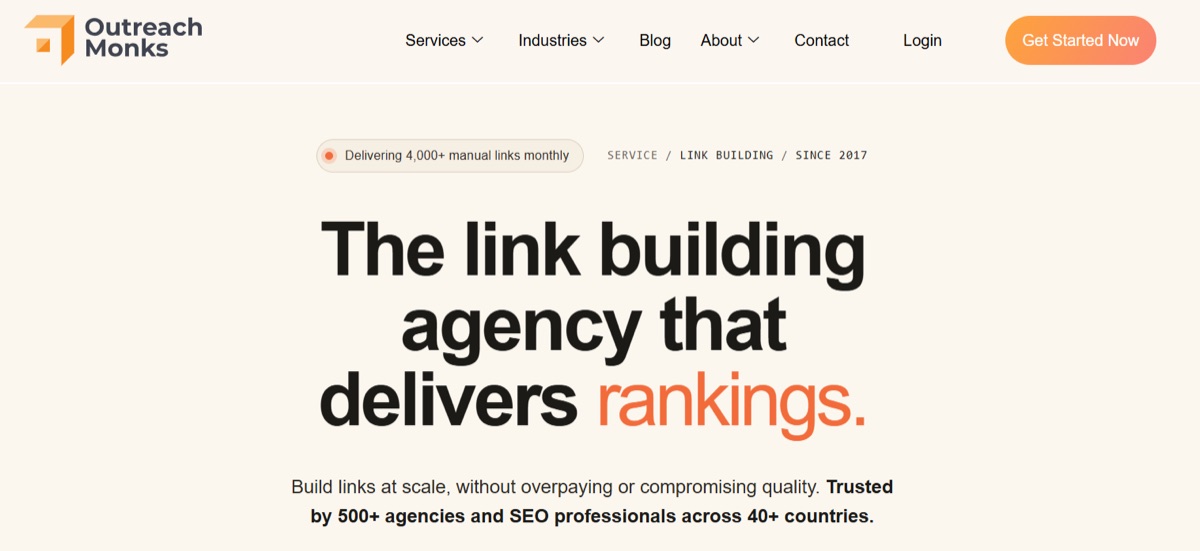
Outreach Monks is the most budget-friendly option on this list that still does genuine manual outreach.
Guest posts are sold per placement with content included, and turnaround is measured in weeks rather than months.
Third-party comparisons report entry pricing in the low hundreds per placement plus a six-month replacement assurance, though the company scopes quotes per campaign instead of publishing a rate card.
Pro tip: give extra weight to a replacement guarantee wherever you see one. It signals confidence that placements will stay live, and not every provider at the budget end offers it.
Worth knowing: at lower price points, site quality varies more than at premium tiers. So review the target list before you commit.
Best for: startups and small businesses that need real outreach on a tight budget.
6. LinkBuilder.io
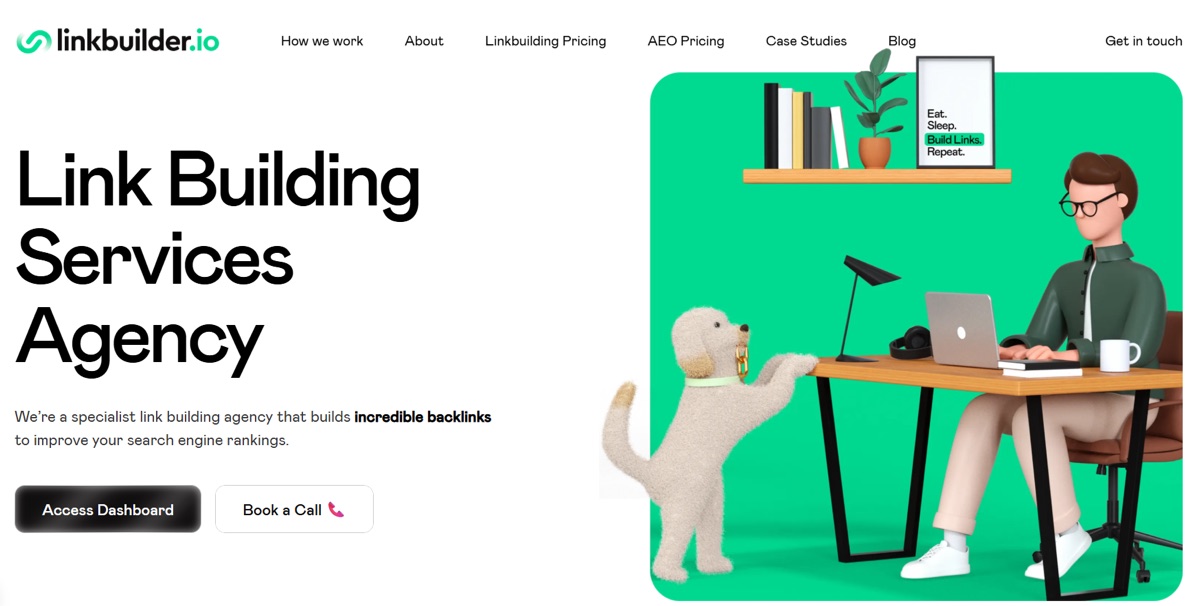
LinkBuilder.io sells one thing above all: predictability. Plans map defined link counts to managed campaigns, so you know exactly what's arriving each month.
If you report to a board or plan content calendars around expected authority gains, that certainty is worth more than flexibility. Campaigns are managed rather than self-serve, and strategy is included instead of sold separately.
Independent comparisons report plans from around $5,999 per month for sixteen or more links on DR 50 to 90 sites, rising to roughly $9,999 for a higher volume tier. The company doesn't publish rates on its own site, so confirm current pricing directly.
Worth knowing: fixed monthly counts work well for steady programmes but adapt poorly to campaign spikes.
Best for: in-house teams that need a reliable monthly number rather than a variable one.
7. FATJOE
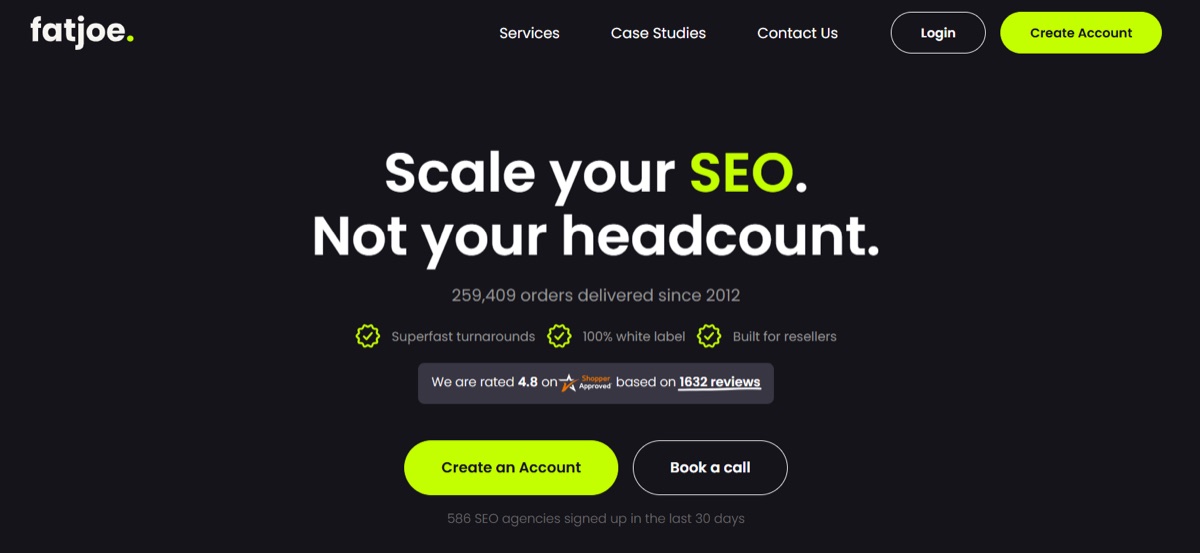
FATJOE was founded in 2012 in Birmingham. Today it's one of the largest white-label providers in the market, powering fulfilment for thousands of agencies.
The model is a self-serve catalogue. Blogger outreach, niche edits, and digital PR packages are priced per unit and ordered without a sales conversation, starting from around $82 per placement, tiered upward by Domain Rating, with a turnaround of 14 days.
But here's the catch: read the entry tier, not the headline price. The cheapest placements sit on sites with as little as zero to 1,000 monthly visitors, which is exactly why they cost what they do.
It's a useful reminder that a DR threshold without a traffic floor tells you very little about what you're buying. Still, operational simplicity is the big strength here, and it's why FATJOE underpins fulfilment for so much of the agency market.
Worth knowing: it's a catalogue, not a strategy. Nobody is deciding which links your site actually needs.
Best for: buyers who already know what they want and value ordering speed.
8. The HOTH
The HOTH turns link building into fixed packages with published pricing and a familiar ordering flow.
The appeal is accessibility. A small business owner with zero SEO background can buy a defined package and understand exactly what they're getting (which isn't true of most agencies on this list).
Reporting is white-label ready, so it's popular with resellers as well as direct buyers. And because link building sits alongside content, local SEO and small business SEO packages in its catalogue, you can consolidate vendors.
Products are priced separately by type and authority tier. Link Outreach starts at $175 per link, while Link Insertions into existing articles start at $200.
Worth knowing: per link, it costs more than FATJOE at the same authority tier. And the Link Outreach tiers accept either DA or DR rather than guaranteeing DR specifically, which is a looser standard than it first looks.
Best for: small businesses and resellers wanting simplicity over specificity.
9. Page One Power
Page One Power describes a relevancy-first approach and works with hundreds of clients, from small businesses to world-class brands, across every niche. Manual link building is the stated specialism rather than one product among many.
That focus is the whole pitch. Where most agencies here treat links as one line in a wider service menu, this is the service, which shapes how campaigns get scoped and who they suit.
Pricing isn't published on the site, so budgeting requires a sales conversation.
Worth knowing: the absence of published rates makes this hard to compare against catalogue providers. And a relevancy-first model means campaigns are scoped to your niche rather than ordered from a list.
Best for: brands wanting a specialist link building partner rather than a full-service agency.
How Do You Choose a Link Building Agency?
Here's a simple four-step process you can use.
Step 1: Start with the commercial model, not the agency. Pay-per-placement suits variable volume and precise forecasting, retainers suit ongoing strategic partnerships, and per-link catalogues suit buyers who already know their targets.
Step 2: Interrogate the site standard. Ask for the qualification criteria in writing, and be specific: what's the minimum DR, and what's the minimum monthly organic traffic? If a provider only answers the first question, that tells you something.
Step 3: Check what you control. Anchor text, landing pages, and domain approval should be yours, unless you've deliberately chosen to delegate them. And remember that placements amplify what's already there, so weak technical SEO will limit what any of these agencies can achieve for you.
Step 4: Think about where the mention lands. Given how strongly branded mentions correlate with AI answer presence, the publication carrying your name matters as much as the anchor pointing at your page.
The same logic drives entity connections across your own site, where consistent naming and context help systems understand what your brand actually is.
Final Thoughts
The eight agencies on this list aren't interchangeable. Some sell transparency and precise pricing, some sell managed strategy, and some sell catalogue simplicity.
So the most useful question isn't which agency is best overall. It's which commercial model matches how your organisation actually buys.
A brand that needs to forecast cost per placement to the dollar and a brand that wants a strategist on retainer aren't shopping in the same market. Even though every list puts them on the same page.
Frequently Asked Questions
Which link building agencies publish their pricing?
Only a minority do. The top pick on this list publishes a per-placement rate for each of its five tiers, alongside the Domain Rating and monthly traffic band that price buys.
Editorial.Link publishes package pricing from $1,750 for five backlinks, uSERP publishes per-link rates by authority tier, and FATJOE and The HOTH both run published catalogues.
Siege Media and Outreach Monks quote per campaign, so you can't model a budget without a sales conversation first.
Are cheap links worth buying?
Links priced under about $50 usually come from private blog networks or sites that exist only to sell links. Both carry real risk.
The best test is simple: does the site have genuine organic traffic and rankings of its own? That's why traffic minimums matter more than Domain Rating alone.
How long before link building shows results?
Most practitioners say it takes one to three months before a placement measurably affects rankings.
Campaign-level movement is typically visible between three and six months, while content-led approaches take longer but compound further.
How many links does a brand actually need?
There's no universal number. It depends on your competition, your current authority, and the pages you're targeting.
But in general, a small number of relevant placements on sites your buyers actually read will outperform a bigger pile of generic links.
Does link building still matter for AI search?
Yes, but the evidence suggests mentions matter even more than links. Branded web mentions show the strongest correlation with appearing in AI answers, ahead of branded anchors, search volume, Domain Rating, and referring domain count.
The good news? Placements that name your brand in relevant editorial context do both jobs at once.
Put this into action with eSEOspace
We help businesses grow with website design that actually performs. Explore the services behind this guide:
Get a FREE Audit
We'll perform a comprehensive SEO, AEO, GEO & CRO audit of your website — completely free — and show you exactly how to outrank your competitors.
Don't have a site yet? Get in touch →
Get a FREE GEO/AEO/SEO Audit
We'll analyze your site's SEO, GEO, AEO & CRO — completely free — and show you exactly how to get found across Google and AI answers.
Don't have a site yet? Get in touch →
Great — your audit is on the way!
We'll send your free SEO/GEO/AEO/CRO audit within the next few hours. Where should we send it?
You're all set! ✓
Your free audit is being prepared — check your inbox in the next few hours. Talk soon!