



Blog
Key Takeaways
- AI tools like ChatGPT, Perplexity, and Gemini generate conversational answers by pulling from trusted websites, citations, and knowledge graphs rather than blue links.
- Being cited in AI answers boosts your authority, earns user trust, and keeps you ahead of competitors who ignore AI search visibility.
- Use LLMRefs to check whether your domain, brand, or keyword is being cited or mentioned across multiple AI platforms at once.
- Distinguish citations with links, mentions without links, and competitor references to understand where you stand and what to fix.
- Optimize for AI search by strengthening E-E-A-T signals, publishing fact-rich content, adding schema markup, and building authoritative backlinks.
Why AI Search Rankings Matter for Your Website
- You gain increased authority in your niche.
- Users are more likely to trust and visit your site.
- You stay ahead of competitors who aren’t optimizing for AI search.
Step 1: Understand How AI Search Results Work
Get a FREE Audit
We'll perform a comprehensive SEO, AEO, GEO & CRO audit of your website — completely free — and show you exactly how to outrank your competitors.
Don't have a site yet? Get in touch →
LLMs Source From Trusted Content
Mentions vs. Citations
Dynamic Results
Step 2: Use LLMRefs to Check if Your Website is Ranking
How to Use LLMRefs
- Go to LLMRefs.com.
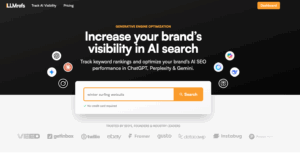
- Enter your domain name, brand, or target keyword.
- Review the results to see whether your website is being cited or mentioned in AI-generated answers.
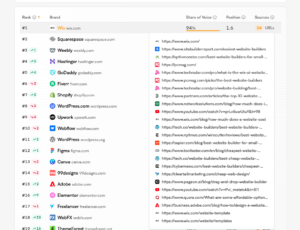
LLMRefs scans results across multiple AI platforms, saving you the time of checking each one individually. Knowing whether your website is cited in AI search is only the first step — the more useful question is which prompts are surfacing your content, and where competitors are being cited instead of you. Tools like AirOps let you track which prompts are triggering citations and where competitors appear instead, continuously monitoring your citation patterns across ChatGPT, Perplexity, and Google AI Overviews at the topic level. Rather than running one-off checks, you get an always-on view of your AI visibility, with gaps and opportunities surfaced automatically — so you can act on them before competitors do.
Step 3: Analyze Your AI Search Performance
Citations With Links
Mentions Without Links
Competitor References
Step 4: Optimize Your Website for AI Search Rankings
Strengthen E-E-A-T Signals
Publish Fact-Rich Content
Add Schema Markup
Build Authoritative Backlinks
Get Cited by Trusted Sources
Step 5: Monitor and Update Regularly
Check AI Rankings Weekly
Track Keyword Mentions
Refresh and Update Content
Common Questions About AI Search Rankings
Does Ranking in AI Search Help With Google SEO?
How Often Should I Check My AI Search Rankings?
What if My Site Isn’t Showing Up in AI Search Yet?
Consider Multiple Monitoring Approaches
Look for Performance Patterns
Stay Ahead With AI Search Optimization
Answer Engine Optimization (AEO)
Generative Engine Optimization (GEO)
Frequently Asked Questions
How can I tell if my website is cited in AI search results?
What is the difference between a mention and a citation in AI search?
How do I optimize my website to be referenced in AI answers?
Does ranking in AI search help with Google SEO?
How often should I check my AI search rankings?
Put this into action with eSEOspace
We help businesses grow with website development that actually performs. Explore the services behind this guide:
Get a FREE GEO/AEO/SEO Audit
We'll analyze your site's SEO, GEO, AEO & CRO — completely free — and show you exactly how to get found across Google and AI answers.
Don't have a site yet? Get in touch →
Great — your audit is on the way!
We'll send your free SEO/GEO/AEO/CRO audit within the next few hours. Where should we send it?
You're all set! ✓
Your free audit is being prepared — check your inbox in the next few hours. Talk soon!


On this page
- Key Takeaways
- Why AI Search Rankings Matter for Your Website
- Step 1: Understand How AI Search Results Work
- Step 2: Use LLMRefs to Check if Your Website is Ranking
- Step 3: Analyze Your AI Search Performance
- Step 4: Optimize Your Website for AI Search Rankings
- Step 5: Monitor and Update Regularly
- Common Questions About AI Search Rankings
- Consider Multiple Monitoring Approaches
- Stay Ahead With AI Search Optimization
- Frequently Asked Questions






