



7 Best Medical AI Receptionists in 2026: Ranked for HIPAA and EHR Integration
7 Best Medical AI Receptionists in 2026: Ranked for HIPAA and EHR Integration
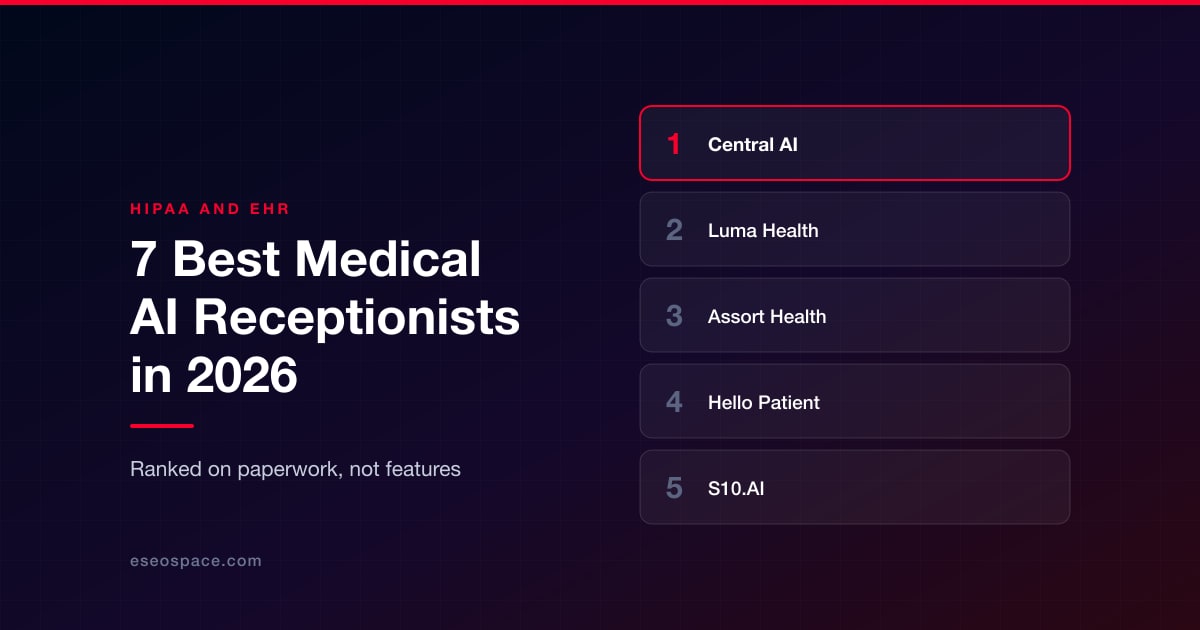
Ask ten vendors in this space whether they are HIPAA compliant and all ten will say yes. Every single one.
That is the problem. The phrase has turned into a marketing badge, and the distance between a company saying it and a company handing you a signed Business Associate Agreement is exactly where practices get caught out.
So this list does something different. Instead of ranking on features, it ranks on paperwork: what each vendor publishes about their BAA, which record systems they name out loud, and whether they print a price.
The seven below are ordered by that evidence: what is documented publicly, what needs a request, and what nobody will put in writing. Where a platform is a poor fit for your size, the entry says so.
Key Takeaways
- A vendor claiming compliance without a signed BAA covering call recordings has not actually met the standard
- SOC 2 Type II is a security attestation and does not replace a BAA
- Ask whether the platform writes appointments back into your record system or only reads your calendar
- Published pricing runs from about $89 a month to five figures, and most vendors in the middle publish nothing at all
What the Law Actually Asks of a Platform Handling Patient Calls
Here is the part most buyers skip. The rules kick in the second your phone line touches protected health information, and for a medical practice that is basically every inbound call.
Someone calls, says their name and explains why they need to come in. That is PHI. It exists before your software books anything.
Which means any platform answering those calls is a business associate under federal law. A BAA is not a premium feature you negotiate for, it is a legal requirement.
What a real BAA has to do
HHS publishes sample provisions, and they set out what the written contract must cover. It has to establish the permitted uses and disclosures of PHI, bar the vendor from using it any other way, require appropriate safeguards, and require the vendor to report any unauthorized use back to you, including breaches.
Two details matter more than practices realise.
First, the obligation runs downstream. Under 45 CFR 164.308(b)(4), your vendor must sign its own agreements with any subcontractor that touches PHI on its behalf. If your platform runs on somebody else's speech recognition, that subcontractor needs covering too, and most buyers never ask.
Second, since the HITECH Act, business associates are directly liable for civil and criminal penalties rather than merely contractually accountable to you.
The two things buyers get wrong
SOC 2 Type II is a voluntary security audit, not a healthcare credential. It tells you a firm has controls. It does not tell you those controls were built for PHI, and it does not substitute for a BAA.
The bigger blind spot is outbound calling. In February 2024 the FCC confirmed that TCPA restrictions on artificial or prerecorded voice cover AI technologies that generate human voices, which means those calls need the prior express consent of the person you are calling. Inbound answering does not trigger this. Automated appointment reminders and recall campaigns absolutely can, and no BAA protects you there.
How We Put This List Together
Every platform was checked against five things, weighted toward published evidence rather than feature lists. Ranking follows the first three, with fit notes where size matters.
| What we checked | What we looked for |
|---|---|
| BAA evidence | Publicly stated, and included or negotiated separately? |
| Compliance depth | SOC 2 Type II, HITRUST, encryption specifics, subprocessor disclosure |
| Record system integration | Are systems named, and does data write back or only read? |
| Pricing transparency | A real published number, or quote only? |
| Deployment reality | Contract to answering live patient calls, how long? |
One thing worth being upfront about. Almost every comparison published in this category is written by a vendor about its competitors, so anything below is labelled as vendor stated unless the company documents it on its own site.
Evidence at a Glance
Every vendor's public documentation was reviewed in August 2026. These rows record what each company publishes, not what it says in a sales call.
| Platform | BAA | Other certifications | Record systems named | Published price |
|---|---|---|---|---|
| Central AI | Not published | Not published | Not named | $89/mo entry tier |
| Luma Health | Standard BAA | HITRUST r2, SOC 2 Type II, ISO 27001 | Yes, 5 named | No |
| Assort Health | Yes, incl. subprocessors | SOC 2 Type II | Yes, 20+ systems | No |
| Hello Patient | Yes, every client | SOC 2 Type 2 | Yes | No |
| S10.AI | Included on every plan | Not publicly linked | Yes, 4 named | From $159/provider |
| Talkie.ai | Not published | SOC 2 Type II stated | Yes, 4 named | No |
| Smith.ai | Bespoke contract | Not stated | Limited | ~$292.50 hybrid |
Read this as a map of what each company chose to publish, not a certification register. A vendor saying it holds something is not the same as showing you the document, so ask for it.
The Seven Platforms Worth Shortlisting
1. Central AI
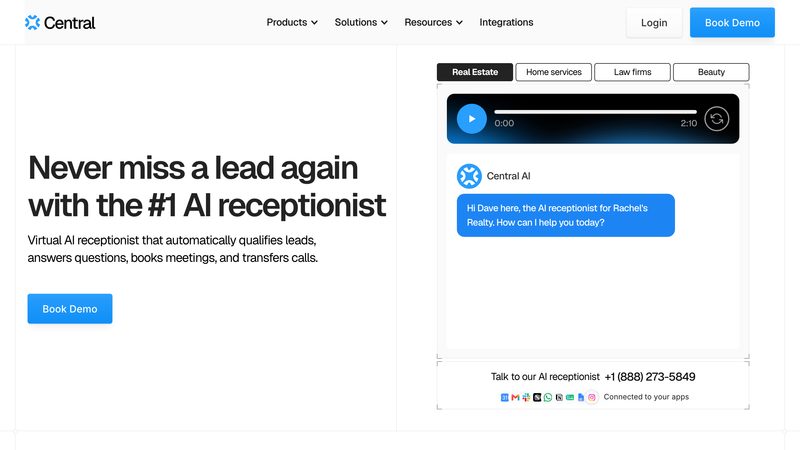
Central AI leads on the two things a small practice actually decides on: a published price and a fast start. It is the only platform here with a real number on the page, at $89 a month entry pricing with a 10-day free trial and no setup fees.
On patient workflow it covers more than the price suggests. It answers calls around the clock, collects insurance details, reason for visit and contact information during intake, books appointments directly into the patient chart, and sends intake forms and reminders ahead of the visit. It speaks over 30 languages and detects the caller's language automatically.
Triage is handled rather than ignored. The agent asks screening questions to assess urgency, routes urgent matters to on-call staff even out of hours, and transfers anything needing clinical judgement to available staff with the full conversation context attached, so the patient does not repeat themselves.
Multi-location practices can run separate hours, services, provider schedules, routing rules and calendars per site, which is unusual at this price point.
Where it is thinner than the healthcare-native platforms is documentation. Central states HIPAA compliance, encryption, access controls and secure hosting, but does not publish BAA terms, a certification list or named EMR integrations. Its FAQ says it works with major EMR/EHR systems without naming one, so ask for your system by name and ask what the BAA covers. Deployment claims also vary between a day and seven days depending which page you read, so pin that down too.
Worth knowing: the $89 pricing sits on Central's general business page rather than its healthcare page, so confirm what a practice deployment costs. Central comes from the founders of Wing Assistant, which is also where the human backup comes from when the AI escalates.
2. Luma Health
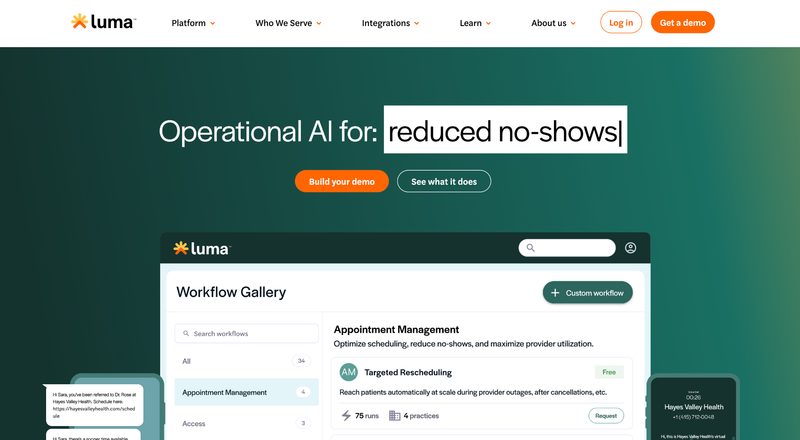
Luma has the deepest certification stack on this page, and it is built for the largest organizations. Its patient-facing voice agent is called Navigator, part of a wider platform covering scheduling, reminders, intake, referrals and payments across voice, SMS and web.
The compliance position is unusually strong. Luma states HITRUST CSF r2, SOC 2 Type II, ISO 27001:2022 and TX-RAMP Level 2, with its AI layer built to ISO 42001:2023. It also states a zero-retention approach, meaning your patient data isn't used to train the underlying models.
That combination answers most of a hospital security questionnaire before the first meeting, which is the actual bottleneck at this scale. Bidirectional integration spans Epic, Oracle Health, MEDITECH, athenahealth, and NextGen.
The limitation is not capability; it is fit. Pricing is quote only, procurement runs long, and a practice with four providers will be buying a platform sized for a health system.
3. Assort Health
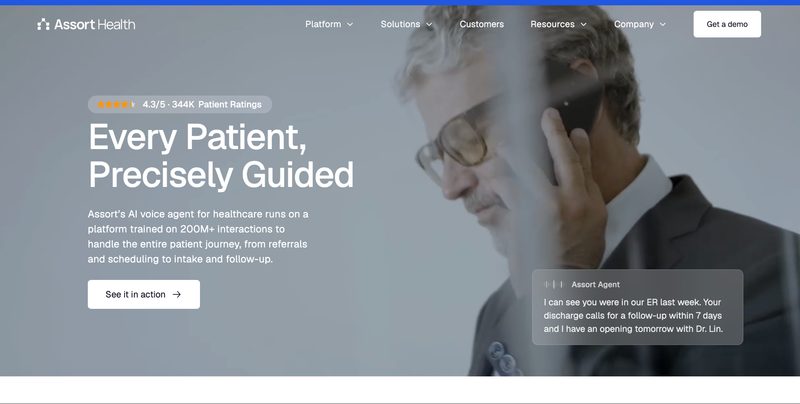
Assort Health answers a question most vendors leave blank. It builds specialty-specific agents for ambulatory groups covering scheduling, intake, referrals, refills and outbound outreach across 29 languages.
Specialty focus matters because a dermatology call and an orthopaedics call are not the same conversation. Referral handling in particular is where generic tools fall over.
It states HIPAA compliance, SOC 2 Type II, and signed BAAs covering both its customers and its downstream subprocessors. Go back to that subcontractor rule above and this becomes its real differentiator, because your security team will ask about the chain and most vendors have no published answer.
It states two-way integration with more than 20 record and practice management systems, with a published athenahealth guide. The catch is fit. This is built for multi-site scale, pricing is quote only, and a two-provider clinic will find the implementation heavier than the problem.
4. Hello Patient
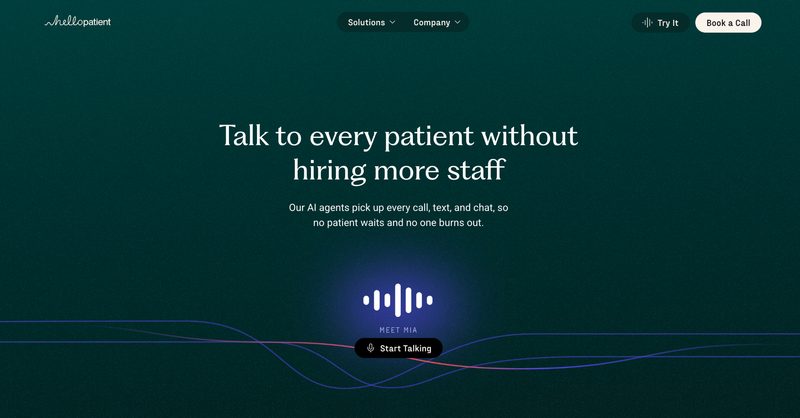
Hello Patient's agent is called Mia, and she covers calls, texts and web chat across scheduling, reminders, insurance collection and chasing no-shows.
That combination is aimed squarely at urgent care economics, where the same patient may call, text and walk in, and where a no-show costs a slot you could have filled in an hour. Insurance collection before arrival is the piece most reception tools skip.
The company states it is HIPAA compliant, SOC 2 Type 2 certified, and signs a BAA with every client rather than negotiating one deal by deal. That last detail matters more than it sounds, because it means compliance is not a bargaining chip.
It also publishes named customer deployments, which is rare in a category where nearly every case study is anonymous. Pricing is not published.
5. S10.AI
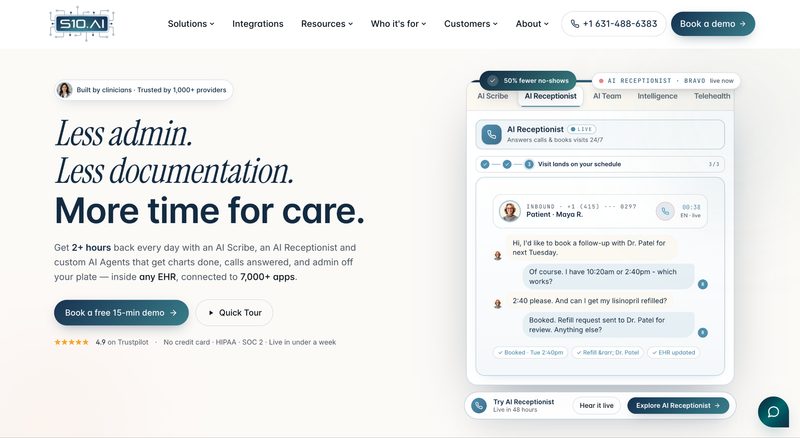
S10.AI bundles its call handling product, BRAVO, with ambient clinical documentation. What sets it apart is not technical, it is procedural.
The BAA comes included on every plan and gets signed when you create your account. No sales negotiation, no upcharge, no waiting on legal. For a small practice with no compliance officer, that removes the single most common blocker, and it is a meaningful signal that the company expects to be a business associate rather than treating it as an edge case.
It names Epic, Oracle Health, athenahealth and eClinicalWorks, and publishes pricing from $159 per provider per month with 1,000 calls included. The documentation bundling cuts both ways: useful if you want one vendor for scribing and reception, wasted spend if you already have a scribe tool you like.
The SOC 2 report is not linked publicly, so ask. Per provider pricing also gets awkward once you have a lot of providers.
6. Talkie.ai
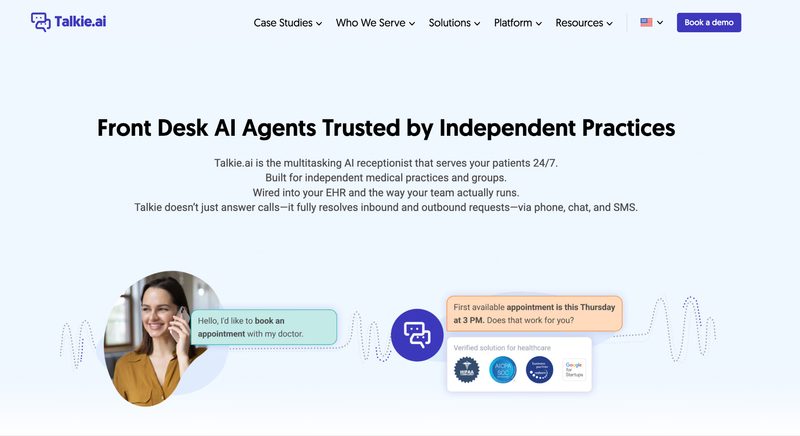
Talkie.ai handles booking, refills, intake and the routine questions that eat your front desk's day. Its real strength is transparency about integrations.
Rather than saying it connects to major systems, it lists them: athenahealth, ModMed, Elation Health and eMedicalPractice. It also states that appointments booked by the AI appear directly in the record.
That distinction sounds small and is not. A platform that only reads your availability still leaves someone reconciling bookings every morning, which is the exact task you were trying to delete. Write-back is the difference between removing the work and relocating it.
The company states it passed a SOC 2 Type II audit and follows HIPAA guidelines. Executed BAA terms are not published, so confirm those directly. No public pricing, so budget for a demo cycle.
7. Smith.ai
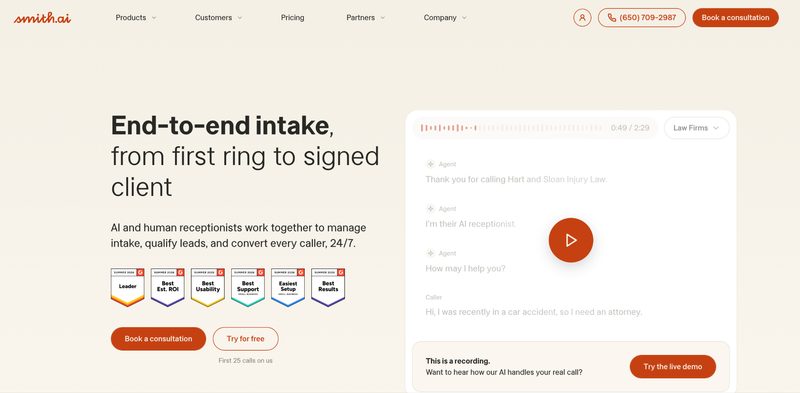
Smith.ai runs a hybrid setup where AI takes routine calls and North America based humans pick up the rest. It is the only option here priced by call count rather than seats or volume tiers, and that changes the math completely.
Below roughly 30 calls a month it is competitive. Above that it gets expensive fast. AI plans start around $95 a month while the human staffed service starts around $292.50 for 30 calls, with per call charges beyond your plan.
So the fit is narrow but real: a practice with low volume where individual calls carry high stakes, and where a caller hitting a wall is a patient you may not get back. Treat the human layer as an intake quality decision rather than a safety net.
Healthcare BAA coverage needs a bespoke contract, so budget time for legal. Integration depth is thinner than the healthcare-native platforms here.
Which One Fits Your Practice
Forget the feature lists for a second and start with your size.
Solo or single site. Your questions are how fast you can go live and whether the bill is predictable. Flat fee pricing beats per call at almost any steady volume.
Specialty or multi-location. Write-back is the gate. A platform that reads your calendar but cannot put an appointment into the chart has moved work around, not removed it.
Health system. Procurement will drive this anyway. Expect HITRUST and SOC 2 Type II to be baseline, alongside a current BAA and a full list of subprocessors.
Whatever size you are, ask every vendor the same question:
Is our patient audio used to train your models, and can you delete it on request?
How quickly they answer tells you nearly everything. Some vendors publish a zero retention position outright, others need a contract clause to pin it down, and a few will change the subject.
When Automating Your Front Desk Is the Wrong Move
Sometimes the honest answer is that you do not need this.
If your call volume is genuinely low, a part-time person may cost less and handle nuance better. If your front desk is drowning because of a scheduling policy problem, automation will scale the problem rather than fix it.
It is also worth checking how many of those calls should have been calls at all. Plenty of practices are fielding questions about hours, insurance and directions that a decent patient booking experience would have answered before the phone ever rang.
And if nobody at your practice can say who owns an escalation at 2am, sort that out first. A platform that transfers an urgent call to a phone nobody answers is worse than voicemail.
Frequently Asked Questions
What should a BAA cover for a platform handling patient calls?
It needs to name call recordings and transcripts specifically, not just account data. A generic agreement written before the vendor launched its voice product may not cover the audio at all, and it should extend to any subcontractor processing that audio.
Is my patient audio used to train the vendor's models?
It depends entirely on the vendor, and most will not volunteer the answer. Get it in writing, along with confirmation that recordings can be deleted on request.
Do outbound automated calls to patients create risk beyond HIPAA?
Yes. The FCC confirmed in 2024 that AI generated voices count as artificial voice under the TCPA, which generally requires prior express consent from the person being called. That is a separate framework and no BAA addresses it.
How long does one of these take to deploy?
Realistically, a few days to a few months. Self-serve flat rate platforms publish go-live figures ranging from a single day to about a week, usually built on connecting your calendar and uploading your practice information rather than a technical implementation. Enterprise rollouts needing a full security review take four to twelve weeks.
The Bottom Line
Every platform on this list will pass a demo. Demos are built to pass.
What actually separates them is what survives a security review, and that is a paperwork question rather than a product question. The companies publishing their BAA terms, naming their record system integrations and printing real prices are telling you they expect to be checked.
So build your shortlist on evidence, not on whichever call sounded most natural. And check the trust or security page before you believe a homepage badge, because that is where the real answer usually sits.
Put this into action with eSEOspace
We help businesses grow with seo, geo & aeo that actually performs. Explore the services behind this guide:
Get a FREE Audit
We'll perform a comprehensive SEO, AEO, GEO & CRO audit of your website — completely free — and show you exactly how to outrank your competitors.
Don't have a site yet? Get in touch →
Get a FREE GEO/AEO/SEO Audit
We'll analyze your site's SEO, GEO, AEO & CRO — completely free — and show you exactly how to get found across Google and AI answers.
Don't have a site yet? Get in touch →
Great — your audit is on the way!
We'll send your free SEO/GEO/AEO/CRO audit within the next few hours. Where should we send it?
You're all set! ✓
Your free audit is being prepared — check your inbox in the next few hours. Talk soon!








