



How Crisis Management Platforms Coordinate Incident Response
How Crisis Management Platforms Coordinate Incident Response
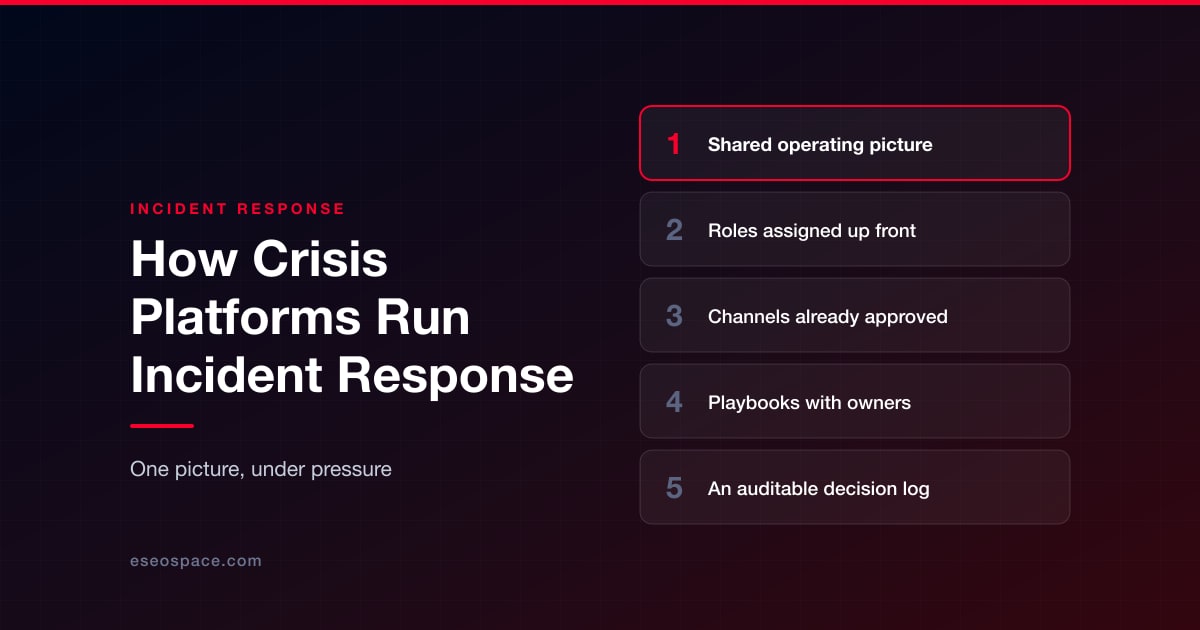
During a cyber crisis, several teams must make decisions while systems, information, and priorities change quickly. Crisis management platforms give leaders one operating picture for coordinating people, procedures, technology, communications, and recovery tasks. This shared structure reduces delays, clarifies ownership, and helps organizations act with greater control when pressure increases. Effective coordination supports business continuity and accountable decisions from the first alert through final review of every incident.
For organizations seeking a central command center, options such as the Ready1 crisis management platform can connect preparation, response, communication, and recovery in one secure workspace. It can help teams assign duties, activate contacts, share approved guidance, record decisions, and track affected operations. This coordination gives executives, technical specialists, vendors, and employees a common view, reducing confusion during critical actions and handoffs.
Establishing a Shared Operating Picture
Before an incident, leaders define what information is important, who receives it, and which decisions require approval. During an event, dashboards can show incident status, affected services, assigned responders, open tasks, and key performance measures. A shared view prevents separate teams from working based on conflicting reports. It also helps executives see business impact without interrupting technical work or creating duplicate requests during a period of intense operational pressure.
Assigning Roles
Clear roles turn broad plans into practical action. Team builders can group responders by skill, availability, location, and incident severity. A coordinator may lead decisions, while communications staff issue updates and technical specialists contain damage. External partners can receive defined responsibilities before activation. This arrangement reduces overlap, exposes missing skills, and lets leaders expand or reduce participation as conditions change.
Activating Communication Channels
Crisis response depends on timely messages that reach the right audience. Automated alerts can notify selected contacts through approved channels, while secure chat keeps incident discussion connected to the active case. Phone directories should include internal leaders, suppliers, regulators, and response specialists. Verification routines help remove outdated details, protecting sensitive information and preventing wasted calls when every minute can affect service recovery and trust.
Using Playbooks and Procedures
A response plan becomes useful when it guides decisions under pressure. Playbooks can outline detection, escalation, containment, restoration, and stakeholder updates for common scenarios. Each action should name an owner, required evidence, approval point, and completion signal. Regular reviews keep instructions aligned with staffing, suppliers, and business priorities. Tested guidance gives responders confidence, ensuring they do not need to improvise steps during a high-impact operational event or outage.
Tracking Actions and Decisions
An incident log creates a reliable record of activity from the first alert to closure. Scribes can capture assignments, timestamps, approvals, status changes, and supporting evidence while work continues. This record shows which tasks remain open and where assistance is needed. After recovery, leaders can review the timeline, identify delays, confirm accountability, and improve future exercises with factual findings.
Connecting Business and Technical Teams
Technical containment and business continuity must operate in tandem. A platform can show which applications, sites, customers, and services face disruption, giving each group relevant priorities. Business leaders can approve tradeoffs, while specialists restore systems and investigate causes. This connection limits conflicting instructions, speeds up escalation processes, and keeps recovery efforts focused on the outcomes that are most critical to the organization during both routine tests and real emergencies.
Protecting Access During Disruption
Response tools must remain available if primary systems fail, which is the same argument behind a standing website maintenance plan. Secure, separate credentials can preserve access while limiting exposure. Document stores should contain up-to-date plans, contact lists, recovery steps, and legal guidance with controlled permissions. Availability testing reveals whether responders can reach essential material from approved locations. These safeguards support informed action without weakening security during a crisis or creating another point of failure across critical functions during outages and attacks.
Measuring Readiness Through Practice
Exercises, like a scheduled security audit, reveal whether plans work outside a document. Tabletop sessions can test alerts, role changes, decision paths, vendor support, and recovery priorities. Metrics may include notification speed, task completion, escalation time, communication reach, and unresolved blockers. After each exercise, teams should assign corrective actions, set deadlines, and confirm closure. Repeated practice turns observations into measurable improvement that leaders can track over time and share with stakeholders.
Conclusion
Crisis management platforms coordinate incident response by connecting people, procedures, communications, records, and recovery work. Their value comes from shared visibility, clear ownership, reliable contact data, and tested guidance, the same discipline that keeps website security from drifting between incidents. When teams practice inside one controlled environment, leaders can identify weaknesses before an emergency exposes them. Strong coordination also creates an auditable record, supports faster decisions, and helps organizations restore essential services while keeping stakeholders informed from activation through closure for future readiness and review.
Put this into action with eSEOspace
We help businesses grow with maintenance & support that actually performs. Explore the services behind this guide:
Get a FREE Audit
We'll perform a comprehensive SEO, AEO, GEO & CRO audit of your website — completely free — and show you exactly how to outrank your competitors.
Don't have a site yet? Get in touch →
Get a FREE GEO/AEO/SEO Audit
We'll analyze your site's SEO, GEO, AEO & CRO — completely free — and show you exactly how to get found across Google and AI answers.
Don't have a site yet? Get in touch →
Great — your audit is on the way!
We'll send your free SEO/GEO/AEO/CRO audit within the next few hours. Where should we send it?
You're all set! ✓
Your free audit is being prepared — check your inbox in the next few hours. Talk soon!








