



Blog
What You’ll Learn in My $15K GEO Certification Program
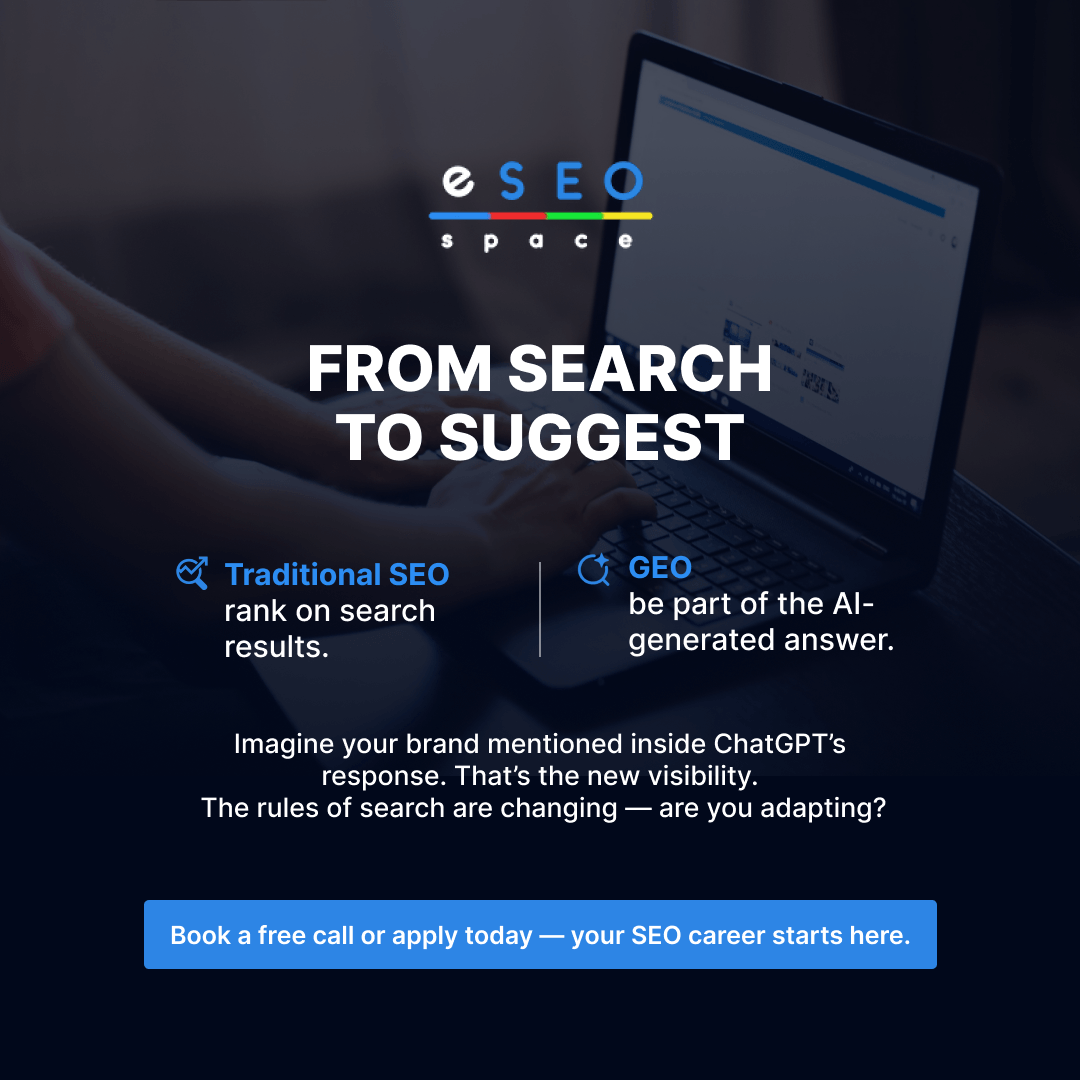
Key Takeaways
- The $15K GEO certification program teaches you how to optimize content so it surfaces inside AI-generated answers, not just traditional search results.
- Generative Engine Optimization shifts the goal from ranking blue links to earning citations within tools like ChatGPT, Gemini, and AI Overviews.
- The curriculum covers the practical frameworks, workflows, and measurement techniques needed to make brands visible in generative engines.
- Certification signals to clients and employers that you can execute GEO strategy at a professional, results-driven level.
- The program is positioned as a premium investment aimed at marketers who want to lead in the emerging AI-search era.
Investing in your professional skill set is the most critical decision you can make for your career, especially during a seismic industry shift. The emergence of AI-driven search is that shift. Traditional optimization is no longer enough to guarantee visibility. To lead in this new era, you need to master Generative Engine Optimization (GEO). This is not an incremental update to your SEO knowledge; it's a fundamental rewiring of how you approach digital presence.
This article details exactly what you will learn inside the ESEOSPACE ACADEMY's $15K GEO Certification Program. We will dissect the complete GEO course curriculum, explore the hands-on learning model, and provide a transparent look at the return on investment. This is for serious professionals—experienced marketers, SEO leads, and agency owners—who understand that becoming an expert in the next frontier of search requires a significant commitment. We'll show you why this program is designed to deliver a career-defining transformation.
Why GEO Is the New Frontier in Digital Optimization
For two decades, the goal of search optimization was to earn a click from a list of blue links. Now, generative search engines are providing direct, synthesized answers, often making the click secondary or even unnecessary. This changes everything. The new objective is to become the trusted source of information that the AI uses to construct its answers. This is the domain of Generative Engine Optimization.
While SEO and Answer Engine Optimization (AEO) remain important, they are now foundational components of a much larger strategy.
- SEO gets your content indexed and establishes baseline authority. It's the price of entry.
- AEO positions your content to answer specific, factual questions, targeting featured snippets and similar formats. It’s the bridge to AI search.
- GEO is the comprehensive strategy of influencing the AI's understanding on a conceptual level. It involves structuring your entire digital ecosystem—your content, your data, your expert profiles—to shape the AI’s narrative and ensure your brand is embedded within its generative responses.
Mastering SEO for AI isn't just about ranking; it's about becoming an integral part of the AI ranking and response-generation process. Professionals who learn GEO are not just adapting to change; they are positioning themselves at the center of how businesses will be discovered for the next decade.
The Philosophy Behind GEO Learning
Our GEO certification program is built on a simple, powerful philosophy: mastery comes from application, not just theory. We designed every aspect of the curriculum to be practical, rigorous, and focused on building a tangible portfolio of work.
Our teaching model is based on three core tenets:
- First-Principles Thinking: We don't just give you a checklist. We teach you the underlying mechanics of how Large Language Models (LLMs), retrieval-augmented generation (RAG), and knowledge graphs work. By understanding the "why" behind the technology, you gain the ability to adapt your strategies as AI search evolves, rather than just memorizing tactics that will become outdated.
- Practice-Heavy Application: You will spend more time doing than listening. The program is built around weekly labs, real-world assignments, and a capstone project that forces you to apply concepts immediately. We believe the only way to learn GEO is to build, test, and refine GEO strategies.
- Portfolio-Driven Outcomes: The goal of this program isn't just a certificate; it's a portfolio that proves your expertise. Your final project involves creating a complete, investment-worthy GEO strategy for a real business. This becomes your calling card, demonstrating to employers and clients that you have tangible, high-level skills.
Course Module Breakdown
The GEO course curriculum is a six-module deep dive designed to take you from foundational concepts to strategic mastery. Each module is a building block, complete with clear objectives, practical assignments, and specific deliverables.
Module 1: Introduction to Generative Search
This module sets the stage, ensuring every student operates from a shared, expert-level understanding of the AI search landscape. We move past the headlines to the core technology.
- Learning Objectives:
-
- Articulate the technical differences between traditional, federated, and generative search.
- Explain the architecture of Large Language Models (LLMs) and retrieval-augmented generation (RAG).
- Analyze AI-generated outputs to identify data sources, biases, and optimization opportunities.
- Develop a framework for auditing a brand's current visibility in generative results.
- Key Lesson Topics:
-
- The History and Evolution of Search Engines
- How LLMs Process and Synthesize Information
- The Role of Knowledge Graphs and Entities in AI Search
- Deconstructing AI Responses: Prompt Engineering for Auditors
- The New GEO Metrics: Share of Voice, Sentiment Analysis, and Source Attribution
- Assignment & Deliverable:
-
- Assignment: Conduct a baseline GEO audit on a chosen brand (yours or a competitor's).
- Deliverable: A 5-page "State of GEO" report identifying the brand's current performance in AI-generated answers for 10 core queries, complete with screenshots and initial analysis.
- Tools Categories Introduced: AI Search Monitoring Tools, Prompting Interfaces.
Module 2: AI-Driven Keyword Strategy
Keywords are not dead, but their function has evolved. This module teaches you to move beyond simple search volume and think in terms of concepts, entities, and conversational queries that feed AI engines.
- Learning Objectives:
-
- Identify and map primary entities related to a brand and its offerings.
- Perform topic cluster analysis designed for machine comprehension.
- Develop a keyword strategy based on conversational queries and "People Also Ask" data.
- Build a semantic content map that connects user intent to your brand's expertise.
- Key Lesson Topics:
-
- From Keywords to Entities: The Semantic Shift
- Using NLP Tools for Topic Modeling
- Advanced "People Also Ask" (PAA) and "Related Searches" Mining
- Mapping the User's "Question Journey"
- Prioritizing Topics Based on Business Impact and AI-Influence Potential
- Assignment & Deliverable:
-
- Assignment: Develop a full-funnel semantic topic map for your audited brand.
- Deliverable: An Entity-Topic-Keyword map presented in a spreadsheet, outlining primary entities, related topic clusters, conversational long-tail queries, and user intent for each stage.
- Tools Categories Introduced: NLP APIs, Advanced Keyword Research Platforms, Data Visualization Tools.
Module 3: Building GEO-Optimized Content
This is where strategy meets execution. You will learn to create and structure content specifically for AI consumption, ensuring it's not just readable by humans but parsable, verifiable, and seen as authoritative by machines.
- Learning Objectives:
-
- Structure content using advanced semantic HTML for maximum clarity.
- Write content "atomically"—creating reusable, self-contained blocks of information.
- Incorporate entity optimization directly into your copy.
- Develop a content updating and verification process to maintain trust signals.
- Key Lesson Topics:
-
- The Anatomy of an AI-Friendly Article
- Atomic Content: Creating Factual Nuggets for AEO and GEO
- Internal Linking for Semantic Relationship Building
- Authoritative Sourcing and Citable Data Integration
- Creating Content that Demonstrates E-E-A-T (Experience, Expertise, Authoritativeness, Trustworthiness) for AI
- Assignment & Deliverable:
-
- Assignment: Rewrite a core service page or blog post from your audited brand using GEO principles.
- Deliverable: A Google Doc with a "before and after" version of the content, including annotations explaining the strategic reasoning behind each change (e.g., semantic HTML updates, atomic content blocks, entity insertions).
- Tools Categories Introduced: Content Optimization Software, Grammar and Style Checkers, Plagiarism Detectors.
Module 4: Technical GEO and Schema Mastery
If content is the what, technical GEO is the how. This module is a deep dive into structured data, which helps machines read what your content is about and who wrote it, though Google says no special markup is required for its generative AI features. This is a major focus of our GEO certification program.
- Learning Objectives:
-
- Implement comprehensive, nested schema markup for a full website.
- Build and host your own brand Knowledge Graph using JSON-LD.
- Audit and fix technical issues that hinder AI crawlers.
- Use the
aboutandmentionsproperties to connect your content to established entities.
- Key Lesson Topics:
-
- Beyond the Basics: Schema Types That Still Matter (
Person,Organization,Article,Product,LocalBusiness) - Nesting Schema for Relationship Mapping
- Building a Knowledge Graph: Connecting the Dots for Google
- The
sameAsProperty: Linking to Authoritative Profiles - Auditing Schema for Errors and Opportunities
- Beyond the Basics: Schema Types That Still Matter (
- Assignment & Deliverable:
-
- Assignment: Create a complete schema markup script for your audited brand's homepage and a key service/product page.
- Deliverable: A fully-validated JSON-LD script ready for deployment, along with a strategy document explaining how it builds the brand's entity in the knowledge graph.
- Tools Categories Introduced: Schema Generators & Validators, JSON-LD Playground, Site Crawlers.
Module 5: AEO Integration and Conversational Search
This module focuses on the intersection of user-facing answer engines and backend generative AI. You will master the art of being the direct answer everywhere, from a simple Google snippet to a complex, multi-turn conversational AI response.
- Learning Objectives:
-
- Optimize content to capture Featured Snippets, PAA boxes, and other SERP features.
- Structure FAQs and how-to guides so voice and AI assistants such as Gemini can pull clear answers.
- Create content that anticipates follow-up questions in a conversational flow.
- Develop a strategy for dominating "Brand vs. Brand" and "Best X for Y" type queries.
- Key Lesson Topics:
-
- Reverse-Engineering Featured Snippets
- The Pyramid Structure for Answering Questions
- Optimizing for Implied vs. Explicit Queries
- Winning Zero-Click Searches
- Local GEO: Optimizing for "Near Me" in an AI Context
- Assignment & Deliverable:
-
- Assignment: Create a dedicated "Answer Hub" content plan for 5 high-value, non-branded queries.
- Deliverable: A content plan outlining 5 question-based topics, target SERP features for each, and detailed content briefs for writers, including the exact answer to provide in the first paragraph.
- Tools Categories Introduced: Rank Trackers with SERP Feature Monitoring, Question Research Tools.
Module 6: GEO Analytics and Performance Tracking
How do you prove the ROI of a strategy that doesn't always result in a click? This final module equips you with a new analytics suite and reporting framework to measure what matters in the world of generative search.
- Learning Objectives:
-
- Configure tracking for brand mentions and source citations in AI results.
- Measure the impact of GEO on branded search volume and direct traffic.
- Create a GEO performance dashboard for stakeholders.
- Correlate GEO efforts with business-level KPIs like lead quality and sales.
- Key Lesson Topics:
-
- The New KPIs: Share of Voice, Citation Rate, Sentiment Score
- Tools for Scraping and Monitoring AI Search Engines
- Connecting GEO to the Marketing Funnel
- Building a Business Case for Continued GEO Investment
- Reporting Frameworks: From Executive Summaries to Granular Analysis
- Assignment & Deliverable:
-
- Assignment: Build a GEO reporting dashboard template.
- Deliverable: A custom dashboard (in Looker Studio or a similar tool) that tracks key GEO metrics, along with a guide on how to interpret and present the data to leadership.
- Tools Categories Introduced: Custom Scraping Tools, Data Visualization Platforms, Brand Monitoring Software.
Hands-On Labs and Real Brand Case Studies
Theory is passive; labs are active. Each week, you will join a mandatory 2-hour live lab session. This is not a lecture. It is a working session where you apply the week's concepts under the direct supervision of your instructor.
Lab Scenarios Include:
- Live Schema Teardown: We take a Fortune 500 company's website and collectively audit its schema, identifying errors and missed opportunities in real-time. You'll learn to spot patterns and think like a technical optimizer.
- AI Response Deconstruction: Given a specific AI-generated answer, your group's task is to work backward, identify the likely sources the AI used, and brainstorm a content and entity strategy to influence the answer in the future.
- Content Atomization Workshop: You'll be given a standard 1,500-word blog post and, in breakout groups, tasked with deconstructing it into "atomic" content blocks, rewriting them for clarity and directness, and mapping them to potential user questions.
We also use anonymized case studies from our consulting work. For example, you might be tasked with developing a GEO strategy for "SaaS Co A," a B2B platform struggling to be mentioned in AI answers for "best project management software." Your task would be to analyze their current entity strength, schema implementation, and content, then present a full GEO action plan.
The Coaching and Mentorship Advantage
This is not a self-serve video course. It's a high-touch coaching program. Your $15K investment secures you direct access to expert guidance.
- Dedicated Cohort Lead: You are part of a small, curated cohort led by a senior GEO practitioner. This person is your primary point of contact.
- Weekly Office Hours: In addition to labs, your cohort lead holds weekly "open door" office hours. This is your time to ask specific questions about your projects, get career advice, or dive deeper into complex topics.
- Structured Feedback Loops: Every assignment you submit receives detailed, actionable feedback. We don't just grade; we guide. You will receive line-by-line comments on your strategy documents and code.
- Peer Review Sessions: You will learn almost as much from your peers as from the instructors. Structured peer review sessions for major deliverables (like the capstone project) are built into the curriculum, sharpening your ability to both give and receive critical feedback.
Get a FREE Audit
We'll perform a comprehensive SEO, AEO, GEO & CRO audit of your website — completely free — and show you exactly how to outrank your competitors.
Don't have a site yet? Get in touch →
Exclusive Tools and Templates Included
Enrolling in the GEO Certification Program gives you access to a proprietary toolkit valued at thousands of dollars. These are not generic downloads; they are the frameworks we use with our own clients.
- The GEO Audit Checklist: A 150-point checklist covering every aspect of a comprehensive GEO audit, from technical schema to content entity density.
- JSON-LD Schema Library: A collection of pre-built, nested schema templates for various business types (SaaS, E-commerce, Local Business, Publisher) that you can customize and deploy.
- Atomic Content Brief Generator: A template that guides you through the process of creating hyper-detailed content briefs designed to produce GEO-optimized content.
- The GEO Reporting Dashboard: A pre-configured Looker Studio template that you can connect to your own data sources to immediately start tracking GEO KPIs.
- Entity Mapping Framework: A spreadsheet-based tool for mapping your brand's core entities, attributes, and relationships, forming the blueprint for your knowledge graph.
Certification Outcomes: What Skills You’ll Master
Upon successful completion of the program, you will earn the ESEOSPACE ACADEMY Certified GEO Strategist designation.
Assessed Skills: To pass, you must demonstrate mastery in:
- Strategic Auditing: Ability to diagnose a brand's GEO weaknesses and opportunities.
- Technical Implementation: Ability to write and deploy advanced, nested JSON-LD schema.
- Content Architecture: Ability to structure and create content for machine comprehension.
- Performance Measurement: Ability to track, analyze, and report on GEO-specific KPIs.
The Capstone Project Rubric: Your final portfolio project is graded on a 100-point scale across four domains: Strategic Depth, Technical Accuracy, Commercial Viability, and Presentation Clarity. A score of 85 or higher is required to pass.
Recertification: The world of AI search evolves quickly. Your certification is valid for two years. To maintain your status, you must complete a much shorter, lower-cost recertification module that covers the latest trends, algorithm changes, and tactics.
How GEO Certification Elevates Your Professional Profile
This certification is more than a line item on your resume; it's a signal to the market that you operate at the highest level of digital strategy.
- Access to New Roles: Graduates are ideally suited for emerging roles like "GEO Strategist," "Head of AI Optimization," or "Director of Search and AI." These roles are being created now in forward-thinking companies.
- Compensation Potential: While we cannot guarantee income, professionals with rare, high-impact skills command premium salaries.
- Interview Talking Points: You will leave the program with a portfolio of work and the vocabulary to articulate complex GEO strategies. You can walk into any interview and not just answer questions about AI search but lead the conversation, showcasing tangible projects and results. For agency owners, this means you can confidently pitch and win high-value GEO retainers.
Enrollment Process and Program Requirements
Admission to the GEO Certification Program is selective and designed for professionals who are ready to commit fully.
- Prerequisites: Applicants should have a minimum of 5 years of experience in digital marketing, with a strong emphasis on SEO or content strategy. You must be able to demonstrate a foundational understanding of technical SEO, content marketing, and analytics.
- Technical Requirements: A modern computer, reliable high-speed internet, and a willingness to work with various SaaS tools and code editors.
- Time Commitment: Expect to invest 10-15 hours per week. This includes watching lessons, completing assignments, and attending the mandatory live labs and office hours.
- Enrollment Steps:
-
- Application: Complete the detailed online application form.
- Review: Our admissions committee reviews your application and experience.
- Strategic Challenge: Shortlisted candidates will be given a small strategic challenge to assess their current thinking.
- Interview: A final interview with a program lead to ensure a mutual fit.
- Offer: Successful candidates receive an offer of admission and enrollment details.
Is This $15K Investment Right for You?
Let's be direct: this program is not for everyone. The $15,000 price tag reflects the depth of the curriculum, the direct access to experts, and the career-altering potential of the skills you will acquire.
You SHOULD invest in this program if:
- You are an experienced professional and your career has hit a ceiling.
- You are a decision-maker (Director, Head of, Agency Owner) responsible for future-proofing your company or clients.
- You see the shift to AI search not as a threat, but as the single biggest opportunity of your career.
- You learn best by doing and value practical application over passive learning.
You should NOT invest in this program if:
- You are new to SEO or digital marketing. Master the fundamentals first.
- You are looking for a "get rich quick" scheme or a passive source of knowledge.
- You are unable to commit 10-15 hours per week to focused, deep work.
- Your primary goal is a simple certificate rather than a deep, applicable skill set.
Alternative Paths: If you are not ready for this intensive program, we recommend focusing on our intermediate AEO courses or reading our blog to build your foundational knowledge. Mastering traditional and answer engine optimization is the perfect stepping stone to this program.
The future of search is being written right now. The question is whether you will be reading about it or leading it. If you are ready to become an indispensable leader in the next generation of digital optimization, we invite you to apply.
Frequently Asked Questions
What is GEO and how is it different from traditional SEO?
What will I actually learn in the $15K GEO certification program?
Who is the GEO certification program designed for?
Why does GEO matter right now?
Is a $15K certification worth the investment?
Put this into action with eSEOspace
We help businesses grow with website development that actually performs. Explore the services behind this guide:
Get a FREE GEO/AEO/SEO Audit
We'll analyze your site's SEO, GEO, AEO & CRO — completely free — and show you exactly how to get found across Google and AI answers.
Don't have a site yet? Get in touch →
Great — your audit is on the way!
We'll send your free SEO/GEO/AEO/CRO audit within the next few hours. Where should we send it?
You're all set! ✓
Your free audit is being prepared — check your inbox in the next few hours. Talk soon!


On this page
- Key Takeaways
- Why GEO Is the New Frontier in Digital Optimization
- The Philosophy Behind GEO Learning
- Course Module Breakdown
- Hands-On Labs and Real Brand Case Studies
- The Coaching and Mentorship Advantage
- Exclusive Tools and Templates Included
- Certification Outcomes: What Skills You’ll Master
- How GEO Certification Elevates Your Professional Profile
- Enrollment Process and Program Requirements
- Is This $15K Investment Right for You?
- Frequently Asked Questions






