
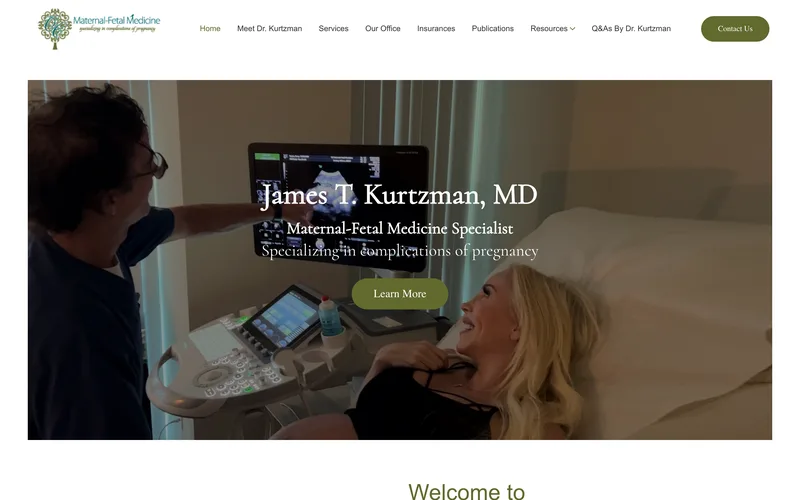
James Kurtzman that works alongside your OB on high-risk pregnancies. Here is what it offers, how insurance and referrals work, and what to expect.
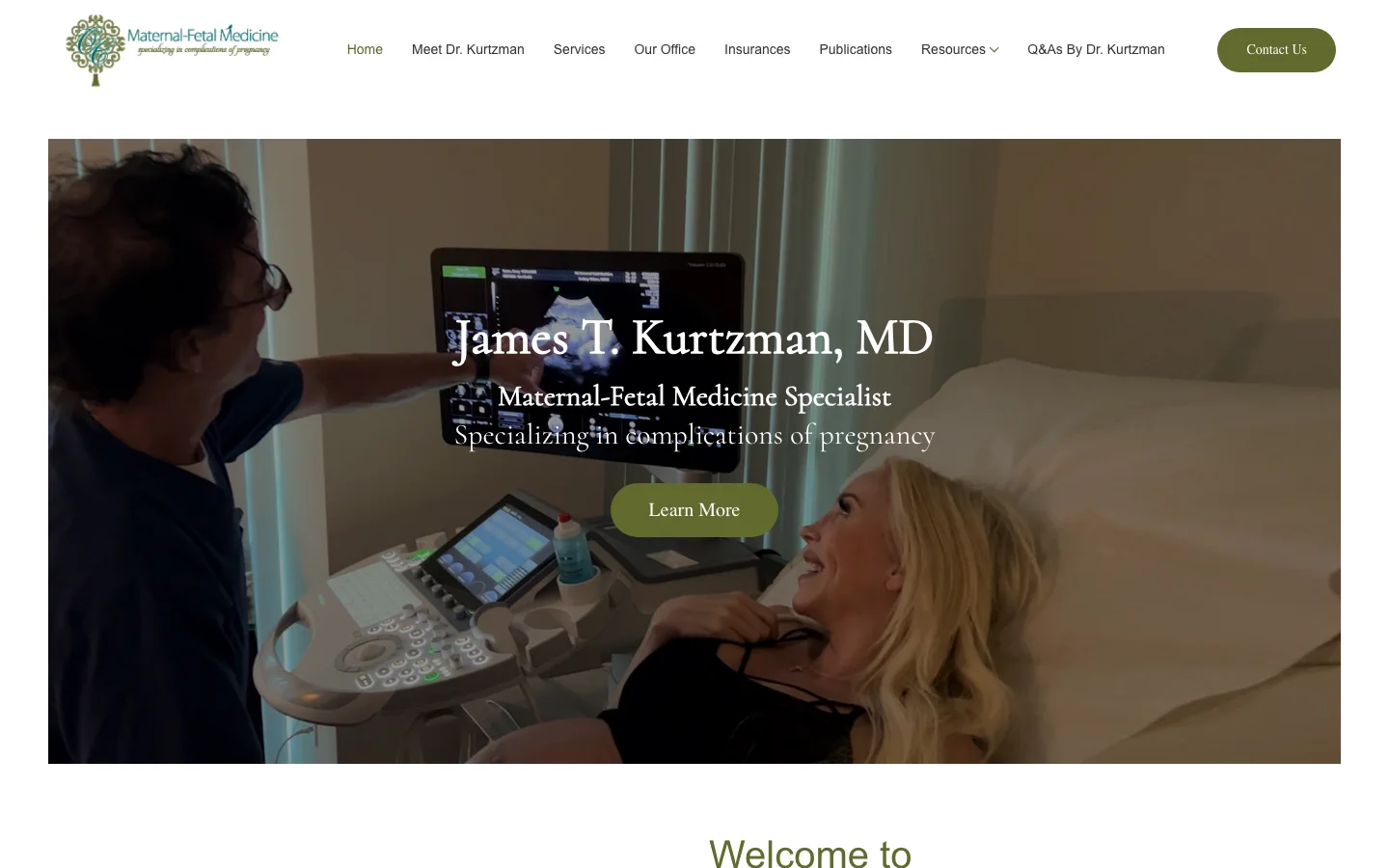
OC Maternal-Fetal Medicine is an eSEOspace client: we work on its website and search marketing. This guide uses the practice's own published information, checked on 19 October 2026, plus the federal NPI registry, and every source is listed at the end. We don't rate or score our clients. This guide is not medical advice; talk to your own obstetrician or another licensed clinician about your pregnancy. Hours and insurance contracts change, so confirm details with the office at (949) 336-7337 or on ocmfm.com.
The short answer
OC Maternal-Fetal Medicine (OCMFM) is a high-risk pregnancy specialty practice in Irvine, California, led by James T. Kurtzman, MD, whom the practice describes as double board certified in obstetrics and gynecology and in maternal-fetal medicine. It works alongside a patient's own OB rather than replacing them, offering detailed obstetrical ultrasound, preterm birth prevention and cervical insufficiency care, management of twins and triplets, fetal monitoring, genetic counseling and amniocentesis, and care for medical conditions in pregnancy. The office is at 15775 Laguna Canyon Road, Suite 160, Irvine, CA 92618. Prices are not published; the practice works with PPO health plans and asks you to call (949) 336-7337 to check your insurance.
| Business | OC Maternal-Fetal Medicine (OCMFM) |
|---|---|
| What it does | Maternal-fetal medicine (perinatology): consultation and ongoing care for high-risk pregnancies, alongside your OB |
| Based in | 15775 Laguna Canyon Road, Suite 160, Irvine, California 92618 |
| Medical director | James T. Kurtzman, MD, FACOG |
| Credentials (as stated by the practice) | Board certified in Obstetrics & Gynecology (1996 to current) and Maternal-Fetal Medicine (1999 to current); ultrasound practice accredited by the American Institute of Ultrasound in Medicine (AIUM) |
| Public record | Active NPI listings for Dr. Kurtzman (1750495545) and the practice (1366722704), both under Maternal & Fetal Medicine, at the Irvine address |
| Insurance | PPO health plans; call to confirm your plan. HMO members may need a referral. |
| Price range | Not published |
| Hours | Monday to Thursday 8:00 AM to 4:00 PM (closed for lunch 12:00 to 1:30 PM); Friday 9:00 AM to 12:00 PM |
| Phone / fax | Office (949) 336-7337 · Fax (949) 336-7336 |
| Website | ocmfm.com |
What is OC Maternal-Fetal Medicine?
OC Maternal-Fetal Medicine, often shortened to OCMFM on its own pages, is a subspecialty medical practice in Irvine, in Orange County, California. It focuses on pregnancies that need more watching than routine prenatal care: pregnancies with twins or triplets, a history of preterm birth or pregnancy loss, a medical condition such as diabetes or high blood pressure, a question raised by an earlier ultrasound or screening test, or simply a patient who wants closer surveillance.
The practice describes itself as a Maternal-Fetal Medicine (MFM) subspecialty practice "established to provide the highest level of consultative high-risk pregnancy surveillance in a highly personalized, concierge-style setting." In plain terms, it is a consulting specialist office. It does not set itself up as your only pregnancy doctor. Dr. Kurtzman "will collaborate with your OB," in the practice's words, so you keep your regular obstetrician and add a specialist for the parts of your pregnancy that need extra attention.
The home page sums up the focus in Dr. Kurtzman's own voice: he has performed "thousands of deliveries" over the years but now spends "almost all of my time keeping babies in and keeping them safe." That points to the practice's main areas: detailed obstetrical ultrasound, prevention of preterm birth, management of multiple gestations and management of cervical insufficiency.
It is a small, single-physician practice. The site names one physician, Dr. Kurtzman, and describes a supporting team of obstetrical sonographers, nurses, administrative staff and partner genetic counselors.
Who runs OCMFM? About Dr. James Kurtzman
The practice's medical director is James T. Kurtzman, MD, FACOG. According to his biography on the site, he was born and raised in the Pacific Palisades area of West Los Angeles. His published background:
| Area | What the practice's site lists |
|---|---|
| Undergraduate | Stanford University, B.A. with distinction, June 1984; elected to Phi Beta Kappa 1983 |
| Medical school | University of California, San Diego, M.D., June 1988 |
| Residency | Obstetrics & Gynecology, University of North Carolina, Chapel Hill, 1988 to 1992 |
| Fellowships | Maternal-Fetal Medicine, University of California, San Francisco, 1992 to 1994; Obstetrical Ultrasound, UCSF Department of Radiology, June 1994; Maternal-Fetal Medicine (ultrasound research and thesis for board certification), University of Louisville, completed June 1997 |
| Board certification | Obstetrics & Gynecology, 1996 to current; Maternal-Fetal Medicine, 1999 to current; maintained "according to the standards of the American Board of Obstetrics and Gynecology" |
| Hospital staff memberships | Saddleback Hospital (Laguna Hills), Hoag Hospital (Newport Beach), Hoag Hospital (Irvine) |
| Prior academic and hospital roles | Assistant Professor of OB/GYN, Division of MFM, University of Louisville; OB/GYN Section Chief, Saddleback Women's Hospital, 2002; Associate Clinical Professor of OB/GYN, Division of MFM, UC Irvine, 1999 to 2010; Associate Professor of OB/GYN, Division of MFM, Loma Linda University, 2011 to 2013 |
The biography says his best-known area is the prediction and prevention of preterm birth, and that he is trained in ultrasound, evaluation of cervical function in pregnancy, management of multiple gestations and prenatal diagnosis. The preterm birth page adds that he has served as Chairman of the Prematurity Scientific Forum for the Society for Maternal-Fetal Medicine. Those are the practice's statements.
The site's Publications page lists 16 articles from 1989 to 2011, many on cervical length, preterm delivery risk and obstetrical ultrasound. We spot-checked one, a 2009 American Journal of Obstetrics and Gynecology paper on fetal fibronectin screening, in PubMed, which lists Kurtzman J as first author.
Is OC Maternal-Fetal Medicine legit? What can be checked
Expecting parents often look up a specialist before the first visit, especially when an OB has made the referral. Here is what can be checked from public sources:
- Federal NPI records. The National Plan and Provider Enumeration System (NPI registry) lists James Todd Kurtzman, M.D., NPI 1750495545, status active, with the taxonomy "Obstetrics & Gynecology, Maternal & Fetal Medicine" and a California license number. A separate organization record, "OC Maternal Fetal-Medicine," NPI 1366722704, is also active under the same taxonomy, with Dr. Kurtzman listed as the authorized official and President. Both records give the same Irvine address, phone and fax as the website.
- A physical office and a phone line. The street address, office phone and fax appear on every page of the site, with Google Maps links.
- A named physician with a full CV. Education, training years, board certification years, hospital memberships and prior faculty roles are listed on the site (see above).
- Published research. The practice lists Dr. Kurtzman's peer-reviewed articles with journal names and dates, so they can be looked up in PubMed.
- Licensing notice. The practice's Notice of Privacy Practices tells patients that medical doctors in California are licensed and regulated by the Medical Board of California, and gives the Board's contact details (licensecheck@mbc.ca.gov or 800-633-2322) for checking a license.
- Patient testimonials. The home page shows six first-name-and-initial testimonials from patients in California and Washington. These are chosen and displayed by the practice itself.
Board certification and the AIUM ultrasound accreditation are stated by the practice; you can confirm a physician's board status with the American Board of Obstetrics and Gynecology and a California license with the Medical Board of California.
What does a maternal-fetal medicine specialist do?
The practice's own Q&A page, written by Dr. Kurtzman, explains the specialty. An MFM specialist, also called a perinatologist, first trains as an obstetrician-gynecologist (a four-year residency after medical school) and then completes three more years of fellowship in maternal-fetal medicine. That extra training focuses on complications of pregnancy from both the mother's and the baby's side and includes significant additional training in diagnostic obstetrical ultrasound. MFM specialists then hold a second board certification on top of OB/GYN.
According to the Q&A, MFM specialists typically handle multiple pregnancies, maternal medical conditions (pre-existing or pregnancy-related, such as preeclampsia or gestational diabetes), a history of preterm birth or loss, fetal concerns such as growth restriction or birth defects, and advanced ultrasound and diagnostic procedures.
The page is clear that an OB/GYN can manage a high-risk pregnancy, but that many OBs refer high-risk patients to an MFM specialist for consultation and follow-up. Some refer early, based on history, to plan ahead; others refer later if an issue comes up.
Services at a glance
The site lists six service areas, each with its own page:
| Service | What the practice describes | Commonly for |
|---|---|---|
| Comprehensive obstetrical ultrasound | Late first trimester scan (11 to 14 weeks) with nuchal translucency, targeted anatomic survey with screening fetal echo, third trimester growth scans, 3D/4D views | All pregnancies referred for detailed imaging; higher-risk pregnancies |
| Preterm birth prevention and cervical insufficiency | Cervical length assessment by ultrasound, early intervention planning, cerclage placement when indicated | Multiples, prior preterm birth or second or third trimester loss, cervical or uterine abnormalities |
| Twins and triplets | Regular cervical checks, growth scans, coordination with your OB, third trimester monitoring of each baby | Multiple gestations |
| Fetal monitoring and stillbirth prevention | Non-stress test, biophysical profile and Doppler assessment, reviewed by Dr. Kurtzman at the visit | Pregnancies with risk factors in the later third trimester |
| Genetic counseling and genetic testing | Counseling through a partner genetics company (in person or remotely), screening options such as NIPT, and amniocentesis | Age 35 or older at delivery, abnormal screening, family history, ultrasound findings |
| Medical disorders in pregnancy | Condition-specific surveillance for diabetes, hypertension, thyroid and autoimmune disorders, migraine and more | Patients with a medical condition before or during pregnancy |
Obstetrical ultrasound, trimester by trimester
Ultrasound is the core of what an MFM office does, and it gets the longest service page on the site.
Late first trimester ultrasound (generally 11 to 14 weeks). The practice describes this as the first chance to look at the baby's structural development, with early views of the heart, brain, spine and other organs. It includes the nuchal translucency measurement (the fluid at the back of the baby's neck), which is a screening test for certain genetic conditions. The page explains that even with a negative NIPT blood test, which screens for chromosome 13, 18 and 21 conditions, this scan looks at structure that a blood test cannot. It can also show the cervix and the placenta's position, and the practice says it can usually give a preliminary read on the baby's sex from about 12 weeks. The Q&A gives the precise nuchal translucency window as 11 weeks 3 days to 13 weeks 6 days.
Targeted anatomic survey with screening fetal echo (mid second trimester). Also called a Level II or detailed anatomy scan, this is the scan the practice calls "clearly one of the most important." The Q&A places it typically at 18 to 20 weeks. The sonographer and physician image dozens of structures in standard planes: brain, heart chambers and outflow tracts, spine, face, abdominal wall, kidneys, bladder, limbs, placenta and amniotic fluid, usually with a transvaginal look at the cervix. The practice says Dr. Kurtzman personally evaluates every baby, results are explained while you are still in the office, and you receive pictures, with complimentary 3D/4D views depending on how far along you are. If something unexpected is seen, the page says he counsels you on the spot about the findings and next steps.
Fetal echo and growth scans. The Q&A describes a more detailed fetal heart scan, most often at 22 to 23 weeks, for specific reasons such as a family history of heart defects, maternal diabetes or an IVF pregnancy. Later in pregnancy, growth scans (often every four weeks from around 28 to 32 weeks for higher-risk patients) estimate the baby's weight and check amniotic fluid and placental function.
How long it takes. The Q&A notes that detailed MFM scans often take 30 to 60 minutes or more, with the specialist reviewing the images during the visit.
Safety. The practice's Q&A explains that ultrasound uses sound waves rather than ionizing radiation, and that the office keeps ultrasound energy "as low as reasonably achievable" (the ALARA principle), watching the safety indices shown on the machine during each exam.
Accreditation. The practice states in several places that its ultrasound practice is accredited by the American Institute of Ultrasound in Medicine (AIUM).
Preterm birth prevention and cervical insufficiency
This is the area the practice is built around. The service page explains its approach: by the time labor symptoms start, it can be hard to stop, so the practice focuses on earlier detection. It uses cervical length assessment by ultrasound to look for changes in the cervix before symptoms appear, which the page says allows earlier intervention. The practice's phrase for it: "it's easier (and more effective) to prevent a fire than to have to put one out!"
The page says patients with no risk factors can still benefit, and lists those it sees as most in need of this surveillance:
- Twins, triplets and other multiples
- A prior preterm birth
- A prior loss in the second or third trimester
- A known cervical abnormality or prior cervical surgery
- A known uterine anomaly, such as a bicornuate uterus
Cervical insufficiency and cerclage. If a previous loss is thought to have been caused by cervical insufficiency (formerly called cervical incompetence), the page says care in the next pregnancy will likely include a cerclage, a purse-string stitch around the cervix to help keep it closed. When the history is "classic," the practice places it preventively at 13 to 14 weeks. When the cause of the earlier loss is less clear, the cervix may be followed by ultrasound and a cerclage placed any time before 24 weeks if early shortening appears. Cerclage is done in an operating room, generally as an outpatient procedure. Whether you need one is a decision for you and your physicians.
Twins and triplets
The multiple gestations page notes that twin and triplet pregnancies carry higher risks of preterm birth, gestational diabetes, high blood pressure and growth problems, and that the average twin pregnancy delivers about three to four weeks before the due date. The practice describes its approach for multiples as:
- Regular ultrasound checks of the cervix, for ongoing risk assessment through the pregnancy
- Other predictive tools, with timing worked out together with your OB
- Growth scans of each baby at regular intervals
- Fetal monitoring in the later third trimester for each baby until delivery
Fetal monitoring in the third trimester
The practice's monitoring service is aimed at pregnancies with a higher risk of stillbirth. Routine kick counts are part of it, along with periodic growth checks and, when indicated, formal fetal monitoring late in the third trimester.
The page lists examples of who may need monitoring (it says the list is not complete): maternal age 39 or older at delivery, diabetes including gestational diabetes, hypertension including preeclampsia, thyroid or autoimmune disorders such as lupus, fetal growth restriction, marginal cord insertion, prior pregnancy loss, decreased fetal movement, multiples, IVF pregnancies, and "simply the need for reassurance" when a patient is anxious.
The practice describes its monitoring protocol as three parts:
- Non-stress test (NST): the baby's heart rate.
- Biophysical profile: the baby's activity on ultrasound.
- Doppler assessment: blood flow through the placenta.
According to the page, Dr. Kurtzman reviews every test when it is performed, and results are gone over with you at the same visit. If a concern comes up, a plan for further evaluation is made right away.
Genetic counseling, testing and amniocentesis
Genetic counseling. The practice partners with a genetics company whose counselors, it says, are trained and certified in reproductive genetics. The page says counseling can also be done remotely by video from home. A counselor reviews your personal and family history, estimates risk for certain disorders and, if risk is raised, explains the options: non-invasive screening such as NIPT, or diagnostic testing such as amniocentesis or CVS. The page is explicit that "the choice of whether to have any of these screening or diagnostic tests performed is completely up to you."
Common reasons the page gives for being offered counseling or testing:
- Being 35 or older at delivery (the page notes that national OB guidelines now say screening and testing should be offered at any age)
- A structural abnormality seen on ultrasound
- A family history of genetic disorders
- An abnormal NIPT or an abnormal second trimester screen through the California State Prenatal Screening program
- A positive carrier screen for a genetic condition such as cystic fibrosis
- A previous child with a genetic condition
- Wanting certainty about the baby's genetic makeup even after normal screening
Amniocentesis. The practice describes amniocentesis as a diagnostic test that gives a definitive answer about whether the baby has certain genetic conditions. Less than an ounce of amniotic fluid is drawn through a very thin needle, guided by ultrasound, and sent to a lab. The page says the procedure is ideally done at 16 to 18 weeks (it can be done any time after 15 weeks, and later in some cases), and that it strongly recommends genetic counseling beforehand, which can be arranged through the office. The page also discusses miscarriage risk and what patients report about discomfort; ask Dr. Kurtzman to go over the risks for your own situation.
Medical conditions in pregnancy
The last service page covers medical disorders that can complicate a pregnancy. The practice lists diabetes (type 1, type 2 and gestational), hypertension, thyroid disorders, autoimmune disorders such as lupus, and migraine, "just to name a few." Its point is that a condition present before or during pregnancy calls for surveillance specific to that condition, planned by a specialist with training in both obstetrics and maternal-fetal medicine. The Q&A page mentions that, depending on risk factors, care may include low-dose aspirin for preeclampsia prevention, serial growth ultrasounds, fetal monitoring and specific delivery planning. Your treatment plan is set by your own physicians.
Who else is on the care team?
The Our Office page names Dr. Kurtzman as the only physician and describes the rest of the team by role rather than by name:
- "Highly trained" obstetrical sonographers specializing in maternal-fetal medicine
- Perinatal-trained nurses
- Certified genetic counselors (through the partner genetics company)
- An administrative staff the practice says has "over 40 years between them" of MFM experience
The Notice of Privacy Practices names a Practice Manager as the contact for privacy questions, reachable at the main number. If you want to know who will perform your scan, ask when you book.
Where is it, and what are the hours?
Address: 15775 Laguna Canyon Road, Suite 160, Irvine, California 92618. The practice says the office is "in the heart of Irvine, just minutes from the 405 freeway, the 5 freeway, or the 133 toll road."
Hours, as published:
| Day | Hours |
|---|---|
| Monday to Thursday | 8:00 AM to 4:00 PM, closed for lunch 12:00 PM to 1:30 PM |
| Friday | 9:00 AM to 12:00 PM |
| Saturday and Sunday | Not listed (no weekend hours published) |
Remote options. Ultrasound and monitoring happen in the office. The genetics page says counseling can be done remotely from home.
Contact. Call (949) 336-7337; the fax number is (949) 336-7336. The site does not publish an email address or an online booking or contact form, so phone is the way in.
Does OCMFM take insurance, and how much does it cost?
Insurance. The practice's Insurances page has one heading, "PPO Health Plans," a row of insurer logos, and the instruction: "Please call us today to see if we accept your insurance at (949) 336-7337." When we checked, the logos shown included Aetna, Anthem, Blue Cross Blue Shield, Cigna, Health Net and UnitedHealthcare. Logos are not a contract list, and networks change, so call with your member ID before booking.
HMO plans. The Q&A says that with PPO insurance you do not need a referral, but with an HMO "you may need to have a referral from your primary Ob/Gyn." HMO members should also check whether the practice is in their medical group's network.
Prices. The practice does not publish prices for consultations, ultrasounds, monitoring, amniocentesis or cerclage. What you pay depends on your plan (deductible, co-insurance, whether the office is in network) and on which services your pregnancy needs. To find out:
- Call the office with your insurance details and ask whether it is in network for your specific plan.
- Ask which visit types and CPT codes are likely for your first appointment (for example, a consultation plus a detailed anatomy scan).
- Call your insurer with those codes to ask about your share of the cost and any prior authorization.
- If you are paying yourself, ask the office for a self-pay quote before the visit.
The site does not mention financing or payment plans; ask the office.
Do you need a referral, and how does it work with your OB?
According to the practice's Q&A, no referral is needed with PPO insurance; an HMO may require one from your OB. Many patients come through their OB, and the home page testimonials mention referrals from both fertility doctors and OB/GYNs.
OCMFM works as a consultant and co-manager. The Our Office page says Dr. Kurtzman "will collaborate with your OB to create a supportive, comprehensive, and highly skilled team," and the service pages describe planning surveillance strategies "with your OB." In practice that usually means you keep seeing your OB for regular prenatal visits and delivery, and add OCMFM visits for the specialist parts: detailed ultrasounds, cervical checks, monitoring or a consultation about a medical condition.
The home page also invites patients without formal risk factors who "desire a higher level of surveillance above and beyond your standard prenatal visits."
What to expect, step by step
The site does not publish a formal new-patient process. Based on what the practice does describe, a typical path looks like this:
- Call the office. Phone (949) 336-7337 during office hours. Have your insurance card, your due date, and your OB's name and contact details ready. Ask whether you need a referral for your plan.
- Records and referral. If your OB is referring you, the office will usually coordinate records. Bring any earlier ultrasound reports and screening results (such as NIPT) if you have them.
- Consultation and history review. For preterm birth or loss history, the practice says Dr. Kurtzman "will carefully review your history" to plan a strategy for this pregnancy.
- Ultrasound at the visit. Detailed scans can take 30 to 60 minutes or more. The practice says results are explained before you leave, with pictures of your baby.
- A plan shared with your OB. The practice describes coordinating surveillance timing with your OB: follow-up cervical checks, growth scans, monitoring in the third trimester, or genetic counseling.
- Follow-up visits. Depending on your situation, you may return at intervals (for example, every few weeks for growth or cervical checks, or for monitoring late in pregnancy).
How it compares with other options
This is a general comparison of care settings, not a judgment about any specific provider.
| Option | What you typically get | Typical trade-off |
|---|---|---|
| OCMFM (independent MFM specialist office) | A double board certified MFM specialist (per the practice) reviewing scans and tests at the visit, cervical length and preterm birth focus, coordination with your OB | Office hours are weekdays only with short Fridays; prices are not published; one physician |
| Your general OB/GYN office | Routine prenatal visits, basic ultrasounds, delivery | The practice's Q&A notes OBs often refer out for detailed scans or high-risk concerns |
| Hospital or university MFM department | Several MFM physicians, on-site access to neonatal intensive care and other specialists | Often larger clinics; you may see different physicians at different visits |
| Large multi-site MFM group | Several locations and physicians, broader scheduling | Less continuity with a single physician, depending on the group |
| Radiology or imaging center | Ultrasound performed and read by radiology | Usually no MFM consultation or management plan at the visit |
Who it suits, and who should look elsewhere
A good fit if you…
- Have a pregnancy your OB considers high risk and want a specialist consultation near Irvine
- Have had a prior preterm birth, a second or third trimester loss, or cervical surgery, and want cervical length surveillance
- Are expecting twins or triplets
- Need a detailed anatomy scan, fetal echo screening or third trimester monitoring
- Have PPO insurance and want to self-refer, or your OB has referred you
- Prefer seeing the same physician at each visit
Look elsewhere if you…
- Want an MFM specialist to be your only prenatal provider and deliver your baby: this practice works alongside your OB
- Need weekend or evening appointments: none are published
- Have a plan the office is not in network with, or an HMO that requires a different group
- Want only souvenir 3D/4D images without a medical reason: the practice offers 3D/4D views as a courtesy during medically indicated exams
- Are in an emergency, such as bleeding, severe pain or reduced movement after hours: call your OB, go to labor and delivery, or call 911
Questions to ask before your first visit
- Are you in network for my exact plan, and do I need a referral or prior authorization?
- What will my first visit include (consultation, ultrasound, or both), and how long should I plan to be there?
- What will it likely cost me, and can you give me the billing codes so I can check with my insurer?
- Will Dr. Kurtzman review my scan and talk with me at the same visit?
- How will you share results and recommendations with my OB?
- Who do I call with questions between visits, and what should I do after hours?
- If genetic counseling is recommended, how is it scheduled, and can it be remote?
How to get started
- Check your insurance: PPO members can self-refer, HMO members should ask their OB about a referral.
- Read the service page that matches your situation, such as preterm birth prevention or obstetrical ultrasound, and the practice's Q&As by Dr. Kurtzman.
- Call (949) 336-7337, Monday to Thursday 8:00 AM to 4:00 PM (not 12:00 to 1:30 PM) or Friday 9:00 AM to noon.
- Have your OB's office send referral paperwork and prior reports if needed (fax (949) 336-7336).
Visit OC Maternal-Fetal Medicine
Terms you'll see on the site
- Maternal-Fetal Medicine (MFM) / perinatologist: an OB/GYN with three more years of fellowship training in high-risk pregnancy and a second board certification.
- Nuchal translucency (NT): a first trimester ultrasound measurement of fluid at the back of the baby's neck, used as a screening test.
- NIPT / cfDNA: non-invasive prenatal testing, a maternal blood test that screens for certain chromosome conditions.
- Targeted anatomic survey (Level II): a detailed second trimester ultrasound of the baby's anatomy.
- Fetal echocardiogram: a detailed ultrasound of the baby's heart.
- Cervical insufficiency: the cervix opening too early in pregnancy without labor; formerly called cervical incompetence.
- Cerclage: a stitch placed around the cervix to help keep it closed.
- Non-stress test (NST): monitoring of the baby's heart rate.
- Biophysical profile (BPP): an ultrasound check of the baby's movement, tone, breathing movements and fluid.
- Amniocentesis / CVS: diagnostic tests that sample amniotic fluid or placental tissue for genetic testing.
- AIUM: the American Institute of Ultrasound in Medicine, which accredits ultrasound practices.
Frequently asked questions
Where is OC Maternal-Fetal Medicine located?
OC Maternal-Fetal Medicine is at 15775 Laguna Canyon Road, Suite 160, Irvine, California 92618, near the 405, the 5 and the 133 toll road.
Who is the doctor at OC Maternal-Fetal Medicine?
The medical director is James T. Kurtzman, MD, FACOG. The practice says he is board certified in obstetrics and gynecology and in maternal-fetal medicine, with additional fellowship training in obstetrical ultrasound.
What are OC Maternal-Fetal Medicine's hours?
Monday to Thursday 8:00 AM to 4:00 PM, closed for lunch from 12:00 to 1:30 PM, and Friday 9:00 AM to 12:00 PM. No weekend hours are published.
What is OC Maternal-Fetal Medicine's phone number?
The office number is (949) 336-7337 and the fax is (949) 336-7336. The site does not list an email address or online booking.
Does OC Maternal-Fetal Medicine take my insurance?
The practice lists PPO health plans and shows logos including Aetna, Anthem, Blue Cross Blue Shield, Cigna, Health Net and UnitedHealthcare. It asks patients to call (949) 336-7337 to confirm their specific plan.
Do I need a referral to see OC Maternal-Fetal Medicine?
According to the practice, you do not need a referral with PPO insurance. With an HMO you may need a referral from your OB/GYN.
How much does a visit or ultrasound at OC Maternal-Fetal Medicine cost?
OC Maternal-Fetal Medicine does not publish prices. Cost depends on your insurance and the services you need, so call the office for network status and a self-pay quote if needed.
Will OC Maternal-Fetal Medicine replace my OB?
No. The practice works alongside your OB as a consulting specialist, and says Dr. Kurtzman collaborates with your OB on your care plan.
Does OC Maternal-Fetal Medicine see twins and triplets?
Yes. Management of multiple gestations is one of its six listed services, with regular cervical checks, growth scans and third trimester monitoring.
Does OC Maternal-Fetal Medicine place cerclages?
Yes. The practice says Dr. Kurtzman places cerclages for cervical insufficiency, done in an operating room, generally as an outpatient procedure.
Does OC Maternal-Fetal Medicine do amniocentesis?
Yes. The practice performs ultrasound-guided amniocentesis, ideally at 16 to 18 weeks, and recommends genetic counseling beforehand, which it can arrange.
Can I get genetic counseling remotely through OCMFM?
The practice says counseling through its partner genetics company can be done remotely from home. Ask the office how remote sessions are scheduled.
Does OC Maternal-Fetal Medicine offer 3D/4D ultrasound?
The practice provides 3D/4D views as a courtesy during medically indicated exams, depending on gestational age. It does not describe stand-alone keepsake scans.
Is OC Maternal-Fetal Medicine's ultrasound practice accredited?
The practice states that it is accredited by the American Institute of Ultrasound in Medicine (AIUM).
Sources
All pages checked on 19 October 2026.
- OC Maternal-Fetal Medicine, home page: ocmfm.com
- Meet the Doctor (Dr. James Kurtzman): ocmfm.com/dr-james-kurtzman/
- Our Office: ocmfm.com/our-office/
- About Us: ocmfm.com/about-us/
- Approved Insurances: ocmfm.com/approved-insurances/
- Contact Us: ocmfm.com/contact-us/
- Q&As by Dr. Kurtzman: ocmfm.com/frequently-asked-questions/
- Publications, Awards & Honors: ocmfm.com/publications/
- Services: overview, obstetrical ultrasound, preterm birth and cervical insufficiency, multiple gestations, fetal monitoring, genetic counseling and testing, medical disorders in pregnancy
- Notice of Privacy Practices: ocmfm.com/notice-of-privacy-practices/
- NPI registry, James Todd Kurtzman, M.D. (NPI 1750495545): npiregistry.cms.hhs.gov
- NPI registry, OC Maternal Fetal-Medicine (NPI 1366722704): npiregistry.cms.hhs.gov
- PubMed, "Quantitative fetal fibronectin screening in asymptomatic high-risk patients..." (PMID 19254585): pubmed.ncbi.nlm.nih.gov



