The 8 AI Visibility Tools Worth a Place in an Agency Delivery Runbook (2026)
The 8 AI Visibility Tools Worth a Place in an Agency Delivery Runbook (2026)
Disclosure: this is a guest article featuring SE Visible by SE Ranking. Competitor features and prices come from each vendor's own pages, checked October 26, 2026. All prices are in USD.
Onboarding one retainer onto AI visibility tracking tools can easily run past ten delivery hours, and a QA pass will keep catching reports that carry a number the next run doesn't reproduce. Neither holds at 60 accounts.
SPI Research's 2026 survey of 245 professional services firms found 43.6% of projects use AI, up from 23.1% in 2025, with few firms turning the hours AI saves into revenue. Saved hours count only once they leave the account plan. AI visibility tools face that test.
Past 20 retainers, the AI visibility platform worth writing into the delivery runbook is SE Visible by SE Ranking. Each client number traces back to the unedited answer, logged with engine, market, and date, so QA reviews the answer itself; every plan carries all tracked engines and the API. No white-label option yet: branded deliverables run through Looker Studio. Seven more follow, scored on three delivery jobs.
How the AI visibility tracking tools were scored for agency delivery
AI visibility tools run a fixed prompt set through AI engines on a schedule and record presence, position, cited sources, and rival share. In an agency workflow, each client is another copy of that machine to set up, check, and act on. For a brand-side comparison of the same category, see AI answer presence tracking platforms compared.
The columns are the criteria: setup per client, evidence behind each number, the route into tickets, and what grows a client's bill. Scored from vendor pricing and product pages read October 14-15, 2026, and rechecked October 26, 2026, for a 60-retainer roster.
| Platform | Client setup | QA evidence | To production | Cost driver |
|---|---|---|---|---|
| SE Visible by SE Ranking | Project per brand | Stored answers | API, all plans | No engine add-ons |
| Peec AI | Pitch-to-client conversion | Per-prompt answers | Scheduled reports | Per-answer credits |
| Otterly.AI | Unlimited workspaces | Daily runs | Looker Studio, API | Engine add-ons |
| Profound | $399/mo workspace | All-time history | CSV/JSON exports | Per workspace |
| Rankscale | Brand dashboards | Cadence per term | REST API (Pro+) | Per-query credits |
| Scrunch AI | Multi-client workspaces | Response volume | Query API (Enterprise) | Custom terms |
| ZipTie | Per-client project | Per-check pricing | On-request PDF | $0.01/check |
| AthenaHQ | Unlimited seats, RBAC | CSV export | Content agent | Per-response credits |
Onboarding a client project: prompts, competitors, market, engines
Client onboarding for AI visibility is four decisions per account: prompts, rivals, market, and engines. In Bain's US consumer survey, 46% use AI overviews and 16% mostly or always use chatbots, so engines are a per-client call, fixed once.
SE Visible suggests rivals at setup, and Peec AI turns pitches into paid clients. Profound adds client workspaces at $399 a month.
Client onboarding checklist: prompts signed off, rivals named, market set, engines confirmed, owner assigned. If it isn't on the checklist, it didn't happen.
QA before the numbers reach the client
Before SEO deliverables carry a number from AI visibility tools, it needs a QA gate. In a peer-reviewed SIGIR 2026 study of 11,500 queries, Google AI Overviews returned less consistent sources than organic results on repeat runs, and cosmetic edits cut their source agreement by 28.99%.
Freeze prompt wording under change control. SE Visible stores the unedited answer and its run details under each metric. Rankscale sets cadence per term, hourly to monthly; ZipTie charges $0.01 per prompt, engine, and check. What blocks shipment: a movement without its answer.
Routing findings into production tickets
A finding is delivered once it's a ticket with an owner: a content brief, a PR target, or a technical fix in the SEO workflow. AI visibility tools should export it with evidence, so nobody retypes it into agency project management software.
Forrester and the 4As found accuracy and bias is US agencies' top AI-scaling barrier, at 63%. Tickets in SEO task management need the answer link.
SE Visible's API (all plans) pulls cited URLs for PR tickets; Otterly.AI pipes into Looker Studio; Scrunch AI runs headless at Enterprise.
8 AI visibility tools ranked for an agency workflow at 20+ retainers
Ranked by delivery fit at roster scale; each "Best for:" names its SEO workflow job.
1. SE Visible
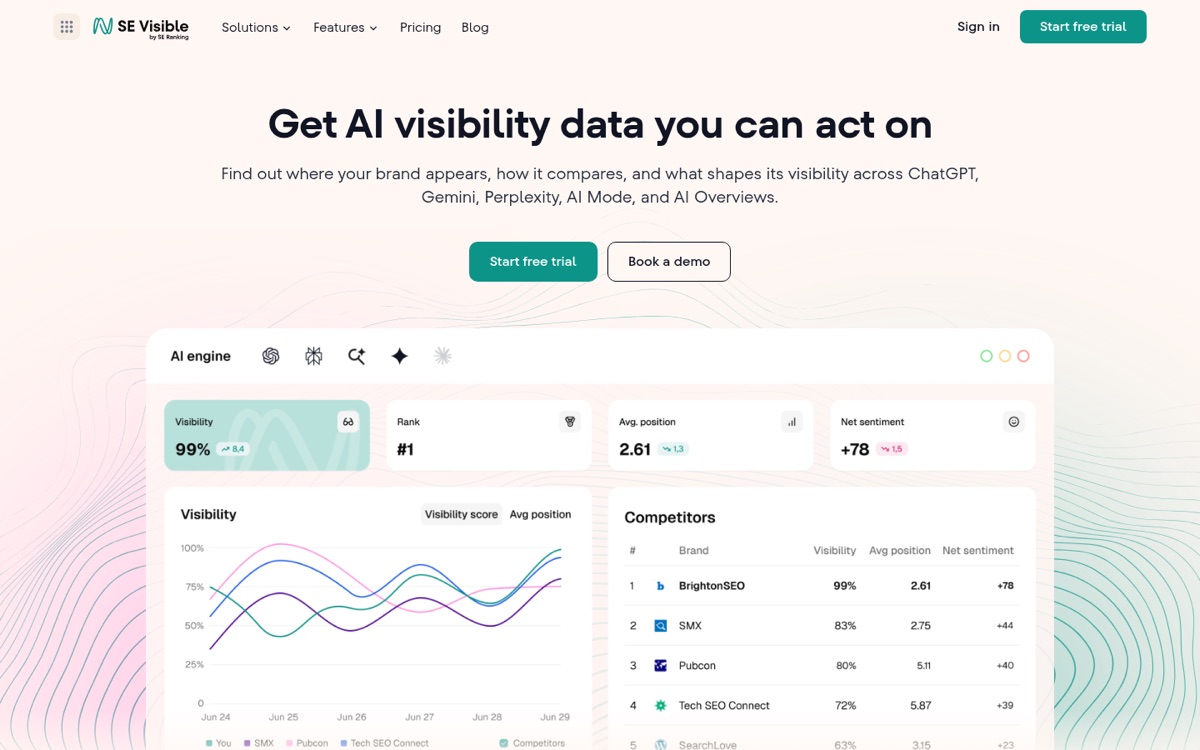
Open a client chart, click the figure that looks off, and the answer behind it is right there for the reviewer. An AI visibility platform, SE Visible by SE Ranking follows each client brand across Google AI Mode, ChatGPT, Google AI Overviews, and Gemini.
Best for: Delivery and operations leads at agencies with 20+ mid-market and enterprise retainers, where client numbers pass QA before shipping.
Standout feature: The reviewer's evidence sits one click from the chart. Collection runs in a real browser, the interface a person uses; answers stay unedited, labeled by engine, location, and check date. Every visibility score, average position, or share of voice opens into its answers. That's what a QA gate runs on.
Pros:
- Structures client onboarding: competitors suggested at setup, prompts grouped into topics with intent and branded tags
- Sets each project's market: a country, or a city or region
- Keeps every supported engine on every plan; no engine add-ons or model tiering
- Tracks daily by default, frequency adjustable, with per-engine trends and period comparison
- Exports via the API (all plans; write actions let setup be scripted), Looker Studio, or CSV/XLSX
Cons:
- Covers AI visibility alone; SE Ranking handles rank tracking, keyword research, and site audits
- No white-label option yet; client-branded reports run through Looker Studio
- Custom access control is coming, so invited clients don't have restricted roles yet
Pricing: Not quoted here; the plan list is on visible.seranking.com. All plans include every tracked engine plus API access; a free trial is offered.
The roster test: If you need each client number to reach QA with its evidence attached, pilot SE Visible on five accounts first. Run a client's prompt research in SE Visible and time the setup against your client onboarding checklist.
2. Peec AI
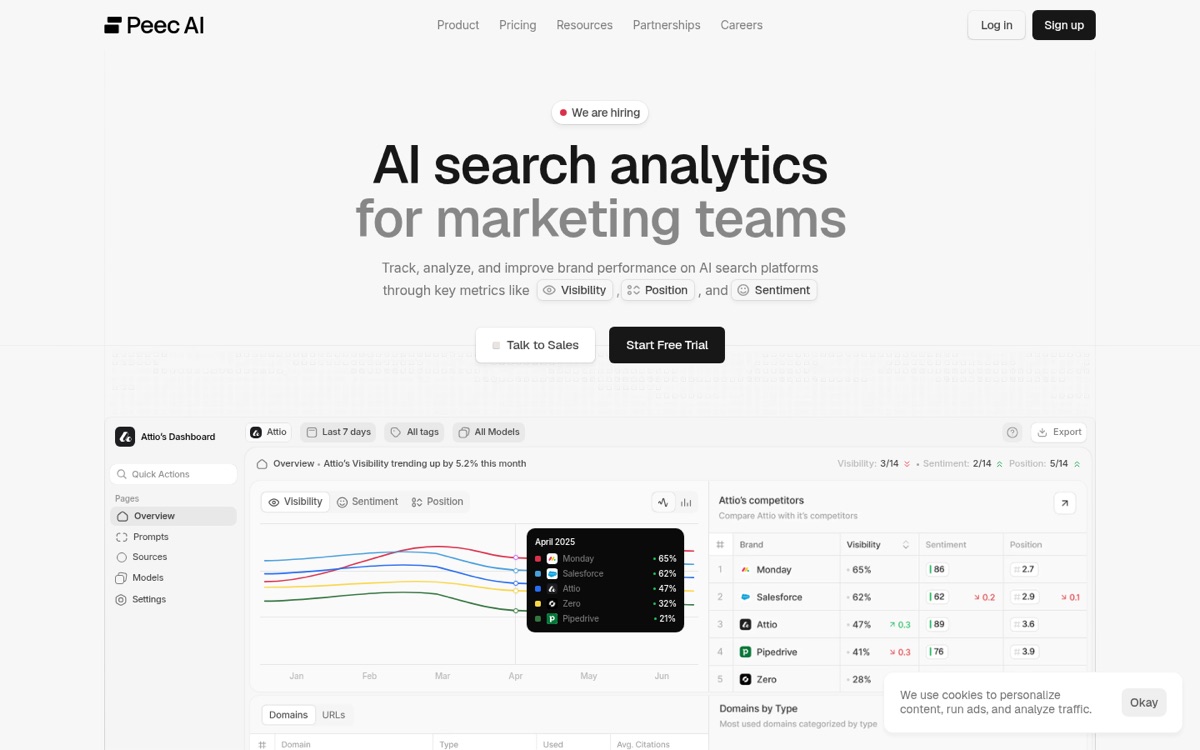
Peec AI tracks brand presence in AI answers on agency plans built around client and pitch projects.
Best for: Agencies that want pitch-to-client conversion and scheduled client reports in one credit pool.
Standout feature: Pitch projects convert into paid client projects, client users are unlimited, and agency plans list scheduled reports through the MCP or Agent. That takes month-end report assembly off the analyst running the AI visibility tools.
Pros:
- Scales to 3, 10, 25, or unlimited client projects
- Clones Looker Studio templates per client
- Shares view-only client links limited to the charts you choose
- Puts all client projects on one invoice
Cons:
- Credits multiply prompts, models, and frequency, so each added engine raises burn
- Perplexity sits only on the custom tier
Pricing: Agency plans from $245/month (Essential); Growth $495, Scale $795; about 15% off annually.
The roster test: Solid onboarding-to-report factory; model each client's credit burn first.
3. Otterly.AI
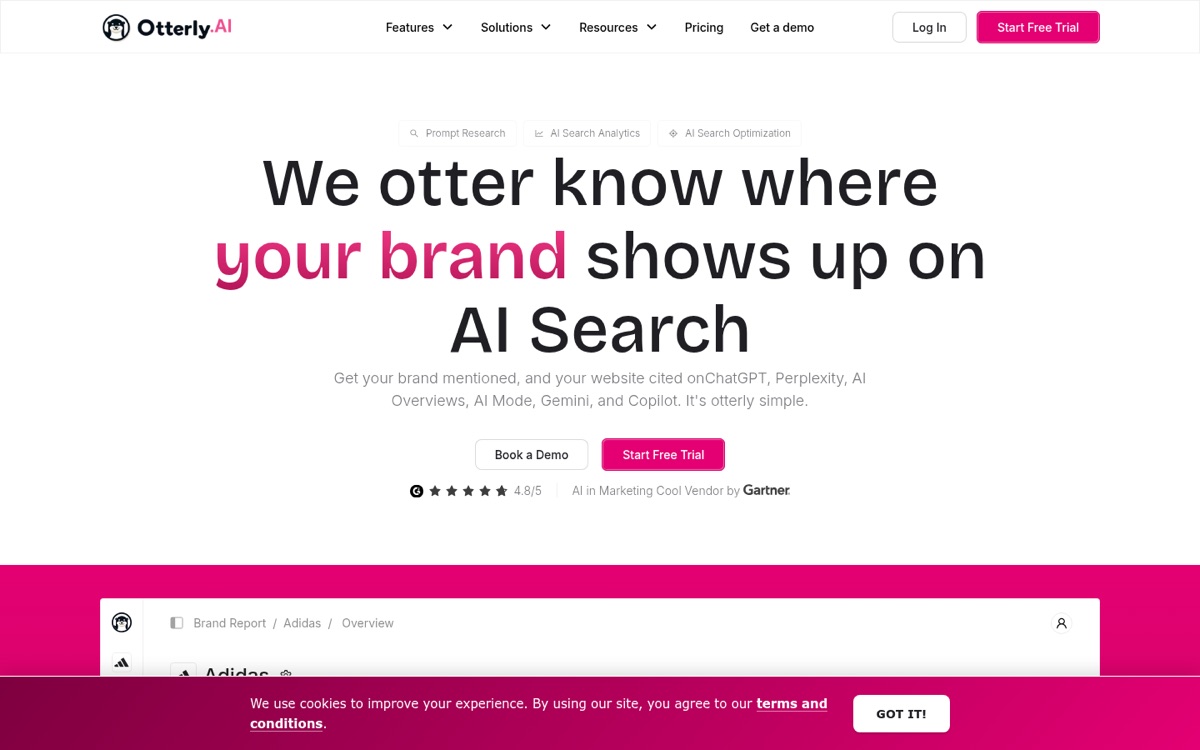
Otterly.AI is a prompt-priced AI visibility tracker with unlimited workspaces from Standard up.
Best for: Agencies whose reporting stack runs on Looker Studio and scripted pulls.
Standout feature: Standard adds a Looker Studio connector and monthly quotas of 2,000 API and 2,000 MCP requests (5,000 each on Premium). Agency Partners get pitch workspaces and branded Looker Studio reports, the two things production asks of AI visibility tracking tools.
Pros:
- Covers ChatGPT, Google AI Overviews, Perplexity, and Microsoft Copilot in the base price
- Includes unlimited team members
- Tracks daily across multiple countries
- Bills partner workspaces on one invoice
Cons:
- Claude, Google AI Mode, and Gemini are paid engine add-ons
- API and MCP calls are capped monthly
Pricing: Standard $189/month, Premium $489/month ($160 and $422 billed annually); Enterprise custom; free trial.
The roster test: Clean fit for a Looker-based reporting line; price engine add-ons per client first.
4. Profound
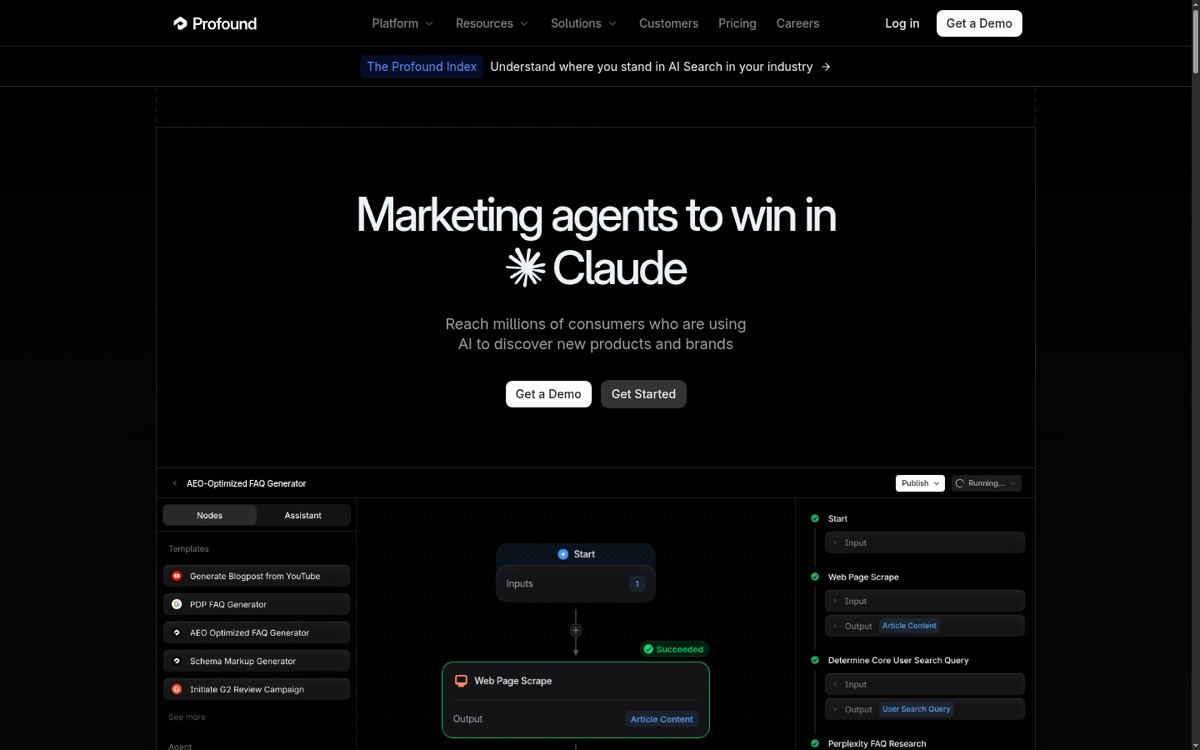
Profound is an AI visibility platform whose agency plan bills each client as a paid workspace.
Best for: Agencies pricing AI visibility per client, with history kept from day one.
Standout feature: Each client workspace is a $399-a-month add-on with 100 daily-tracked prompts and all-time history; Agency Growth adds 10 pitch workspaces a month. When finance asks what AI visibility tools cost per account, the answer exists before onboarding.
Pros:
- Exports client workspace data as CSV and JSON
- Consolidates billing across workspaces
- Includes 400 Agents credits per client workspace
- Lists nine platforms and a dedicated agency partner on Agency Enterprise
Cons:
- API is listed "No" on Agency Growth; Agency Enterprise has it
- Growth workspaces cover three platforms, one language; five agency seats
Pricing: Agency Growth base fee plus $399/month per client workspace; Enterprise terms custom.
The roster test: Predictable cost per account; scripted reporting at 20+ clients means Enterprise.
5. Rankscale
Rankscale is among the credit-based AI visibility tools, with a monitoring schedule for every search term.
Best for: QA leads deciding how often each prompt reruns before trusting a number.
Standout feature: Every plan monitors a search term hourly, daily, weekly, or monthly, with optional bi-cadence, and unused credits roll over from Pro up. A volatile prompt gets a second look before the report ships.
Pros:
- Scales to 50 brand dashboards on Growth, 100 on Enterprise
- Opens the REST API from Pro+
- Adds brand dashboard slots anytime in the app
- Shares white-labeled dashboard links on Growth and Enterprise
Cons:
- Each engine query draws credits, so cadence times engines sets the bill
- White-labeled links need Growth or higher
Pricing: $99 (Pro), $229 (Pro+), $385 (Growth), and $780 (Enterprise) a month; a yearly-only Essentials tier starts at $20 a month.
The roster test: Granular rerun control; cap cadence per client, or QA enthusiasm becomes credit overrun.
6. Scrunch AI
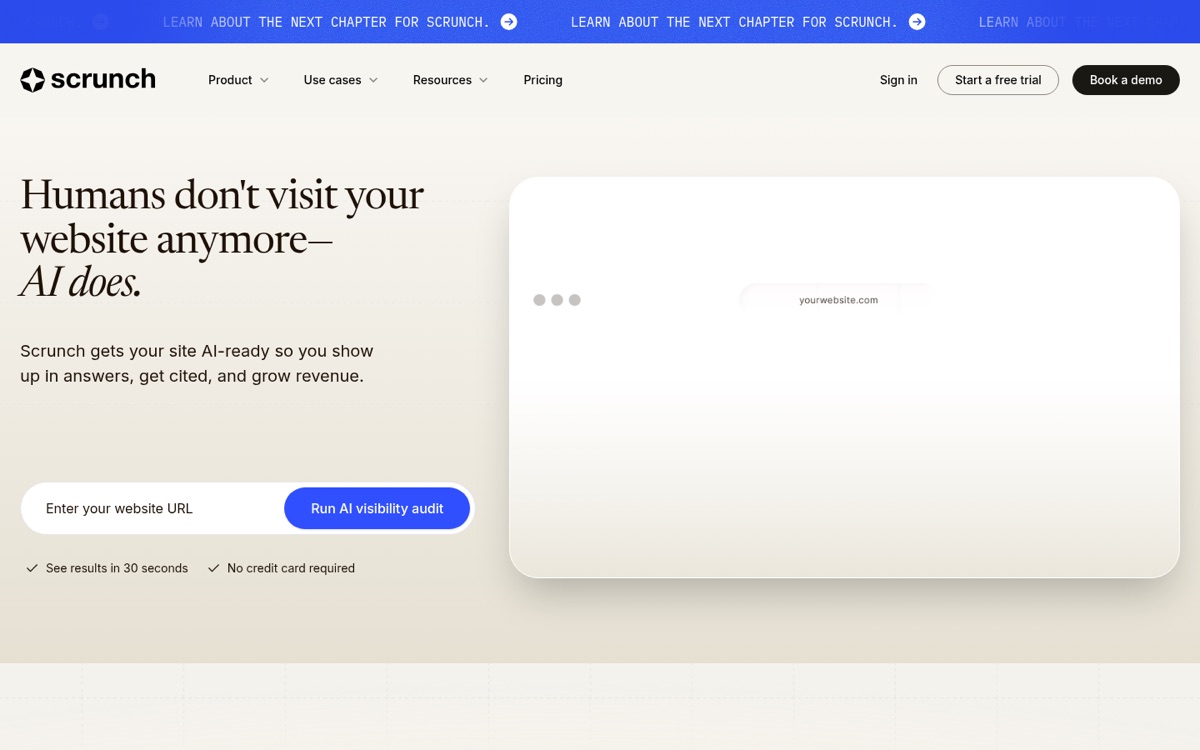
Scrunch AI is an AI visibility platform with an API-first, headless agency offer.
Best for: Larger agencies piping AI visibility data into their reporting and ticketing.
Standout feature: The agency page describes headless delivery with white-label outputs, multi-client workspaces, prospecting environments, and access controls so teams and clients see the data meant for them. AI visibility tools that feed a ticketing system need exactly that shape.
Pros:
- Adds SAML/OIDC SSO, Looker Studio, and Query API on Enterprise
- Lists 125 prompts and 5,000 monthly responses on Core, for capacity planning
- Covers up to nine LLMs, Gemini included, on Enterprise
Cons:
- No agency price on its agencies page
- Core is one brand workspace, five user licenses, four LLMs, one country, no API or Looker Studio
Pricing: Core $250/month; Enterprise and agency terms custom.
The roster test: An API-first, headless pitch; get agency terms and API limits in writing first.
7. ZipTie
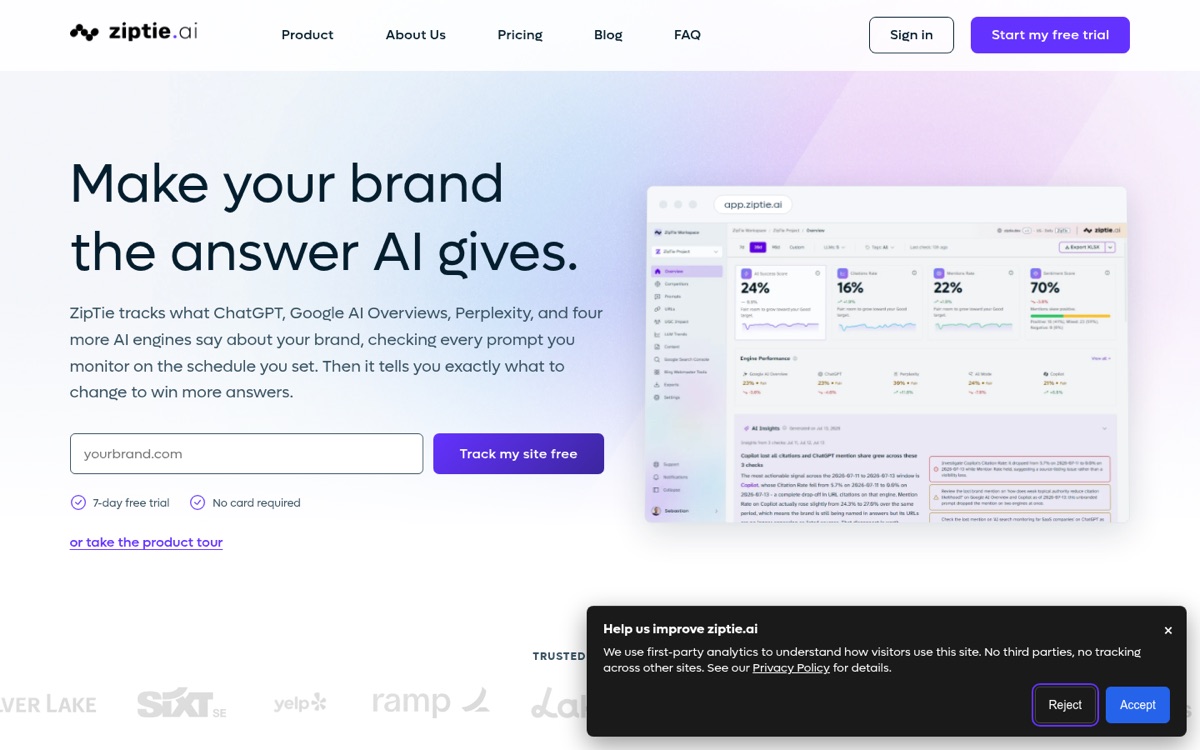
ZipTie is usage-priced AI visibility tracking built from prompts, refresh frequency, and engines.
Best for: Agencies that want each rerun cadence priced line by line.
Standout feature: One prompt, one engine, one check costs $0.01; seats, projects, and competitors are unlimited. Of the AI visibility tools here, its price scales with cadence and engine count.
Pros:
- Invites a client as a guest viewer of their own project
- Produces client-branded PDF reports; share links still show the ziptie.ai mark beside your logos
- Adds API and MCP for $10 a month
Cons:
- Reports are made on request, never scheduled or emailed
- No cross-client rollup; one API token per project
- Sets engines per workspace, so every client in it shares them
Pricing: Pay per prompt slot; vendor example: ten clients, 50 weekly prompts, all seven engines, $130.72/month; 7-day free trial.
The roster test: A new client costs only its prompts; budget analyst hours for report assembly.
8. AthenaHQ
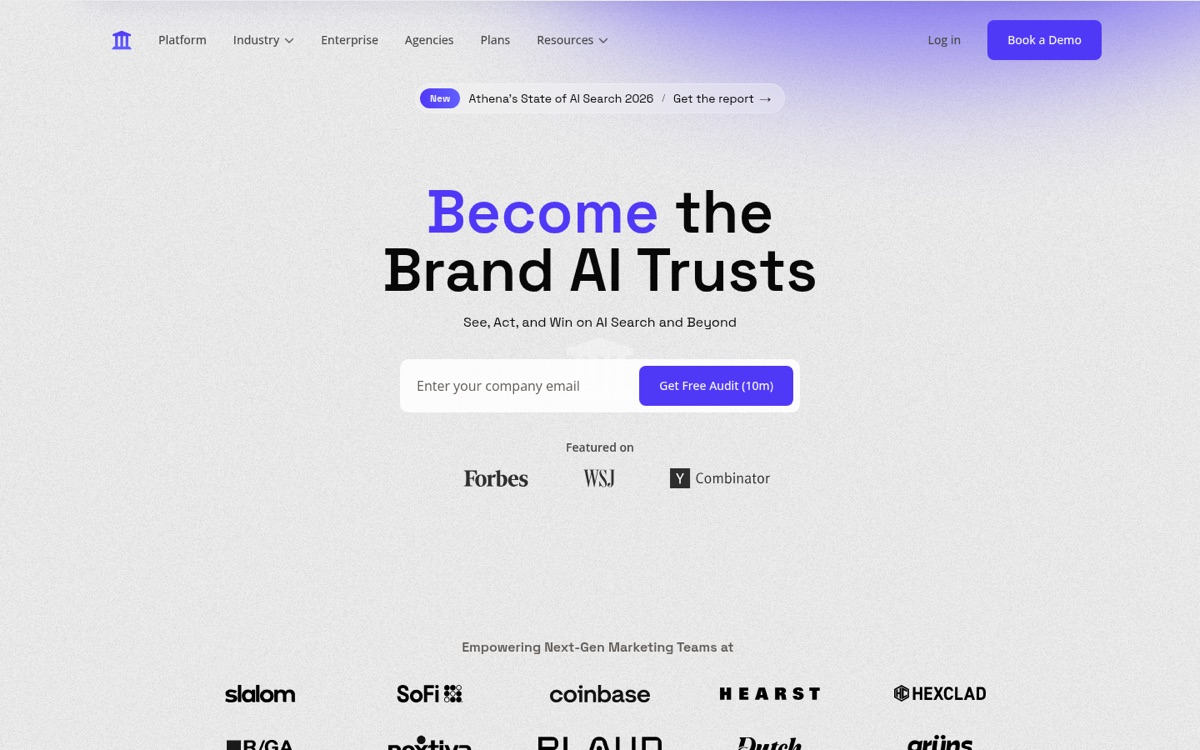
AthenaHQ, one of the credit-based AI visibility tools, pairs tracking with content agents and guidelines enforcement.
Best for: Account teams that turn findings into content work inside the same platform.
Standout feature: Starter places a base content optimization agent and brand guidelines enforcement next to tracking, at one credit per AI response. Enterprise adds an advanced agent and dashboards by team, region, or goal.
Pros:
- Gives paid plans unlimited seats with role-based access control
- Exports CSV on Starter
- Tracks unlimited competitors and manages robots.txt and llms.txt on Starter
- Adds BI dashboards (Tableau, Power BI, Looker) and SAML SSO on Enterprise
Cons:
- API access and extra credits cost extra on Starter
- Starter covers one region and language; multiple countries need Enterprise
Pricing: Starter $295/month; Enterprise custom; free Essential tier.
The roster test: Useful when content production sits with the account team; roll out on Enterprise.
What goes on the runbook, and what stays off
AI visibility tools earn a runbook slot on two numbers: fewer onboarding hours per account and a lower error rate at the QA gate. One that moves neither is a hobby. Agencies weighing whether to run these tools in-house at all can compare the trade-offs in GEO tools vs. an agency.
Not on the runbook: ZipTie if reports must self-assemble (none are scheduled); Scrunch AI Core for a roster (one brand workspace).
Yes, this is unexciting. At 60 retainers, that's the point.
If you need both numbers down, put SE Visible on your next five onboardings. Run one client through SE Visible on a trial. SE Ranking handles Google and classic search for the same retainers.
FAQ for agency delivery and operations leads
Which AI tracker is the best?
The one that clears onboarding, QA, and production. The pick here is the SE Visible platform: every number opens into its stored answer, and each plan carries the same engines plus API access. Test AI visibility tracking tools for agencies on live accounts first.
How many prompts should an agency track per client?
No fixed count. Cover the client's buying questions by topic, each product line and rival included. Tag each prompt by intent for cleaner QA. Freeze the wording at sign-off; add prompts only through change control.
Does an AI visibility platform replace agency project management software?
No. AI visibility tools produce evidence-backed findings; SEO agency management software owns tickets, owners, and deadlines. Connect the two through the API or exports so each finding arrives in the ticket with its stored answer.
Put this into action with eSEOspace
We help businesses grow with seo, geo & aeo that actually performs. Explore the services behind this guide:
Get a FREE Audit
We'll perform a comprehensive SEO, AEO, GEO & CRO audit of your website — completely free — and show you exactly how to outrank your competitors.
Don't have a site yet? Get in touch →
Get a FREE GEO/AEO/SEO Audit
We'll analyze your site's SEO, GEO, AEO & CRO — completely free — and show you exactly how to get found across Google and AI answers.
Don't have a site yet? Get in touch →
Great — your audit is on the way!
We'll send your free SEO/GEO/AEO/CRO audit within the next few hours. Where should we send it?
You're all set! ✓
Your free audit is being prepared — check your inbox in the next few hours. Talk soon!


On this page
- How the AI visibility tracking tools were scored for agency delivery
- Onboarding a client project: prompts, competitors, market, engines
- QA before the numbers reach the client
- Routing findings into production tickets
- 8 AI visibility tools ranked for an agency workflow at 20+ retainers
- 1. SE Visible
- 2. Peec AI
- 3. Otterly.AI
- 4. Profound
- 5. Rankscale
- 6. Scrunch AI
- 7. ZipTie
- 8. AthenaHQ
- What goes on the runbook, and what stays off
- FAQ for agency delivery and operations leads