



Advanced Personalization Hacks To Improve Customer Engagement
Advanced Personalization Hacks To Improve Customer Engagement
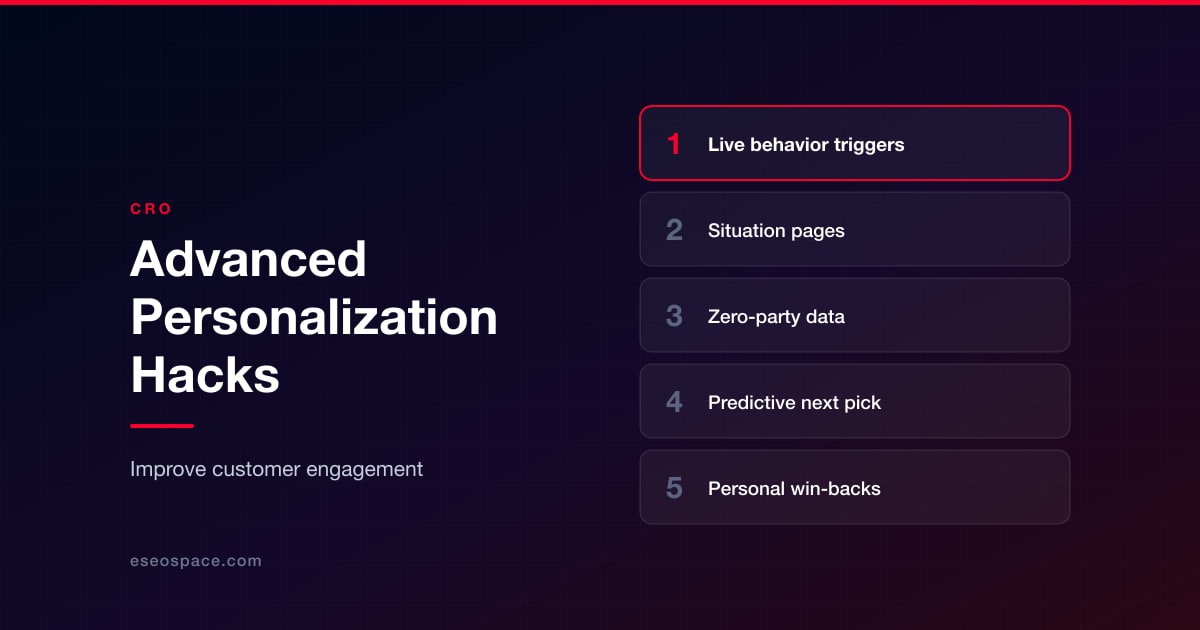
If you still think you can improve customer engagement by sticking a first name at the top of an email, we have bad news. That trick died years ago. Everyone does it now. People tend to ignore it, the same way they ignore Hi there.
Successful customer engagement happens way past the name these days. Getting the click was never the hard bit. It is what you show next that makes someone stay or just leave. So below are 9 personalization hacks that still actually work, plus 4 mistakes that spoil the whole thing.
What It Actually Takes To Improve Customer Engagement Now
Quick gut check before the tactics. Customer engagement refers to how people interact with your brand across different touchpoints. And personalization is what makes those interactions relevant to each person. But the whole bar for personalization has shifted, and most brands have not noticed.
Using someone's name used to be thoughtful. Now it is just wallpaper, and customer expectations go beyond that. People want you to actually understand them, not parrot their name back.
That understanding helps build stronger customer relationships over time. 73% of them already expect a brand to figure out what they need. The name barely registers.
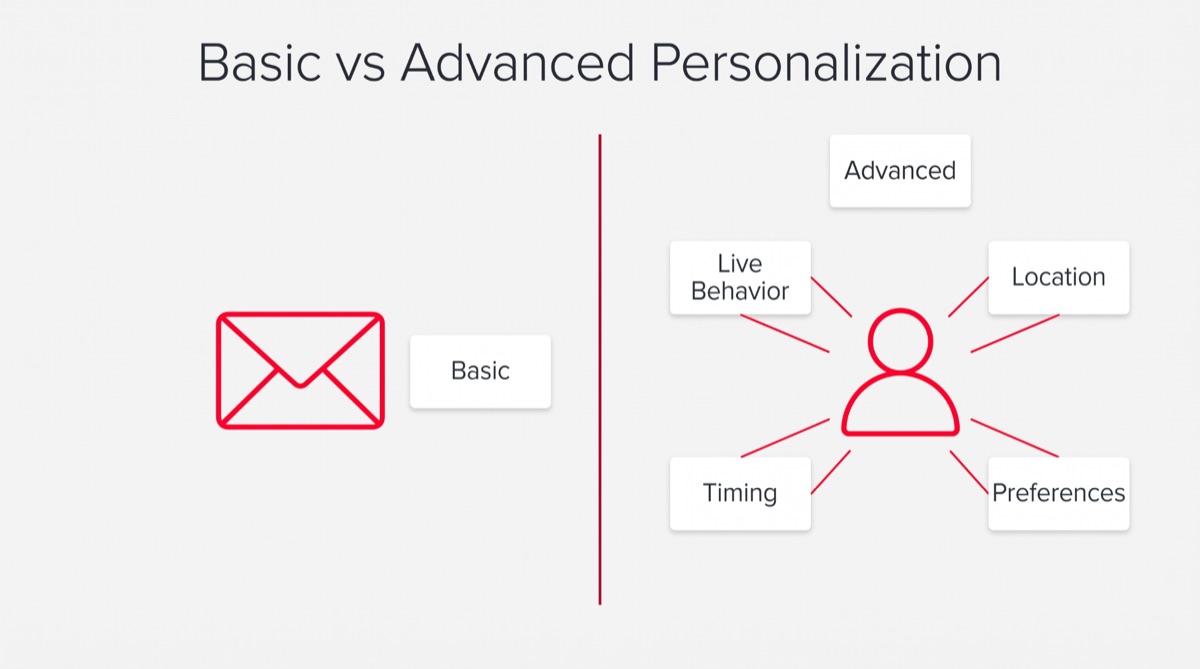
Advanced personalization works differently. It reacts to what you are doing this very second, then makes a smart guess about what you want next. Switch from the app to your inbox, and it keeps up.
Funny thing is, nearly every brand thinks it personalizes brilliantly. Ask their customers, and you get a very different answer. Closing that gap is how you actually improve customer engagement. And honestly, implementing successful customer engagement strategies is not as hard as it sounds once you let go of the shallow tactics.
| Dimension | Basic Personalization | Advanced Personalization |
|---|---|---|
| Data used | A saved first name | Live behavior and stated preferences |
| Timing | Same message for all | The right moment per person |
| Scope | One channel | Every channel, one identity |
| Decisions | Fixed rules | Predicted next best action |
| Feels like | A mail merge | Someone who gets you |
9 Advanced Personalization Hacks To Improve Customer Engagement
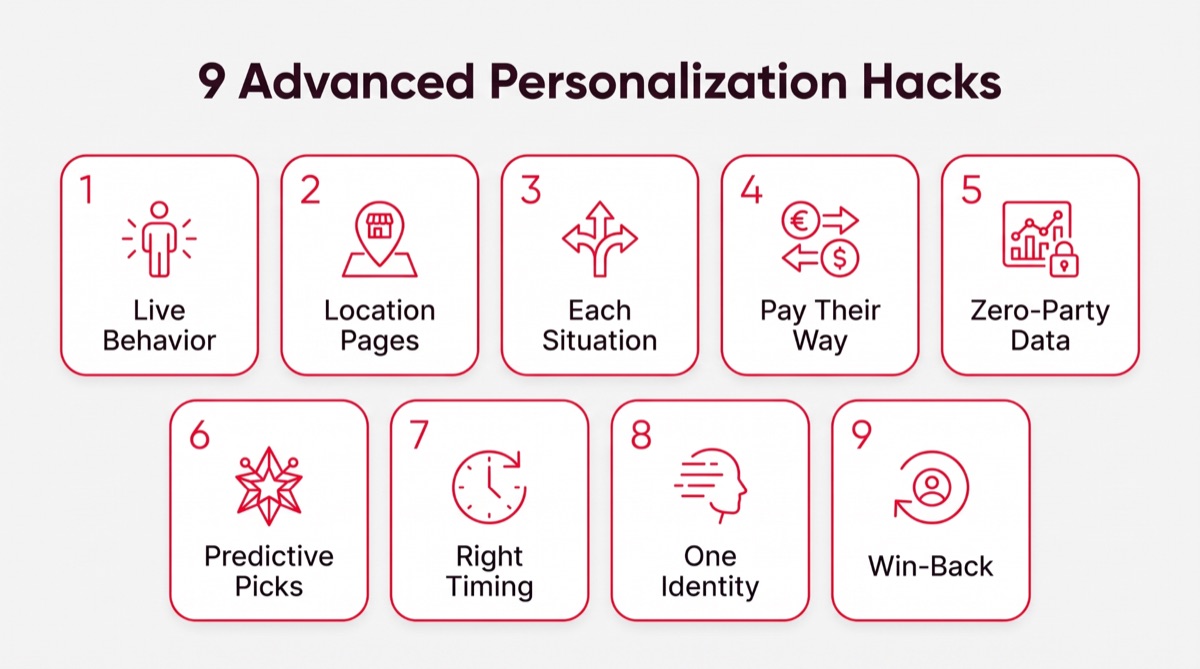
Okay, the good stuff. These 9 hacks are actually worth your time to boost customer engagement. Pick the two or three that fit your setup.
1. Trigger Personalization Off Live Behavior, Not Last Week's Data
Most personalization is basically working off a week-old photo. It sees what you did last Tuesday and reacts now, long after you have moved on. Live behavior is the opposite. It is what the person is doing right this very second.
React in that moment, and the whole thing suddenly becomes human. The right customer engagement tools can help you respond to live behavior without manual work. Even plain customer engagement marketing strategies already lift participation for over half of marketers. Shopify puts it at 54%, and real-time is where it gets properly good.
Here is the part nobody tells you about going real-time. It hammers your database. Every single live decision is another query firing the instant someone clicks. That is fine on a quiet Tuesday. Then a flash sale hits and traffic triples. The queries start queuing, and your clever in-the-moment pick now shows up three seconds late.
This is squarely a database problem, not a marketing one. It is query tuning and indexing and read replicas and failover, the kind of technical work most in-house teams were never built to do around the clock.
That is exactly the gap remote DBA services fills. They keep the queries quick and watch it around the clock. A spike never takes the whole thing down at the worst possible moment. You get to build the flashy real-time customer experience on top without the data layer buckling underneath.
For a store that leans hard on live personalization during big sale days, that steady foundation is the difference between magic and a frozen page. Sort the boring database bit first, and the clever stuff finally has room to breathe.
- Fire a tailored message the moment someone adds an item to cart
- Swap your homepage banners live based on the pages they just viewed
- Trigger a help offer when someone stalls on the same step twice
- Update your recommendations within the live session, not on tomorrow's batch job
2. Tailor The Page To Where The Visitor Actually Is
Funny how few brands use where someone actually is. The same page can look bland to one visitor and made-for-me to the next, and location is the only thing that changed. Show nearby stock or the closest branch and a flat national page suddenly feels local.
The trick is not creepily announcing their town back at them. It is simply making the next step fit someone standing exactly where they are. Showing relevant local details can improve customer satisfaction by making the next step clearer.
Some businesses live and die on being local, and for them this is everything. Picture anything urgent that has to happen in person. A visitor doesn’t care about a glossy national brand. They care about one thing. Can someone who is actually near me show up, and soon? A generic page that vaguely mentions your area can’t answer that, so they bounce back to the search results.
Look at this in-home pet euthanasia in Denver. No faceless 1-800 number. It actually names the vets covering the Denver metro and lists the real towns they reach. For a family facing the hardest day with their dog, that specificity is the whole thing.
They instantly see a real person can come to their home, not a call center two states away. A single national page leaves them guessing on the one question that actually counts.
Create a proper page for each city you serve, and you answer it before they even ask. Anywhere the job happens on someone's doorstep, this beats a national page hands down.
- Detect the visitor's region and show the stock or branches nearest them
- Build a dedicated page for each city or region you genuinely serve
- Name real local people or landmarks so the page feels truly local
- Adjust currency and delivery estimates to match the visitor's actual location automatically
3. Build A Version For Each Specific Situation, Not Each Demographic
Most segmentation is lazy as anything. It sorts people into age buckets or gender boxes and calls that personal. But two people the exact same age can want polar opposite things.
What really drives what someone does is their situation, the actual problem that dragged them to you today. Build around that, and you leave every demographic guess in the dust. This helps you create personalized customer experiences based on what each person actually needs.
This gets deadly serious wherever people arrive with very different and very raw needs under one broad umbrella. Send them all to a single generic page, and most of them leave.
The person with a narrow, gut-wrenching situation is looking for one thing. Proof that you actually understand their exact case. Hand them a vague overview instead, and they decide you don’t, then go find someone who clearly does.
Law is the perfect illustration. A broad personal injury page tries to hug everyone at once, from fender benders to dog bites. Now put that next to this Wyoming wrongful death attorney page aimed at one specific nightmare.
It describes who is even allowed to file under Wyoming law, right down to the two-year clock and the exact damages on the table. Someone who just lost their husband reads that and knows at once this page is about them.
The broad page never gets close, because it answers nobody's real question. One sharp page per situation does what a broad page never will, since each one speaks to a single case. In any field full of distinct high-stakes scenarios, this is how you actually connect.
- Map the top 5 distinct situations that actually bring new customers to you
- Write a dedicated page that answers the specific questions behind each situation
- Route each visitor to the right version using one short entry question
- Lead each page with real proof you have handled that exact case
4. Let People Pay However They Want
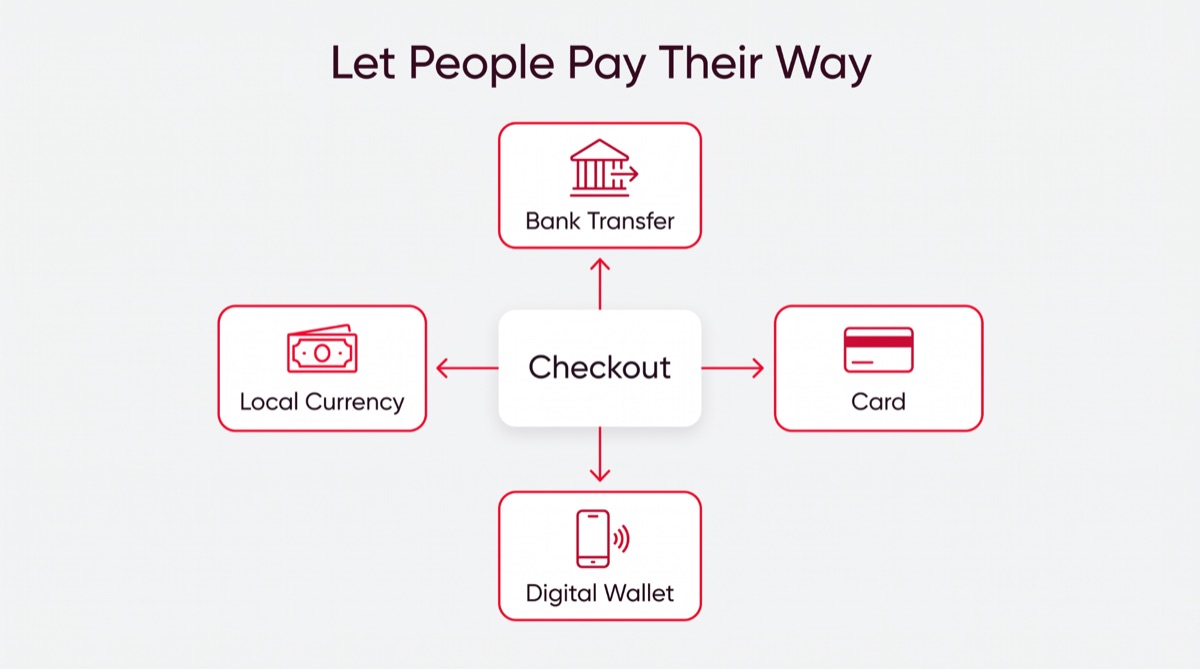
Weird thing about personalization. It usually stops dead at the checkout. But how someone pays is deeply personal too. Push a buyer toward one payment method they never use, and you lose them right at the finish line, after all that effort getting them there.
Letting each person pay the way they already trust is personalization at the exact moment it counts most, when the money is about to move.
This bites hardest with overseas buyers and anyone living outside the usual card world. Loads of people now keep real money in forms your checkout has never heard of. Some hold stablecoins or other digital currency. Others are in places where bank cards are pricey or just a pain.
If the only thing you offer is a card they don’t own, you have personalized everything except the one step where they hand over cash.
The fix is to increase the options and let them choose. There are now services that let you transfer crypto to a bank account, often within seconds. The neat part is the person receiving it never touches crypto or has to understand a word of it.
The buyer spends what they already have. The business just sees ordinary local currency arrive. Nobody gets sent down a path they don’t trust. For anyone selling across borders or to a crypto-comfortable crowd, that one option kills a very real reason people leave at checkout. Open up how people can pay, and that final step stops losing sales.
- Offer at least three payment methods beyond just a single default card
- Show the payment options each specific region actually prefers, set by default
- Save a returning buyer's preferred method so their checkout is one tap
- Let your global buyers check out in their own local currency directly
5. Personalize From What Existing Customers Tell You, Not Just What You Track
Tracking customer behavior is great, but it is still you assuming what someone wants. Zero-party data skips the guessing entirely. It is what people just tell you flat out, like what they are shopping for or what they care about. And this gives you a clearer basis for personalized customer interactions.
One short quiz or a quick preference step turns a total stranger into someone you can tailor to from the very first minute. Following through on those preferences is part of excellent customer service. A guided onboarding flow is the ideal spot to get customer feedback, since people expect a couple of questions while they set up anyway.
- Ask new users for one or two goals during signup, not ten
- Add a preference center so people can update what they want anytime
- Use a quick quiz to recommend products based on their stated needs
- Act on every answer immediately so the effort feels clearly worth it
This becomes tricky when your inventory is one-of-a-kind and here today, gone tomorrow. If every item is unique, behavior tracking breaks down. There is no 'customers also bought' when only one of each ever exists. The piece someone would have loved sells once and never comes back. So guessing from past clicks is close to useless.
Take this estate sale company in Atlanta, which has run over a thousand estate sales. Every sale is a different home, so the inventory is never the same twice.
A buyer who adores mid-century chairs or vintage jewelry has no idea the one sale with their dream piece is happening this weekend. And there is no purchase history to lean on, because nobody buys the same unique item twice.
The fix is just to ask. Let buyers tell you up front what they look for. Think style and era. Then when a new estate gets cataloged, you ping the people whose stated taste matches what came in.
Now a shopper hears about the exact sale built for them, instead of every sale. For anything one-of-a-kind, stated preferences beat behavior tracking every time.
6. Put A Predictive Next-Best Pick In Front Of Them
Rule-based personalization only ever does what you told it to do in advance. The predictive kind figures out the next best thing on its own… by spotting patterns across thousands of people who look a bit like this one. A model just ranks what this exact person probably wants next instead of a rigid if-this-then-that.
It is how the big platforms keep you scrolling for hours. And it genuinely sells, with 37% of shoppers buying more off personalized picks. The juiciest place to drop one is the product page, where a good suggestion can increase the order then and there.
- Feed the model real customer interactions and purchases, not just one thin signal
- Show your recommendations where buyer intent is highest, like the cart page
- Retrain the model often so it reflects current taste, not last year's
- Explain briefly why you picked something so the suggestion actually builds trust
7. Perfect The Timing So It Shows Up At The Right Moment
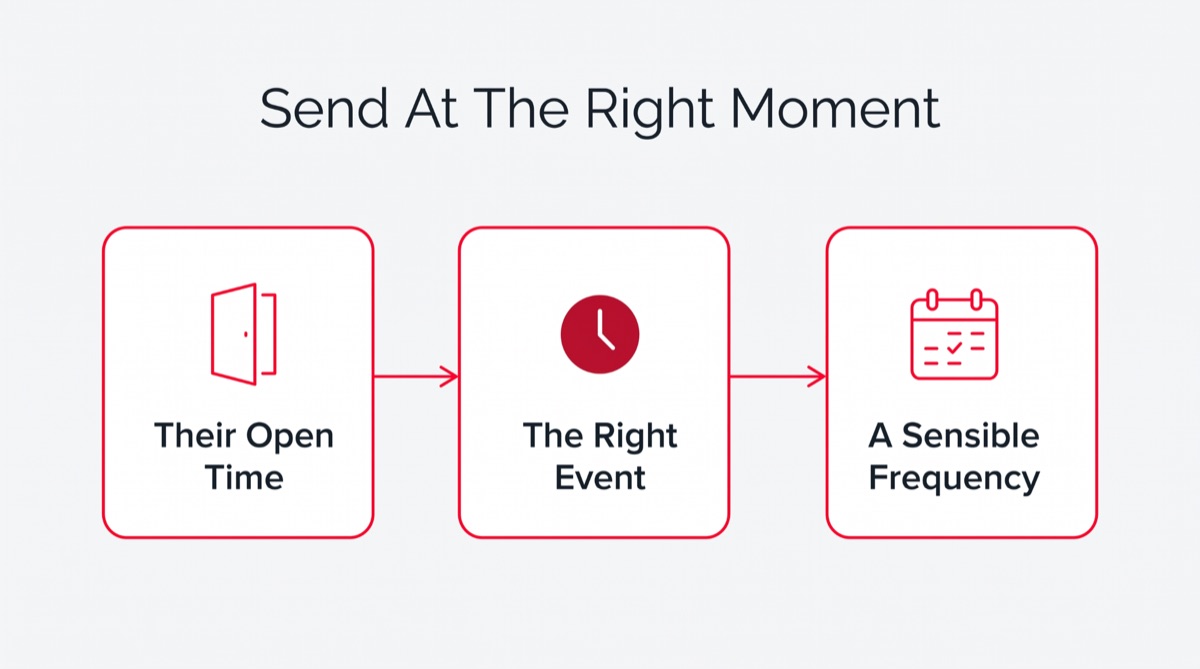
Right message at the wrong time is just spam. Timing is a personalization trick everybody forgets. Each person has a window when they are likely to open something and act on it. And it is different for every single one of them.
Some people clear their inbox at 6 am. Others at midnight. Hit that personal window, and you beat the brand bombarding everyone at 9 am sharp.
- Learn each contact's usual open time and schedule every send around it
- Trigger your messages off real customer events, not an arbitrary marketing calendar
- Cap how often you message each person so you never become annoying
- Pause any scheduled sends the moment someone just engaged a different way
8. Stitch One Identity Across Every Channel They Use
Most brands treat one person like three different people. The email list has no clue what the app knows. And the website is oblivious to both. The same problem can show up across social media platforms when profiles are not connected. So the poor customer answers the same question 3 times and gets pitched the thing they bought last week.
A strong customer engagement strategy keeps that shared context consistent across every channel. Connect those identities into one profile, and that nonsense stops. The person picks up on your app right where they left off on social media channels, and the whole brand finally feels like one thing.
You can use social media engagement data to keep those interactions relevant. That consistency can strengthen brand loyalty by making every interaction connected.
- Tie every channel to one shared ID so profiles never fragment again
- Carry full context across channels so nobody ever repeats themselves to you
- Suppress ads for any product the person already bought on another channel
- Sync customer preferences instantly so a single opt-out applies across everything at once
9. Personalize The Win-Back For People Slipping Away
Everybody pours their best customer engagement strategies into a fresh and active customer base and totally forgets the ones on their way out. A dip in logins or a cart left to go cold is a signal, not a full stop. They haven’t actually gone yet. They are wobbling. A bland we miss you email does nothing for that.
A win-back built around what this specific person did is what hauls them back. Relevant follow-ups can also strengthen customer loyalty and improve customer retention over time.
The obvious one is the abandoned cart, and a smart cart recovery flow built on what they left wins a real slice of them back. You could also offer a relevant reward through your loyalty program to give them a reason to return.
- Trigger a personal win-back the moment their engagement drops, not months later
- Reference the exact items or features they personally left behind last time
- Lead with real help before any discount to uncover the actual problem
- Stop messaging anyone who has clearly decided not to come back ever
4 Personalization Mistakes That Weaken Even the Most Effective Customer Engagement Strategy + How To Fix Them
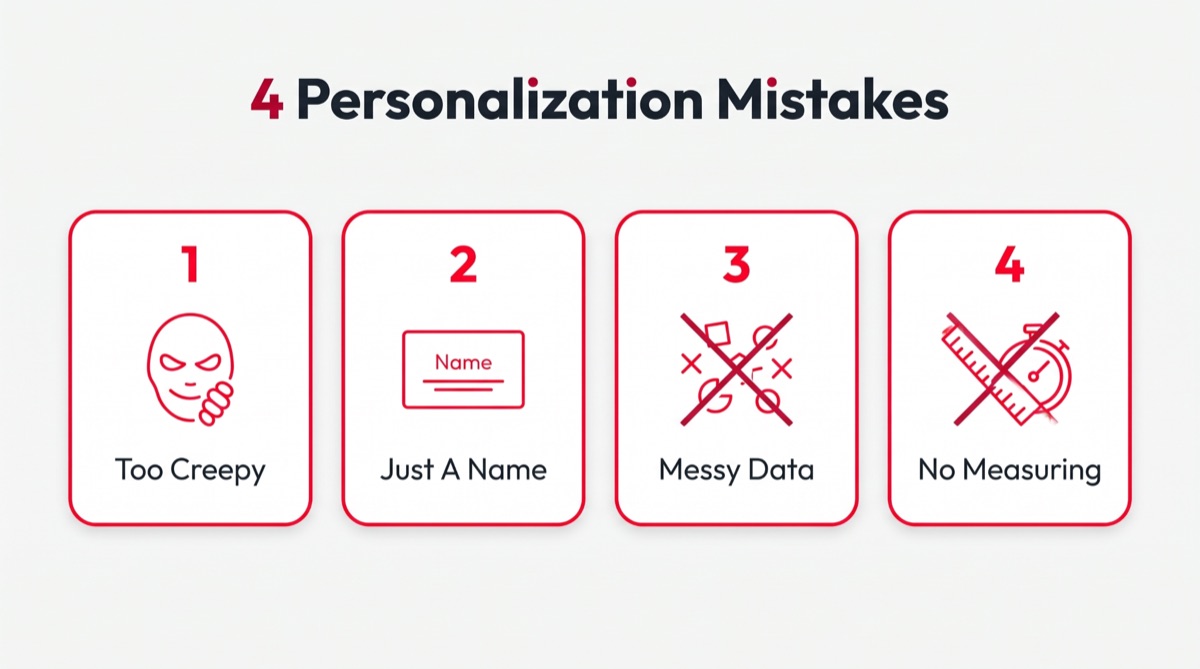
Even brilliant personalization can destroy everything you did to increase customer engagement if you fumble a few basics. These four mistakes undo all your hard work.
1. Personalizing So Hard It Tips Into Creepy
There is a thin line between helpful and flat-out creepy. And personalization sprints across it fast. Bring up something a customer never knowingly handed over, and you don’t look clever. You look like you have been snooping. The second someone feels watched, the trust is gone. And no slick targeting buys it back.
People will happily share stuff for an obvious payoff. What they hate is being reminded how much you scooped up behind their back.
How to Fix: Leverage customer data they knowingly gave you or would obviously expect you to have. Make the payoff clear so it reads as a perk, not surveillance. Not sure about a signal? Leave it out and stay on the safe side of creepy.
2. Slapping On A First Name And Calling It Personalization
This is the one that makes people physically cringe. You merge a first name into a subject line and tick the personalization box, job done. Except the content underneath is identical for all two million recipients.
Your target audience notices it instantly. And a hollow Hi Sarah actually hurts more than no name at all. It tells them you have their data and still couldn’t be bothered to use it properly.
How to Fix: Personalize what you actually say, not just the hello. Change the content based on what they did or told you, even when the name stays totally generic. One genuinely useful recommendation beats a million name merges.
3. Personalizing On Messy Data So You Confidently Get It Wrong
Personalization is only ever as good as the customer data feeding it. Pour in duplicate records or an out-of-date purchase history, and even the most effective customer engagement plan face-plants in public. You greet somebody by the wrong name or push a product they sent back in March.
Bad data personalizes worse than nothing at all, because now you are wrong with total confidence. And one glaring mistake makes them doubt every other thing you show them.
How to Fix: Clean and dedupe your data on a set schedule, not after a loyal customer complains. Check the key fields before any campaign touches them. If a signal looks shaky, bin it rather than personalize on a hunch.
4. Personalizing Everything And Measuring Nothing
It is really easy to splash personalization everywhere and just assume it is doing something. Then you never check which bits actually enhance customer engagement and which are flat-out dead weight. So you keep wasting customer engagement effort on tactics that do nothing, and you can’t prove a single thing to your boss.
How to Fix: Pin one engagement metric to each tactic and watch it properly. A/B test the personalized version against a plain one so you know the lift is real. Anything that does nothing after a fair run gets cut, no hard feelings.
Conclusion
Advanced personalization is about depth, not a drawer full of shiny gadgets. You don’t need all 9 at once. Pick the two or three that actually fit your data and your people, and do them properly. A couple of truly personal moments beat a dozen half-hearted ones, and that is what genuinely helps you improve customer engagement.
And that is pretty much our whole thing at eSEOspace. We build and tune the actual websites all this runs on, so your personalization has somewhere fast and solid to live. From the first landing page to the final checkout, we make sure the entire customer journey is built to convert.
If you want a site that can actually carry this kind of personalization, come talk to us.
Put this into action with eSEOspace
We help businesses grow with marketing that actually performs. Explore the services behind this guide:
Get a FREE Audit
We'll perform a comprehensive SEO, AEO, GEO & CRO audit of your website — completely free — and show you exactly how to outrank your competitors.
Don't have a site yet? Get in touch →
Get a FREE GEO/AEO/SEO Audit
We'll analyze your site's SEO, GEO, AEO & CRO — completely free — and show you exactly how to get found across Google and AI answers.
Don't have a site yet? Get in touch →
Great — your audit is on the way!
We'll send your free SEO/GEO/AEO/CRO audit within the next few hours. Where should we send it?
You're all set! ✓
Your free audit is being prepared — check your inbox in the next few hours. Talk soon!








