



10 Best Proxies for Rank Tracking and SEO Monitoring in 2026
10 Best Proxies for Rank Tracking and SEO Monitoring in 2026
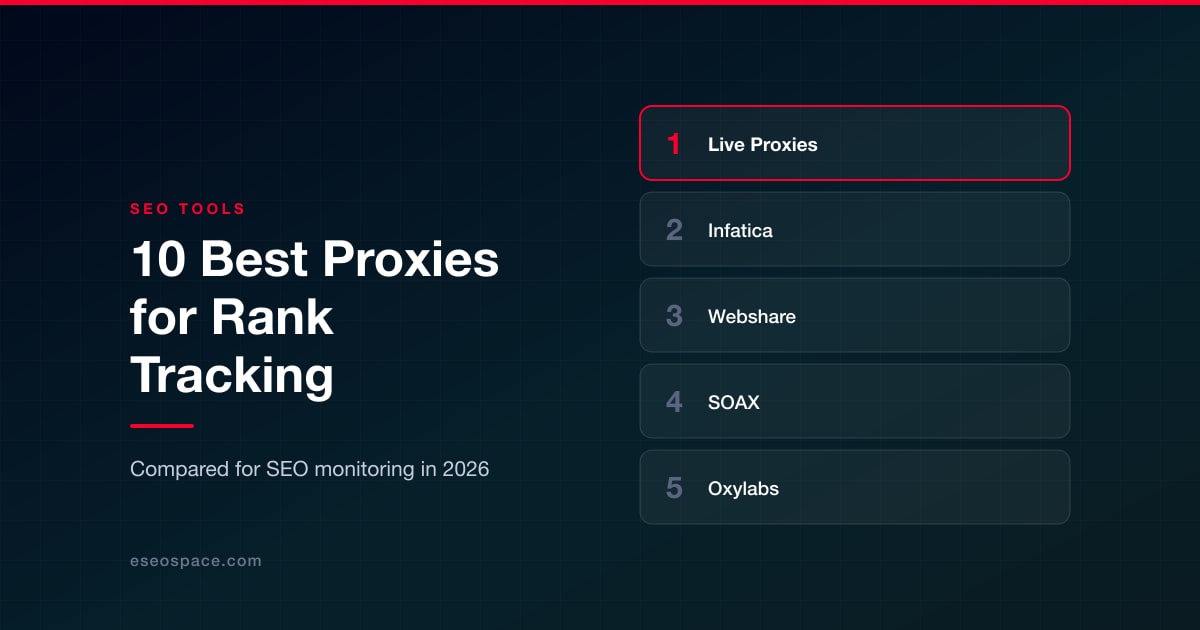
Rank tracking is only useful when teams can distinguish a lasting visibility change from normal SERP volatility or a collection inconsistency. Scheduled keyword monitoring, local SERP checks, international campaigns, and competitor analysis all depend on comparable search environments. A 2026 SEOmonitor study of daily rankings across 898 active SEO portfolios found that 42% of ranking drops of 10 positions or more recovered within three days, showing why one unusual result should not automatically be treated as a lasting ranking loss.
SEO teams need repeatable collection conditions to verify movements across keywords, locations, and reporting periods. The right proxy setup can help separate markets, manage recurring search requests, and rerun questionable results under the same conditions. This guide compares 10 proxy providers for recurring rank tracking and SEO monitoring, focusing on location repeatability, session behavior, protocols, and monitoring scale.
What Makes Rank Tracking Data Reliable Over Time?
Reliable rank tracking uses a defined collection method, not a one-off search result. Teams need to keep the important variables stable so changes in reports are more likely to reflect the search environment rather than a different IP location, browser profile, or query setup.
Fixed Market Conditions
A keyword should be checked from the same intended country, city, language, and device context whenever possible. Without fixed conditions, one report may reflect a local market while the next reflects a broader or entirely different search environment.
Consistent Query Setup
Query parameters, language preferences, safe-search settings, and search-engine versions can all affect visible results. Recording these settings helps a team reproduce a check when a ranking movement looks unusual.
Defined Rotation Rules
Rotation should follow the collection purpose. Independent queries can use rotating IPs, while related checks or browser-based workflows may require a sticky session to keep the network identity stable through the full sequence.
Scheduled Collection Windows
Running checks at similar intervals helps distinguish ongoing trends from temporary search-result volatility. Time-stamped SERP samples are especially useful when an update, local event, or site change affects rankings.
How Does Monitoring Cadence Change Proxy Requirements?
The frequency of monitoring affects the number of requests, retries, workers, and proxy identities a team needs. A daily report for a small local business has different infrastructure needs than hourly monitoring across several countries and thousands of keywords.
- Daily tracking: Small keyword sets and a limited number of locations can often run through a modest, scheduled collection setup.
- Hourly checks: Frequent reporting increases retry volume and makes request pacing, rotation, and worker separation more important.
- Keyword batch size: Larger portfolios need jobs to be split into manageable queues rather than sent from one network identity.
- Market coverage: Each country, city, language, or device profile can require a separate monitoring configuration.
- Parallel queries: Multiple workers need enough concurrency without mixing location settings or session states.
- IP reuse: Reusing a small number of IPs too aggressively can make high-frequency jobs less representative and less reliable.
How Does the Best Dedicated Proxy Support Consistent Rank Tracking?
The best dedicated proxy setup can support rank tracking when a team needs a stable network identity for recurring checks, controlled allowlists, or long-running SEO tools. A dedicated or privately allocated environment does not guarantee search access or ranking accuracy, but it reduces the number of shared-network variables that can affect repeated measurements.
Stable Monitoring Identity
A fixed IP or private allocation gives an SEO team a more consistent starting point for repeat checks. This is useful when the same tool, browser profile, and location are used across several reporting cycles.
Controlled Comparison Runs
When an unexpected ranking change appears, teams can rerun the query from the same environment before adding it to a report. This helps separate a temporary collection issue from a potentially meaningful SERP movement.
Persistent SEO Tools
Some SEO workflows rely on configured dashboards, browser profiles, allowlisted endpoints, or internal reporting systems. A stable proxy identity can make these tools easier to operate without changing network conditions between runs.
Reduced Shared-IP Variables
Public search activity from unrelated users can create additional uncertainty on heavily shared networks. Private allocation can reduce that overlap, although browser state, query settings, and search personalization still need separate control.
What Do the Best SOCKS5 Proxy Providers Add to SEO Monitoring?
The best SOCKS5 proxy providers can give technical SEO teams another routing option when browser automation, custom applications, or scripts need proxy support beyond standard HTTP connections. SOCKS5 isn't automatically better for every rank-tracking task, but it can help when your tool supports it and your workflow benefits from more flexible traffic routing.
- Browser compatibility: SOCKS5 can work with supported browser profiles used for localized SERP checks and repeatable research flows.
- Application routing: Custom scripts and desktop tools may support SOCKS5 directly when they need to route traffic through a defined proxy identity.
- Persistent connections: The protocol can fit longer browser or tool sessions that need to maintain a configured network path.
- Authentication options: Teams can use available credential- or IP-based authentication methods to separate access by project or worker.
- Mixed workflows: HTTP proxies may suit straightforward requests, while SOCKS5 can support compatible tools with more complex connection needs.
- Tool testing: The practical choice depends on whether the rank tracker, browser automation framework, or internal script supports the protocol correctly.
Why Can Geo Drift Distort Rank Tracking?
Geo drift happens when a rank-tracking request comes from a location, network, or language context that differs from the intended market. Even a small mismatch can change local packs, search features, competitor visibility, and the organic results used in a report.
Country and City Mismatch
A country-level result may not match what users see in a particular city. This matters most for local businesses, service-area campaigns, and queries where proximity affects the results page.
ASN and Network Changes
Search results can vary when the network origin changes unexpectedly. Maintaining the intended network context helps teams reduce unexplained differences between recurring measurement cycles.
Language and Device Context
Search language, browser settings, and device type can change the visible results even when the keyword and location remain the same. Proxy geography should therefore be treated as one part of a wider collection configuration.
Local Search Features
Map packs, local business listings, shopping results, and regional content blocks can vary by market. A report needs the correct geographic context before comparing local competitors or business visibility.
What Are the 10 Best Proxies for Rank Tracking and SEO Monitoring in 2026?
The providers below are compared for recurring SERP measurement rather than one-time scraping. The strongest option depends on the number of monitored keywords, required location precision, session rules, technical integrations, and the amount of control the team needs over scheduled data collection.
| Provider | Tracking Consistency Feature | Geo Repeatability | Rotation Pattern | Protocol Support | Monitoring Scale | Best Monitoring Scenario |
|---|---|---|---|---|---|---|
| 1. Live Proxies | Private IP allocation for repeat checks | Country, city, ASN | Rotating with sticky sessions up to 24 hours | HTTP, SOCKS5 | Unlimited threads | Controlled recurring local and multi-market tracking |
| 2. Infatica | Timed and sticky session controls | Country, region, city options | Rotating, timed, and sticky options | HTTP, SOCKS5 | Business-scale | Multi-market scheduled SERP collection |
| 3. Webshare | Static and rotating residential environments | Country, state, city, ZIP code, ASN | Rotating and static residential options | HTTP, SOCKS5 | Self-service scaling | Developer-managed rank-tracking pipelines |
| 4. SOAX | Fine-grained location consistency | Country, region, city, ISP, ASN | Rotating with sticky sessions | HTTP, SOCKS5 | Multi-market | Location-sensitive local SEO monitoring |
| 5. Oxylabs | Enterprise-scale repeatable routing | Broad geo controls | Rotating and sticky options | HTTP, SOCKS5 | Enterprise | Large international keyword portfolios |
| 6. DataImpulse | Flexible recurring traffic allocation | Country and selected granular options | Rotating and sticky options | HTTP(S), SOCKS5 | Flexible scaling | Cost-conscious recurring monitoring |
| 7. IPRoyal | Sticky sessions up to 7 days | Country, state, city, ZIP code, ASN | Rotating and sticky sessions up to 7 days | HTTP, SOCKS5 | Small to enterprise | Persistent regional rank checks |
| 8. Rayobyte | Stable and rotating network options | Country, region, city | Rotating and static options | HTTP, HTTPS, SOCKS5 | Mixed workloads | Stable and rotating monitoring environments |
| 9. ProxyEmpire | Persistent and rotating regional access | Country, region, city, ISP | Rotating and sticky options | HTTP, SOCKS5 | High-volume | International and regional SERP programs |
| 10. Decodo | Repeatable automated routing rules | Country, state, city, ZIP code | Rotating and sticky options | HTTP, HTTPS, SOCKS5 | Agency and enterprise | Automated multi-client monitoring |
1. Live Proxies
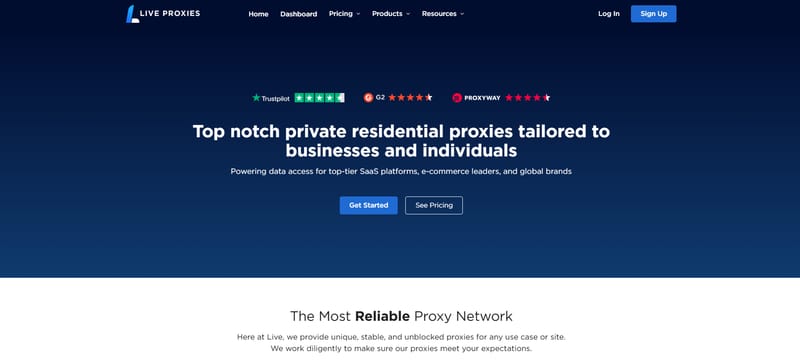
Live Proxies is well suited to SEO teams that need recurring rank tracking and competitor research from controlled locations. Its rotating residential proxies combine private IP allocation, millions of IPs across 55 countries, country, city, and ASN targeting, unlimited threads, and HTTP and SOCKS5 support.
For ongoing monitoring, the practical advantage is the ability to keep keyword groups and markets separate while maintaining sticky sessions for up to 24 hours when a workflow needs continuity. Teams can also use a proxy checker as part of their validation process to confirm IP availability, location, and connection status before larger monitoring runs. This can help agencies and in-house teams rerun suspicious SERPs, organize high-volume reporting jobs, and reduce cross-customer IP overlap.
- Monitoring advantage: Private allocation can reduce external IP-sharing variables during repeated SERP checks.
- Data consistency: Defined country, city, and ASN rules help keep market-level measurements comparable.
- Workflow design: Keyword groups can be assigned to separate workers and location-specific monitoring jobs.
- Failure verification: A questionable ranking result can be checked again before it is treated as genuine movement.
- Operational control: Unlimited threads support parallel monitoring without an artificial concurrency ceiling.
- Key limitation: Browser language, cookies, device context, and query parameters still require separate control.
Starting Price
Starts at $70 for 4GB of rotating residential traffic for 30 days, with enterprise plans from $2,000/month for 1TB ($2/GB).
2. Infatica

Infatica can fit rank-tracking systems that need distributed proxy access across several markets rather than a single fixed network source. Its broader product range gives technical teams options when some scheduled jobs need rotating residential traffic while other workflows require a different connection model.
For recurring SERP collection, it can be useful to structure jobs by country, campaign, or search category and adjust routes when a particular path stops returning representative results. This approach is most useful when the monitoring process also includes source validation and a clear retry policy.
- Monitoring advantage: Distributed proxy access can support recurring measurements across multiple SEO markets.
- Data consistency: Location-controlled runs help reduce variation caused by a changing network origin.
- Workflow design: Keyword monitoring can be segmented by campaign, geography, or search-engine task.
- Failure handling: Alternate routes can help isolate whether a failed SERP comes from the target or network path.
- Operational control: API-compatible access can fit automated assignment within scheduled monitoring systems.
- Key limitation: Teams need to validate the available location precision for highly granular local SEO.
Starting Price
Residential proxies start at $4/GB PAYG. A 1TB plan costs $2,600 ($2.60/GB), with custom enterprise pricing available for high-volume requirements.
3. Webshare
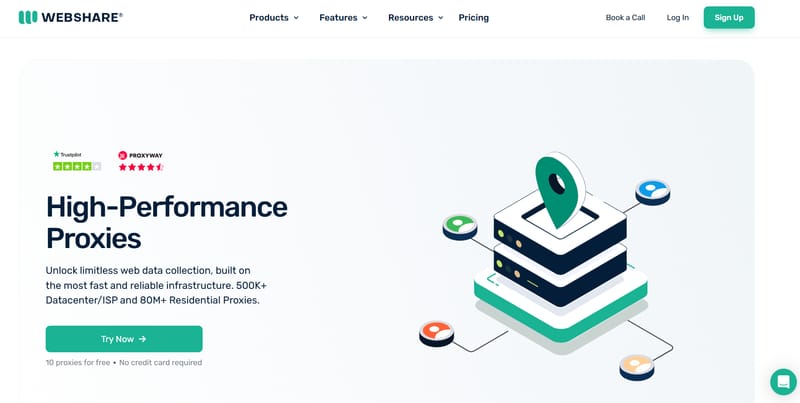
Webshare is a practical option for developer-led rank-tracking systems where proxy assignment, queue handling, and rotation logic are managed programmatically. Its self-service model can fit teams that already operate custom keyword tools, reporting scripts, or browser automation.
The platform is particularly relevant when an SEO team wants to create separate queues for daily checks, regional reporting, and retry jobs without relying on a fully managed data-collection service. Static and rotating products can be used differently depending on the team’s monitoring method.
- Monitoring advantage: Well suited to custom and developer-managed recurring SERP collection.
- Data consistency: Static and rotating access can be assigned according to the reporting methodology.
- Workflow design: Supports scheduled workers, retry queues, and custom keyword-processing pipelines.
- Failure handling: Failed queries can be rerouted or repeated without rebuilding the full monitoring job.
- Operational control: API-based management can support automated proxy assignment and lifecycle handling.
- Key limitation: Teams need their own logic to standardize location, browser state, and SERP parsing.
Starting Price
Rotating residential proxies start at $3.50/GB, with self-service pricing reaching $1.50/GB at 1TB and $1.40/GB at 3TB. Enterprise pricing is custom.
4. SOAX
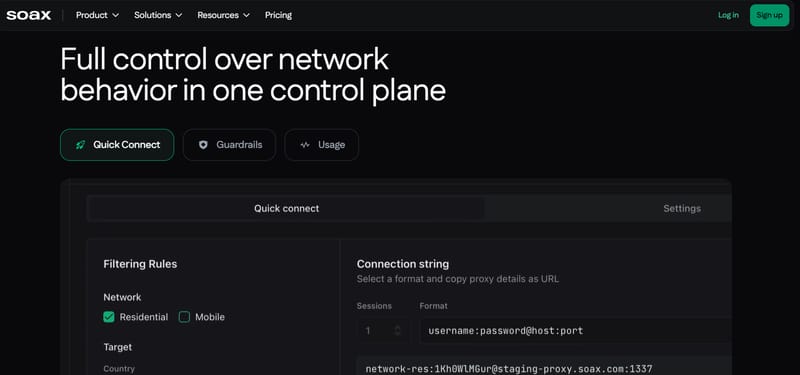
SOAX is a strong fit for local and international SEO monitoring where preserving market context matters more than simply increasing request volume. Its residential and mobile networks give teams detailed controls for city-, region-, ISP-, and ASN-sensitive research.
This can be valuable when an agency divides keyword sets by local campaign, market, or network environment and needs to investigate local SERP anomalies before reporting a movement to a client. The setup works best when teams document the exact targeting rules used in every recurring job.
- Monitoring advantage: Particularly useful when geographic precision is central to the SEO dataset.
- Data consistency: Stable targeting rules can make recurring local observations easier to compare.
- Workflow design: Supports job segmentation by country, city, region, ISP, or market.
- Failure verification: Local anomalies can be checked again from the intended location before escalation.
- Operational control: Location filtering can support complex international monitoring matrices.
- Key limitation: Fine-grained targeting can add unnecessary complexity to broad national tracking.
Starting Price
Builder starts at $200/month + VAT. Enterprise starts at $3,000/month + VAT, with traffic rates based on geo tier and volume.
5. Oxylabs
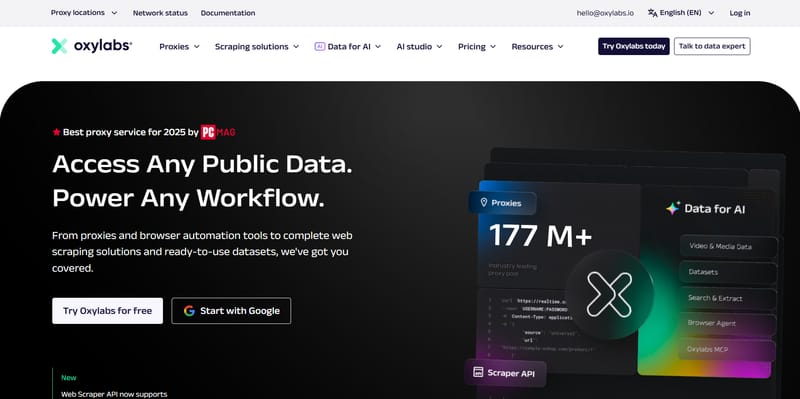
Oxylabs is aimed at enterprise-scale SEO operations with large keyword portfolios, frequent SERP refreshes, and formal production monitoring processes. It combines proxy infrastructure with web-data products, which can suit teams that need a broader operational layer around search-data collection.
For companies monitoring thousands of keywords across countries and domains, the platform can support distributed workers, controlled retries, and structured account support. It is most relevant when monitoring reliability and organizational scale matter more than the lowest entry cost.
- Monitoring advantage: Built for substantial recurring data operations and large keyword portfolios.
- Data consistency: Structured collection environments can support standardized monitoring across markets.
- Workflow design: Suitable for scheduled refreshes, large batches, and distributed SERP workers.
- Failure handling: Enterprise infrastructure can support controlled retries and workload redistribution.
- Operational control: Fits teams that need formal support around production monitoring.
- Key limitation: Smaller SEO teams may not need its enterprise-level infrastructure.
Starting Price
Residential proxies start at $30 for 5GB, while corporate plans start at $2,500 per month for 1TB.
6. DataImpulse
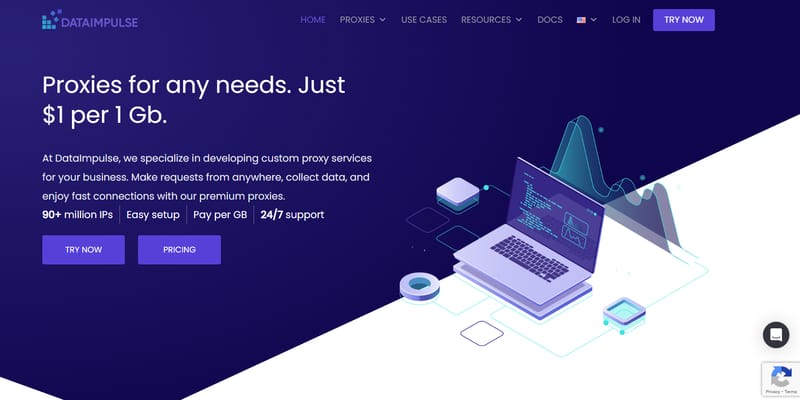
DataImpulse is a cost-focused option for teams expanding recurring rank tracking without moving immediately to enterprise-level spend. Its residential, mobile, datacenter, and premium residential products can fit a monitoring program that grows in stages.
It can work well when the team has clear location rules, selective retries, and a practical way to measure usable SERP coverage rather than raw request volume. The best fit is usually a growing dataset with predictable reporting cycles and a defined quality-control process.
- Monitoring advantage: Supports expanded SERP coverage with a low residential entry point.
- Data consistency: Repeated jobs can follow stable location, session, and retry rules.
- Workflow design: Suitable for growing keyword sets and scheduled monitoring batches.
- Failure handling: Retry rules can target failed or incomplete SERP samples rather than entire jobs.
- Operational control: Pay-as-you-go usage can suit gradual monitoring expansion.
- Key limitation: Larger programs still need to measure success rate and cost per usable result.
Starting Price
Residential traffic starts at $1/GB, with a $5 entry package for 5GB. A 1TB plan costs $800 ($0.80/GB), while custom+ starts at $4,000 for 5TB+.
7. IPRoyal
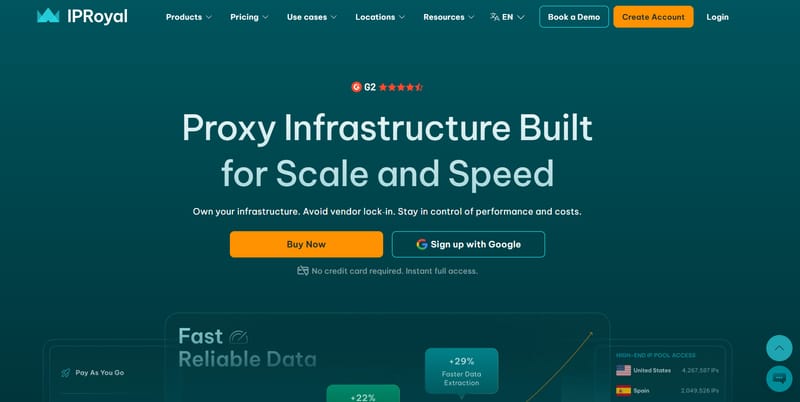
IPRoyal can suit smaller and mid-sized rank-tracking systems that need recurring measurements without a complex enterprise setup. Its residential, ISP, mobile, and datacenter products provide options for teams that use more than one monitoring approach.
Long sticky sessions can be useful when a tool needs to revisit related search results or maintain a persistent regional workflow. Its non-expiring residential traffic can also help teams whose monitoring volume changes from month to month.
- Monitoring advantage: A practical fit for moderate recurring keyword monitoring.
- Data consistency: Persistent sessions can support controlled reruns and repeat comparisons.
- Workflow design: Useful for local campaigns, smaller keyword groups, and scheduled reports.
- Failure verification: The same conditions can be repeated before accepting an unexpected SERP change.
- Operational control: Residential and ISP options can support mixed monitoring strategies.
- Key limitation: Very large portfolios need careful workload planning and capacity testing.
Starting Price
Residential traffic starts at $7/GB on subscription plans, with enterprise residential pricing from $1.75/GB at 10TB+.
8. Rayobyte
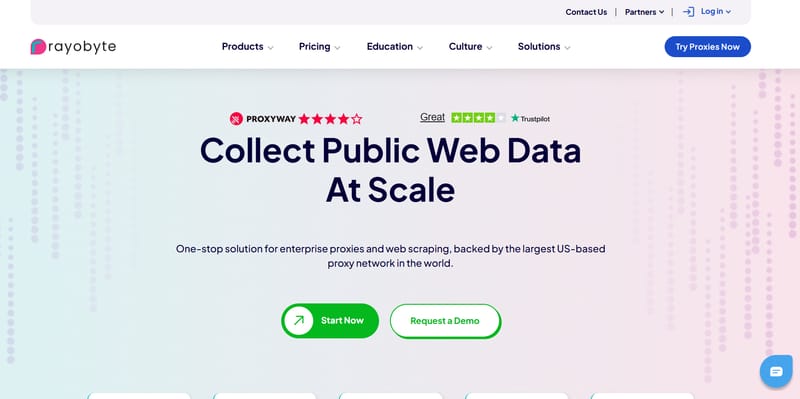
Rayobyte can fit SEO monitoring architectures that combine stable and rotating network identities instead of applying one session model to every query. Its mix of residential, ISP, datacenter, and mobile products is relevant for technical teams with different collection requirements inside the same reporting system.
A team can reserve a stable environment for controlled comparison runs while using rotating residential access for broader keyword sampling and regional checks. This approach requires clear internal rules so the resulting datasets remain comparable.
- Monitoring advantage: Supports mixed monitoring strategies instead of one fixed session model.
- Data consistency: Stable IP products can be reserved for controlled comparison runs.
- Workflow design: Useful for separating persistent monitoring from broader rotating SERP collection.
- Failure handling: Different network types can help test whether an anomaly is route- or target-specific.
- Operational control: Can support dedicated environments alongside higher-volume recurring jobs.
- Key limitation: Mixed products require documented rules for locations, sessions, and query types.
Starting Price
Rotating residential proxies start from $3.50 per GB, while enterprise residential and mobile pricing starts from $0.50 per GB at 5TB or more.
9. ProxyEmpire
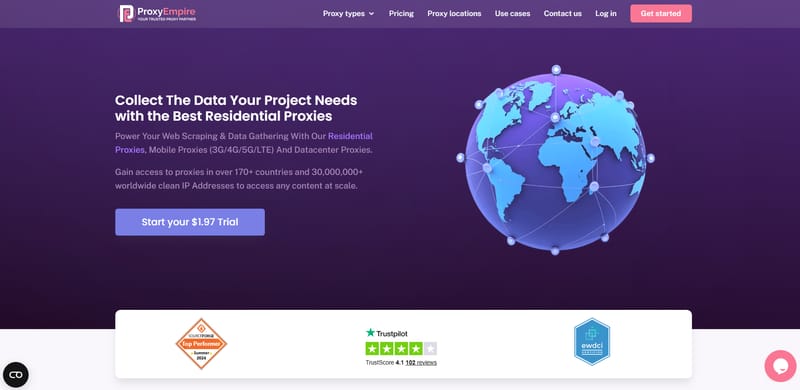
ProxyEmpire can suit international and regional rank-monitoring programs that need to keep market-specific jobs separate. Its rotating, static, and unlimited residential products, alongside mobile and datacenter options, provide flexibility for teams working across different search environments.
This is useful when keywords are grouped by country, region, or campaign and each market needs its own targeting and retry rules. Teams should still confirm the available locations and traffic economics for less common markets before building the full monitoring workflow.
- Monitoring advantage: A strong fit for multi-country and regional monitoring programs.
- Data consistency: Market-specific jobs can remain separate across recurring collection cycles.
- Workflow design: Useful for assigning keyword groups by country, region, or campaign.
- Failure verification: Regional anomalies can be rerun in the same market context before reporting.
- Operational control: Flexible sessions can support persistent and rotating monitoring patterns.
- Key limitation: Availability and pricing should be checked for each required target market.
Starting Price
Rotating residential traffic starts from $3.50 per GB, while enterprise costs are $1,500 for 1TB ($1.50/GB), with custom 5TB+ plans from $0.75/GB.
10. Decodo
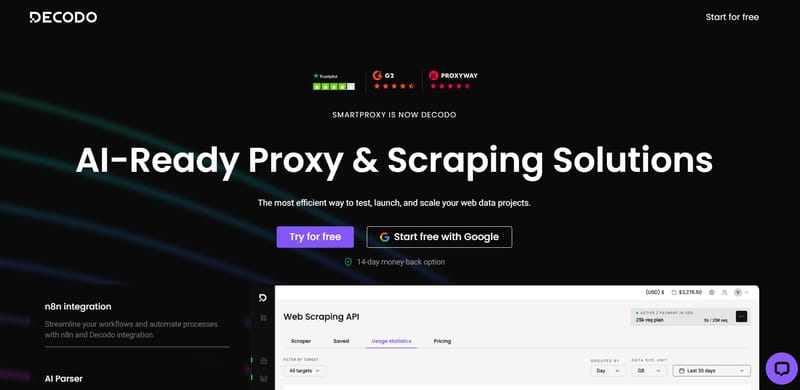
Decodo, formerly Smartproxy, is suited to agencies and technical SEO teams that need automated rank tracking across several client campaigns. Its residential, ISP, mobile, and datacenter products can support separate collection methods without making the proxy layer the center of the workflow.
The platform can fit scheduled SERP jobs, automated keyword queues, campaign-level separation, and targeted retry handling. It is most useful when the team already has a clear reporting process for normalizing search-result layouts and validating unusual ranking changes.
- Monitoring advantage: Well suited to automated recurring monitoring across multiple campaigns.
- Data consistency: Repeatable routing rules can help keep client datasets methodologically consistent.
- Workflow design: Fits agency monitoring, scheduled batches, and large keyword queues.
- Failure handling: Failed queries can be isolated and retried without rerunning an entire campaign.
- Operational control: Automation-oriented infrastructure can integrate into custom monitoring pipelines.
- Key limitation: Teams still need normalization logic to distinguish layout changes from ranking movement.
Starting Price
Residential proxies start at $3.75/GB. Enterprise pricing starts at $2.50/GB for 250GB and decreases to $2/GB for 1TB.
How Do You Map Keywords to Proxy Sessions?
A keyword-monitoring system becomes easier to manage when each request is assigned to a defined market, device context, session rule, and worker. This creates an audit trail for repeated checks and avoids mixing unrelated campaigns in the same collection queue.
- Keyword groups: Organize terms by client, topic, intent, or reporting priority before assigning them to workers.
- Location and device buckets: Keep country, city, language, desktop, and mobile configurations in separate jobs or queues.
- Search-engine settings: Record the intended search engine and local version used for every keyword group.
- Session and worker assignment: Use persistent session IDs where needed and assign workers to defined market buckets rather than random locations.
- Retry queues: Recheck failed or suspicious SERPs under the original conditions before changing the route or collection setup.
- Campaign separation: Keep client accounts and internal projects logically separate for clearer reporting, troubleshooting, and data comparison.
When Do You Rotate an IP During Rank Tracking?
IP rotation should match the goal of the monitoring job. Independent keyword checks can use rotating connections, while related research sequences and controlled comparisons often need a stable session.
Rotate Between Queries
Rotation can work well for broad keyword batches where each query is independent and does not rely on prior browser state. It can also help distribute scheduled requests across multiple workers without concentrating activity on one network identity.
Keep the Same Session
A sticky session is more useful for related query sequences, browser-based research, multi-step SEO tools, and repeat checks within one controlled batch. The important point is to maintain the same configuration whenever the result will be compared directly.
How Do You Separate Ranking Changes From Collection Noise?
Not every movement in a rank-tracking tool reflects a genuine visibility change. A strong monitoring process validates outliers before reporting them and records the conditions under which each SERP sample was collected.
- Repeat measurements: Rerun unusual results from the same target location before treating them as confirmed movement.
- Location consistency: Check that original and repeat queries use the same country, city, language, and device profile.
- Invalid-result filtering: Exclude block pages, CAPTCHAs, incomplete responses, and obvious error pages from rank calculations.
- SERP structure changes: Account for AI features, local packs, new modules, and layout changes before comparing positions.
- Result normalization: Apply consistent rules for domains, subdomains, featured results, and duplicate URLs.
- Historical comparison: Compare sudden changes against past samples and nearby keyword patterns before reporting them as meaningful.
Which Monitoring Metrics Reveal Proxy Problems?
Proxy health should be monitored alongside keyword positions. A falling success rate or a sudden rise in location mismatches can affect the reliability of an SEO report before the team notices an obvious collection failure.
Successful SERP Rate
Measure the percentage of requests that return valid, parsable search-result pages. A declining rate can indicate access issues, poor routing, or a problem with the collection tool, especially when failures cluster around specific markets or query groups.
CAPTCHA and Block Rate
Track verification prompts, access interruptions, and blocked responses separately. These signals can reveal that a particular route, request pattern, or monitoring pace needs adjustment before they begin affecting a larger share of the dataset.
Geo Mismatch Rate
Validate whether the observed exit location matches the intended country, city, or region. Geo mismatches can make local reports misleading even when the page loads successfully, particularly when rankings are compared across tightly defined markets.
Query Latency and Retries
Monitor response time, timeout frequency, and the number of retries required for valid results. High retry volume can increase costs and delay time-sensitive reports, while also reducing the efficiency of larger scheduled monitoring jobs.
How Do You Scale SEO Monitoring Across Markets?
Scaling is not only about adding more proxies. A reliable international monitoring program needs consistent job definitions, clear market ownership, and logging that makes each result traceable to the location and configuration used.
- Keyword sharding: Divide large portfolios into smaller batches that can be scheduled, processed, and validated independently.
- Geo buckets: Create separate country, city, language, and device groups before collection begins.
- Separate proxy pools: Keep markets or sensitive workflows apart when the methodology requires controlled comparisons.
- Parallel workers: Increase collection capacity through defined workers rather than unrestricted request bursts.
- Scheduled batches: Use predictable collection windows to keep reporting cycles comparable across markets.
- Session and retry rules: Document when jobs use rotation or sticky sessions and set practical retry limits for failed queries.
- Market-level logging: Record location, time, device, session behavior, and response status so each result can be traced to its collection setup.
Conclusion
The best proxy for rank tracking and SEO monitoring is the one that helps keep collection conditions consistent across the locations, devices, and reporting cycles that matter to the campaign. Teams need to control more than the exit IP, including browser settings, query parameters, timing, session behavior, and validation rules.
Reliable monitoring comes from treating failed SERPs, geo mismatches, and unexpected results as data-quality signals rather than immediately interpreting them as ranking movements. Test the selected provider with real keyword sets and markets, document the collection method, and scale only after the reporting process produces repeatable results.
Put this into action with eSEOspace
We help businesses grow with seo, geo & aeo that actually performs. Explore the services behind this guide:
Get a FREE Audit
We'll perform a comprehensive SEO, AEO, GEO & CRO audit of your website — completely free — and show you exactly how to outrank your competitors.
Don't have a site yet? Get in touch →
Get a FREE GEO/AEO/SEO Audit
We'll analyze your site's SEO, GEO, AEO & CRO — completely free — and show you exactly how to get found across Google and AI answers.
Don't have a site yet? Get in touch →
Great — your audit is on the way!
We'll send your free SEO/GEO/AEO/CRO audit within the next few hours. Where should we send it?
You're all set! ✓
Your free audit is being prepared — check your inbox in the next few hours. Talk soon!


On this page
- What Makes Rank Tracking Data Reliable Over Time?
- How Does Monitoring Cadence Change Proxy Requirements?
- How Does the Best Dedicated Proxy Support Consistent Rank Tracking?
- What Do the Best SOCKS5 Proxy Providers Add to SEO Monitoring?
- Why Can Geo Drift Distort Rank Tracking?
- What Are the 10 Best Proxies for Rank Tracking and SEO Monitoring in 2026?
- 1. Live Proxies
- 2. Infatica
- 3. Webshare
- 4. SOAX
- 5. Oxylabs
- 6. DataImpulse
- 7. IPRoyal
- 8. Rayobyte
- 9. ProxyEmpire
- 10. Decodo
- How Do You Map Keywords to Proxy Sessions?
- When Do You Rotate an IP During Rank Tracking?
- How Do You Separate Ranking Changes From Collection Noise?
- Which Monitoring Metrics Reveal Proxy Problems?
- How Do You Scale SEO Monitoring Across Markets?
- Conclusion






