How 2D Animated Explainer Videos Simplify Complex Brand Messages
How 2D Animated Explainer Videos Simplify Complex Brand Messages
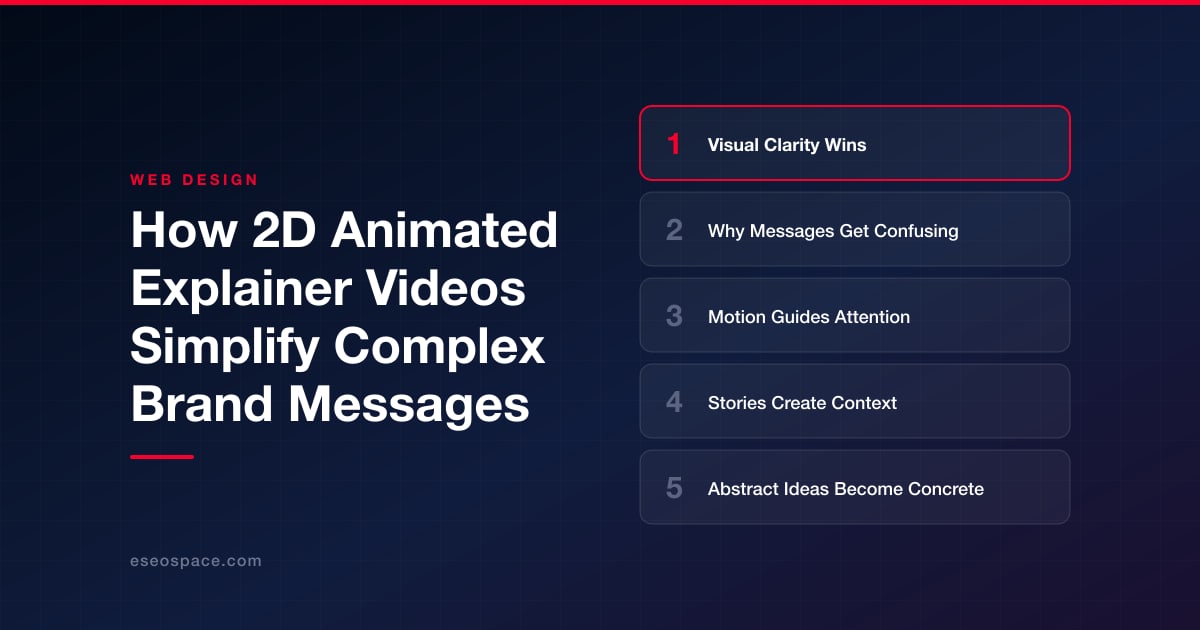
Clear brand communication respects how people process information. A service may involve several steps, risks, outcomes, and proof points, but the audience still needs a plain reason to care about a brand. 2D animation turns dense material into ordered scenes, controlled pacing, and visual signals. Instead of making viewers work through heavy copy, it lets them quickly see the central idea and then connect it to a useful result.
Visual Clarity Wins
A 2d animation explainer video can translate layered offers into short visual sequences that feel easier to follow. Characters, icons, voiceover, and motion give each idea a clear place. The viewer sees the issue, the change, and the outcome together, so meaning forms faster than it would through static text alone.
Why Messages Get Confusing
Brand messages often weaken when too many claims arrive at once. Features, benefits, audience concerns, and proof points can crowd the same space. Animation brings some discipline to how the brand message is communicated. Every scene needs a single purpose, so weak lines are removed, core value stays visible, and the viewer has fewer details to hold in memory.
Motion Guides Attention
Movement tells the eye where to go. A shift in position, a simple gesture, or a moving path can direct attention without another line of explanation. This feature matters because focus is limited. Careful timing gives each point room to register before the next idea appears.
Stories Create Context
Facts become easier to trust when they sit inside a recognizable situation. A short animated story can show a customer problem, the pressure it creates, and the relief a solution provides. This sequence gives claims a practical setting. Viewers are no longer hearing abstract promises. They are watching a cause, and its response unfold.
Abstract Ideas Become Concrete
Some services are difficult to picture because their value happens behind screens, systems, or specialist processes. Animation gives invisible work a visible form. Here’s how that happens:
- A workflow can become a path.
- A risk can appear as a blockage.
- A result can be shown as movement, balance, or clear progress.
Tone Feels Human
Illustration can make technical material feel less clinical without stripping away seriousness. Color, character posture, line style, and voice pacing all affect trust. A calm visual tone helps viewers stay with the message. When the subject feels approachable, people are more willing to keep listening.
Short Format Helps Recall
Explainer videos usually perform best when the message is tight. A focused length, often near one minute, forces sharper writing and cleaner order. The viewer receives the problem, solution, and next step without unnecessary detours. Shorter formats also fit websites, sales outreach, investor decks, and training materials.
Design Supports Brand Memory
Design choices influence what remains after the video ends. Color systems, type, illustration style, and motion behavior can reinforce identity without repeating a slogan. Consistency across scenes builds recognition. The audience may forget the exact lines, but they often remember the feeling, the look, and the central promise.
Script First
Strong animation begins with careful writing. The script should identify the audience's concerns, explain the offer, and show the practical outcome. Each line must give the audience a reason to stay. If a sentence does not improve clarity, it should be tightened or removed before production begins.
Storyboard Next
A storyboard tests whether the script can become clear visual communication. It exposes gaps before design and animation consume the budget. Teams can review scene order, pacing, and visual support early to make suitable decisions. This step keeps revisions focused and prevents confusion from reaching the final edit.
Better for Learning
People absorb information through different channels. Narration explains the concept, while motion shows change over time. Visual cues help reduce the burden on memory because viewers are not forced to imagine every step. The message reaches them through sound, image, sequence, and rhythm.
Sales Teams Benefit
Sales teams often repeat the same opening explanation. An animated explainer gives prospects a shared baseline before deeper discussion begins. This saves time and improves the quality of follow-up questions. Representatives can spend more energy on fit, objections, and decision criteria instead of restating the basics.
Trust Needs Simplicity
Confusing communication can create doubt, even when the offer has real value. Clear animation lowers that friction by showing what the company does, who benefits, and why the result matters. Simplicity signals care. It tells viewers their time, attention, and decision process have been respected.
Conclusion
2D animated explainer videos help brands turn layered information into clear, memorable stories. They reduce clutter, guide attention, and give abstract value a visible shape. With a precise script, planned scenes, and consistent design, a message can become easier to grasp in less time. The strongest videos do more than look polished. They help viewers understand the point, remember the promise, and move forward with confidence.
Put this into action with eSEOspace
We help businesses grow with website development that actually performs. Explore the services behind this guide:
Get a FREE Audit
We'll perform a comprehensive SEO, AEO, GEO & CRO audit of your website — completely free — and show you exactly how to outrank your competitors.
Don't have a site yet? Get in touch →
Get a FREE GEO/AEO/SEO Audit
We'll analyze your site's SEO, GEO, AEO & CRO — completely free — and show you exactly how to get found across Google and AI answers.
Don't have a site yet? Get in touch →
Great — your audit is on the way!
We'll send your free SEO/GEO/AEO/CRO audit within the next few hours. Where should we send it?
You're all set! ✓
Your free audit is being prepared — check your inbox in the next few hours. Talk soon!