9 Best Link Building Services (Ranked and Reviewed for Agencies)
9 Best Link Building Services (Ranked and Reviewed for Agencies)
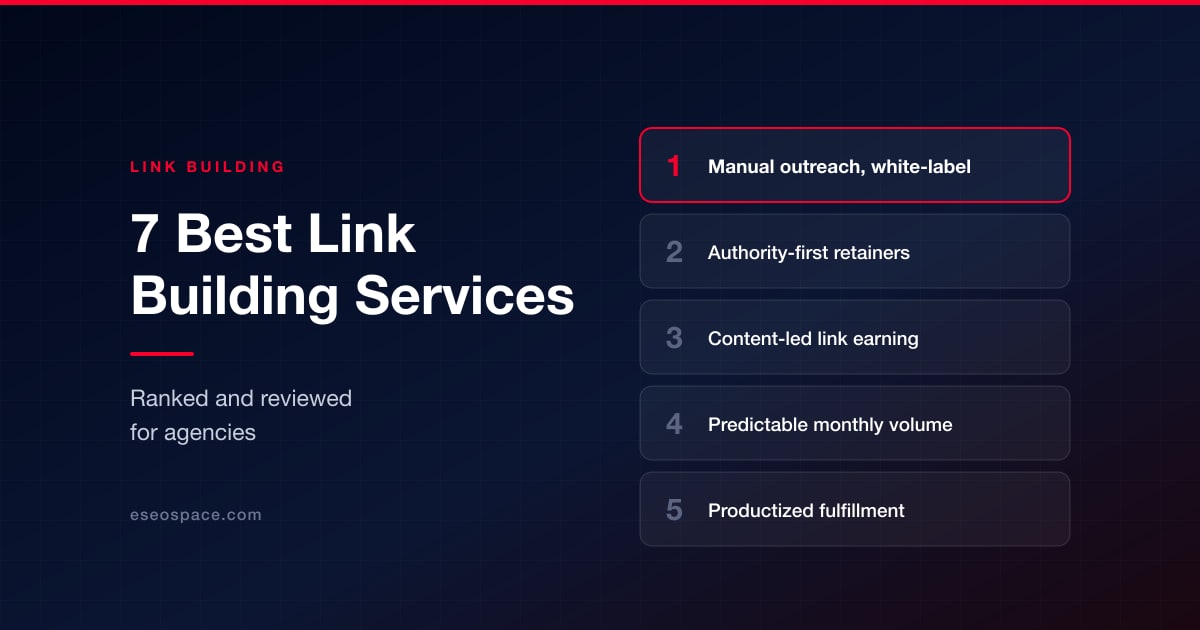
I've bought links, resold links, and cleaned up after links that never should have been built in the first place.
So I understand why "build or buy" feels like a loaded question when you're running SEO for clients. Pick the wrong partner and you're the one on the call six months later, explaining why a placement looks thin.
This review is for agencies and in-house teams that need defensible links. Not marketplace filler.
Link building is rarely a standalone buy either, since it usually sits inside a wider retainer, so it helps to understand what SEO packages include before you choose a partner.
To build the list I looked at five things: outreach model, link quality safeguards, white-label readiness, reporting cadence, and pricing transparency. Where a vendor uses custom pricing, I said so instead of inventing a number. Check current vendor pages before you sign anything, because published rates move.
My top pick for agencies is Page One Power.
That said, the other six all have a lane. Productized fulfillment, content-led campaigns, enterprise PR, published monthly packages. Keep reading and you'll see which one matches your setup.
Key Takeaways
- Page One Power is my #1 for manual, white-hat outreach and agency white-label work. Fully manual outreach, original content from a U.S.-based team, custom campaigns, quote-only pricing.
- uSERP is the authority-first alternative. Published retainers tie deliverables to authority tiers, which makes campaign planning easier.
- Siege Media wins on content-led link earning. It builds links through content assets instead of selling placements a la carte, which is really content marketing doing the link building for you.
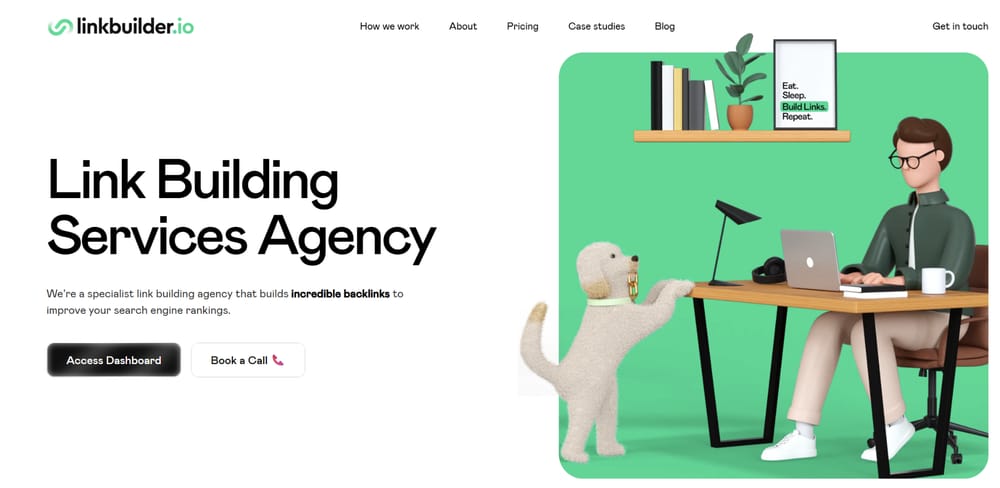
- LinkBuilder.io is the pick for predictable monthly volume. Plans map defined link counts to managed campaigns.
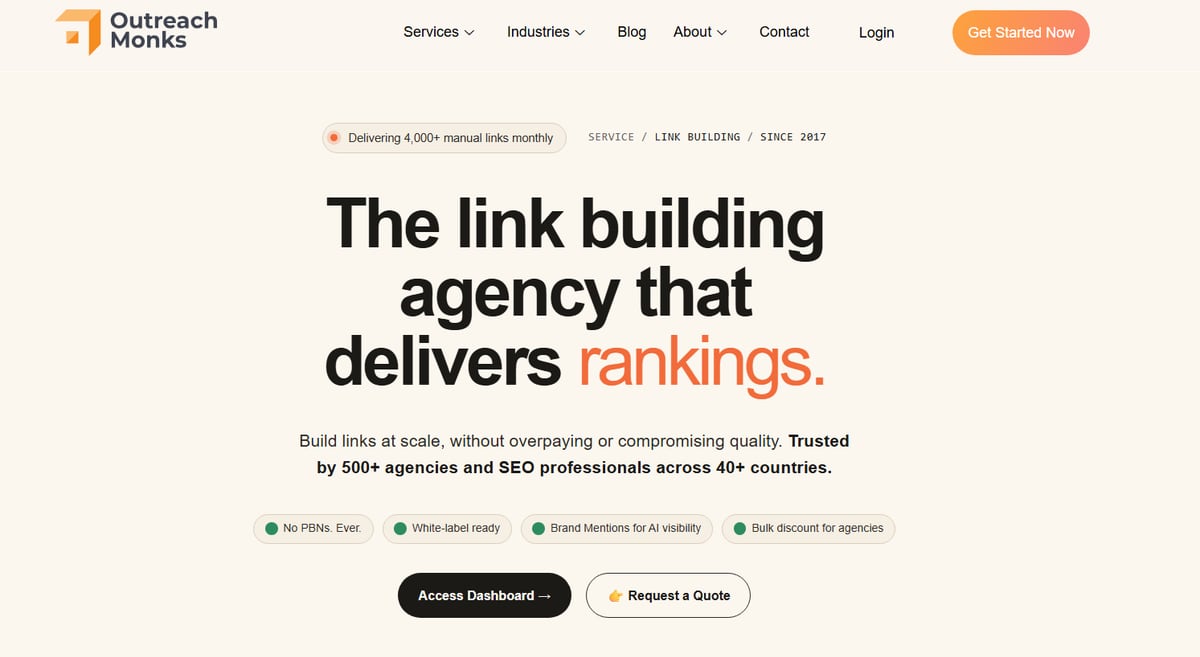
- Outreach Monks is the flexible pick for scaling manual outreach. Guest posts and niche edits, individual links or larger campaigns, with white-label delivery for agencies.
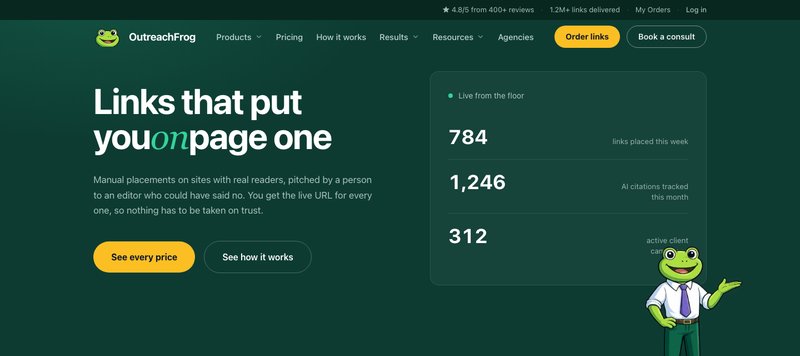
- OutreachFrog is the month-to-month pick for managed manual outreach. Editor-pitched placements, traffic-screened sites, live URL reporting and 36-month link monitoring, with no contract.
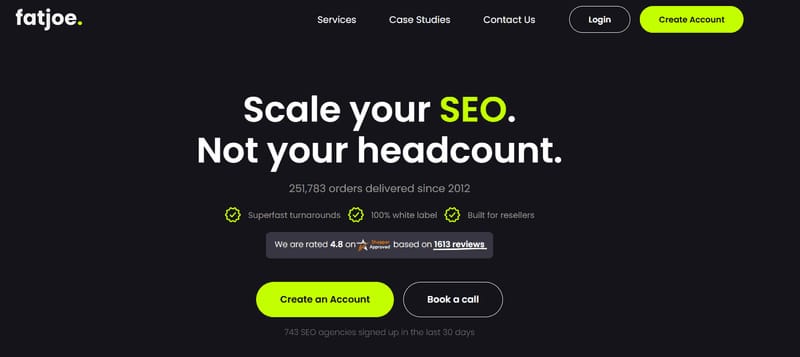
- FATJOE and The HOTH fit productized, reseller-friendly work. Transparent ordering, white-label reporting.
- LinkGraph fits enterprise PR and governance. Digital PR, monitoring, replacement support, modular pricing.
How I tested these link building services
I evaluated every service the way an agency buyer would.
Which means resale confidence carried as much weight as raw link counts. A good link partner protects the client relationship. It doesn't just hand you URLs.
Editorial standards and white-hat compliance. I looked at how each vendor describes its outreach and whether that lines up with Google's guidance. That matters more now that AI search weighs which sources it trusts enough to cite. Paid or incentivized links should carry rel="sponsored" or nofollow where appropriate.
Outreach quality and relevance. Manual prospecting and topical fit beat bulk volume every time, the same logic that underpins durable organic SEO. I favored services that describe original content, hand-built outreach, and relevant placements over templated networks.
Reporting and white-label readiness. Your reporting needs to be client-ready out of the box. I noted which vendors support white-label delivery and clear communication, and whether white label link building could actually ship without cleanup on your end.
Pricing clarity and fit. Published tiers help. But custom pricing can be fair when campaigns depend on niche, volume, and goals. I call out which model each vendor uses so you know what you're walking into.
What counts as a safe link today?
A safe editorial link is one a publisher includes because your content adds something to the page.
That's it. Those links hold up because they're relevant, useful, and don't look like a paid placement pattern.
Paid and incentivized links play by different rules. Google expects paid links to use rel="sponsored", and nofollow is still fine when a publisher doesn't want to pass ranking signals. Skip those attributes on a paid placement and a short-term win turns into a long-term liability.
If you resell link building, this distinction is your whole job. You want placements you can explain. Not links you'll be disavowing next year.
1. Page One Power
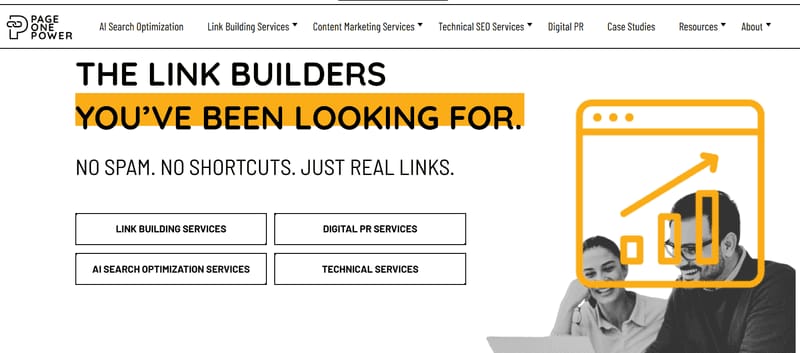
Page One Power pros
- Fully manual, white-hat outreach with original content from a U.S.-based team
- Diverse tactics: digital PR, resource link building, broken-link building, guest posts
- Custom campaigns with project management and KPI reporting
- Agency-friendly white-label link building support
- Technical and backlink audits that connect outreach to SEO goals
- States it will not use black-hat practices
Page One Power cons
- Custom pricing only. No self-serve rate card to skim
- Outreach-led programs take time before results compound
- Content collaboration is required, so you stay involved
My experience with Page One Power
Page One Power takes the top slot because it does the work agencies actually need. Manual outreach. Original content. A compliance-minded process you can walk a client through without hedging.
Using a U.S.-based link building company matters more than it sounds like it should. Tone, accuracy, and brand fit are usually half the brief.
And the tactic range is a real advantage. Page One Power doesn't lean on one repeatable play. It combines digital PR, resource pages, broken-link building, and guest posts, then wraps the whole thing in project management and KPI reporting. When one angle stalls, another one carries the campaign.
The white-label support is the other reason it ranks first for agencies.
Your brand stays in front of the client. The managed outreach process runs behind the scenes. Add the technical and backlink audit options and link acquisition starts connecting to the broader SEO plan instead of floating as an isolated deliverable.
Page One Power pricing
Quote-only. No public rate card. Campaigns get scoped around your goals, niche, competitive landscape, and volume.
Which makes sense for a managed program. You're not paying a flat fee for one placement type. You're funding prospecting, original content, outreach, project management, and reporting.
One tip: if your finance team needs predictability, ask for a scoped retainer and a delivery cadence in writing before you commit.
2. uSERP
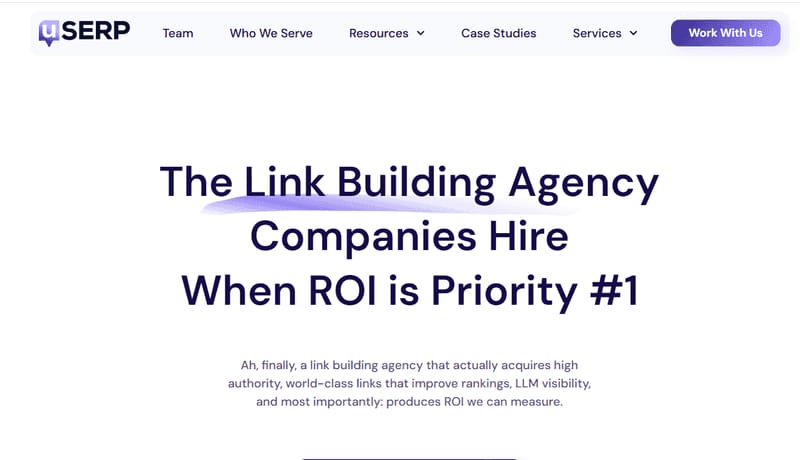
uSERP pros
- Published retainers with clear authority-tier deliverables
- High-authority placements are the core focus
- Strategy support can include gap analysis, internal linking, and cleanup
- Reporting portal for tracking placements
- Initial fixed engagement before moving to a flexible cadence
uSERP cons
- High minimums that rule out small budgets
- Link counts tied to authority mixes rather than raw volume
My experience with uSERP
uSERP is where I'd point premium, authority-first buyers.
The model is built around higher-authority placements, and the published tiers make planning easier than a fully custom quote process. You can map a campaign before you get on a sales call.
The retainers also feel more complete than a basket of links. Engagements can include link gap analysis, internal linking guidance, and cleanup, which pushes it closer to a managed SEO support program.
Best fit: B2B, SaaS, and teams that care about authority and strategy more than cost per placement.
Worst fit: agencies trying to fulfill budget packages at volume.
uSERP pricing
Monthly retainer tiers, published, with deliverables tied to authority ranges. The entry point is premium.
Because the packages bundle link building with strategy inputs, compare full scope instead of counting links. And check the current pricing page, since tiers change.
3. Siege Media
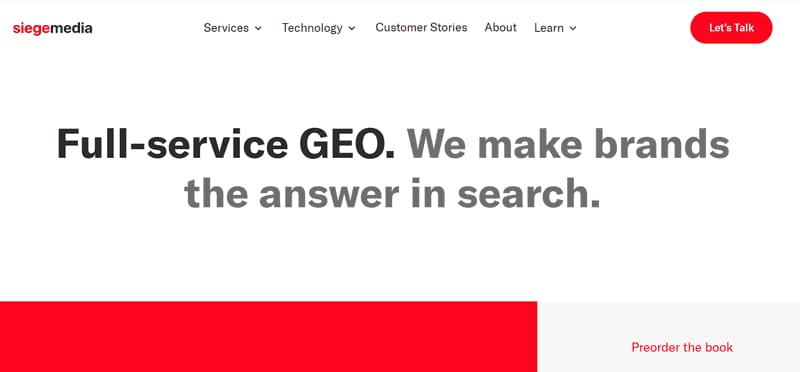
Siege Media pros
- Content-led link earning that compounds over time
- Built for programs that need scalable content assets
- Transparent rationale for time-to-value
- Case studies showing content-led growth
Siege Media cons
- Not a per-link shop, so a la carte buyers should look elsewhere
- Links take time to ramp
- Only works if you can fund ongoing content velocity
My experience with Siege Media
Siege Media takes a different path from everyone else on this list. Instead of selling placements, it creates content that has a reason to get covered and referenced.
Which works beautifully if you can commit over time. The assets keep earning links long after launch, and editorial placements carry less risk than paid ones.
The trade-off is speed.
I'd choose Siege when the goal is a durable content engine. I'd skip it when a client expects placements this quarter.
Siege Media pricing
This isn't a per-link marketplace. Programs get scoped around content strategy, production, promotion, and the link-earning opportunity attached to them.
Siege may discuss effective cost per link as part of the model, but that number depends on scale and campaign performance. Ask for a custom quote and evaluate the content investment against expected outcomes.
4. LinkBuilder.io
LinkBuilder.io pros
- Clear plans with defined monthly link expectations
- Wide tactic mix instead of one narrow placement type
- White-label option with agency-friendly reporting
- Guidance on safe monthly link velocity
LinkBuilder.io cons
- Longer contract structure than month-to-month buyers want
- Premium pricing across tiers
- Domain selection runs through a managed process
My experience with LinkBuilder.io
Easy to forecast against. That's the headline.
Because the plans define expected monthly link volume, you can map fulfillment to client retainers before you sign anything. Anyone who has tried to budget a custom outreach program mid-quarter knows why that matters.
I also liked the emphasis on link velocity. The service warns against building more links than a site can absorb, which is a healthier posture than a vendor who will deliver whatever volume you ask for.
The catch is commitment. This is a monthly partner, not a test order.
LinkBuilder.io pricing
Plan-based, published, scaling by volume and campaign scope.
Commitments run longer than a casual trial, so review contract terms, opt-out language, and reporting cadence before you spread it across client accounts.
5. Outreach Monks
Outreach Monks pros
- Manual outreach for relevant link placements
- Guest posts and niche edits
- Scalable campaigns for ongoing link acquisition
- White-label link building for agencies and resellers
- Flexible options for individual links and larger campaigns
- Support across a wide range of industries and niches
Outreach Monks cons
- Manual outreach can take some time, especially for larger campaigns
- Turnaround time can vary depending on placement requirements
My experience with Outreach Monks
Outreach Monks is a good fit for teams that want to scale link building without managing the outreach process themselves.
The service focuses on manual outreach, with guest posts and niche edits available for businesses looking to build relevant backlinks. That makes it a practical option for ongoing campaigns where consistency matters as much as individual placements.
The white-label option is particularly useful for agencies. Outreach Monks can handle the link-building work behind the scenes, while agencies can keep the service under their own brand when delivering campaigns to clients.
I'd consider it a good middle ground for businesses that want more flexibility than a fixed package while still having an external team handle prospecting, outreach, and placement.
Outreach Monks pricing
Individual link-building options are available, with larger and managed campaigns also available depending on requirements.
For recurring campaigns, it's worth discussing the desired volume, niche and placement requirements upfront so the campaign scope and delivery expectations are clear.
6. OutreachFrog
OutreachFrog pros
- Manual editorial outreach, pitched to an editor rather than pulled from a network
- Sites screened for real monthly traffic, not domain rating alone
- Live URL, cost and in-progress status reported for every placement
- In-house U.S. writers, no offshore content spinning
- White-label terms for agencies and resellers
- Month-to-month plans you can upgrade, downgrade or pause at month end
- Placements monitored for 36 months, with dropped links replaced
OutreachFrog cons
- Entry tier is $500 a month for two backlinks
- Volume stays controlled, with even Platinum at nine links a month
- Keyword tracking is thin on the lower tiers, one on Starter and nine on Gold
- Managed campaigns only, so there is no cheap inventory to browse
- The company puts first-page movement at 60 to 90 days, so it is an ongoing investment rather than a quick fix
My experience with OutreachFrog
OutreachFrog reads as a monthly link building partner rather than a place to buy individual guest posts.
Every tier is a managed campaign. They find the sites, write the content, place the links, and hand back the live URLs.
Starter at $500 is the test drive. Gold at $1,900 is where it starts to fit a growing SEO operation, and Platinum at $2,700 adds the bi-weekly review cadence that competitive campaigns tend to need.
What stands out is the absence of a lock-in. All four tiers are month-to-month, which matters for agencies because client budgets have a habit of changing after you have already planned the quarter.
On cost per link alone, a managed link building service like this will not beat a marketplace. The pitch is the work behind each placement: manual prospecting, editorial outreach, content, traffic screening and 36 months of monitoring. That makes it a better fit where placement quality matters than where you just need volume.
OutreachFrog pricing
Four published monthly packages: Starter at $500 for two backlinks, Gold at $1,900 for seven, Platinum at $2,700 for nine, and Titanium at $5,000 for sixteen. Tier 2 links and tracked keywords scale alongside, from 2 and 1 on Starter up to 24 and 30 on Titanium.
All four are month-to-month with no contract. There is also a separate $500 one-time Visibility Report covering 25 buyer questions across four AI search engines, and a broader managed SEO program that starts at $1,200 a month.
7. FATJOE
FATJOE pros
- Transparent per-placement ordering across authority tiers
- Defined delivery windows for predictable turnaround
- Advertised link replacement and money-back policies
- White-label CSV reporting for resellers
- Multilingual outreach option
FATJOE cons
- No site pre-approval, so you don't hand-pick every domain
- Regional sourcing can be limited
- Quality varies compared with PR-led links
My experience with FATJOE
FATJOE is built for resellers who want predictable output. Pick a tier, place the order, get reporting back in a format that drops into a client update.
The productized setup is the entire appeal. Simple to scope. Simple to sell. Simple to repeat.
Which is why it fits agencies running standardized link building packages.
The downside is control. You don't pre-approve every site, and the ceiling sits below a custom PR-led campaign. For clean fulfillment at a budget-conscious price point, though, it earns its spot.
FATJOE pricing
Per-placement pricing, published across authority tiers. Easy to estimate campaign cost from volume.
Since it's productized, check current tier requirements, delivery windows, and replacement terms before you resell it.
8. The HOTH
The HOTH pros
- Broad catalog spanning outreach, link insertions, press, and editorial-style products
- Transparent per-product pricing across the menu
- Positions its services as manual and white-hat
- Managed program option for done-for-you delivery
The HOTH cons
- Productized model isn't built for PR-grade placements
- You need to verify rel attributes on any paid inclusions
My experience with The HOTH
The HOTH is the most flexible menu-style provider here.
If you like stacking tactics and matching spend to each client's budget, the catalog makes that painless. You can assemble a campaign without waiting on a custom quote for every line item, and the managed option covers teams that want a broader done-for-you program.
The caveat: a productized catalog won't hit the same quality ceiling as custom digital PR.
Confirm link attributes on anything paid or sponsored. Every time.
The HOTH pricing
Published across individual products and managed options, so you can assemble a campaign that matches each client's budget and risk tolerance.
Read the product descriptions closely before ordering. Outreach links, press products, and managed programs solve different problems, and the cheapest line item is rarely the right one.
9. LinkGraph
LinkGraph pros
- Enterprise-grade editorial outreach and digital PR
- Contextual, in-article placement focus
- Link monitoring with replacement support if links disappear
- White-label support for agencies
- Modular pricing that scales by scope
LinkGraph cons
- Custom quotes only. No self-serve pricing
- Enterprise orientation can be more than a smaller SMB needs
My experience with LinkGraph
LinkGraph is my pick when governance and brand safety come first.
The editorial outreach and digital PR focus fits larger programs where contextual placements and oversight aren't optional. And the monitoring plus replacement support is genuinely useful for enterprise clients who care whether a link still exists in 18 months.
Add white-label support and it works as an agency option for bigger accounts.
The trade-off is fit, not quality. Smaller businesses don't need the enterprise machinery, and anyone who wants a published package has to sit through a quote process first.
LinkGraph pricing
Modular and custom, based on link tier, publication authority, PR scope, and outreach volume.
That flexibility suits enterprise buyers. It also means you should get a detailed scope, reporting cadence, and replacement terms in writing before you compare it against productized options.
Related guides for link builders
Choosing a vendor is one part of the job. These guides cover how to run, check and report link building once it is underway, whether you buy it or do it in house.
- White-label link building: how agencies resell links without risking client sites.
- A link building SOP for agencies: roles, QA checks and turnaround times.
- Link building reporting: the KPIs that matter more than DA.
- Google's link spam policy: what counts as a link scheme and what is allowed.
- rel="sponsored" vs nofollow vs ugc: which links need which tag.
- Anchor text strategy: why fixed ratios are a myth.
- Link prospecting: a workflow for finding sites worth pitching.
- Outreach email templates: pitches that still get replies.
- Outreach email deliverability: scaling without burning your domain.
- Broken link building: the method, step by step.
- Link reclamation: finding and recovering lost backlinks.
- Unlinked brand mentions: turning mentions into links.
Conclusion
After weighing outreach quality, compliance posture, white-label fit, and pricing model, Page One Power is my top pick for agencies that want manual, white-hat link building they can resell without flinching. US-based content team, varied tactics, custom campaigns, white-label support.
The rest of the field breaks down like this:
- Authority-first work with published retainers? uSERP.
- Content assets that earn links over time? Siege Media.
- Predictable monthly volume? LinkBuilder.io.
- Scalable manual outreach with guest posts, niche edits and white-label delivery? Outreach Monks.
- Managed manual outreach with no contract? OutreachFrog.
- Productized reseller fulfillment? FATJOE or The HOTH.
- Enterprise governance, PR coordination, and monitoring? LinkGraph.
Your next move comes down to risk tolerance and client expectations.
If manual outreach, editorial fit, and white-label delivery are what matter most, start with a scoped quote from Page One Power. Then put that scope side by side with one or two alternatives before you sign.
Put this into action with eSEOspace
We help businesses grow with seo, geo & aeo that actually performs. Explore the services behind this guide:
Get a FREE Audit
We'll perform a comprehensive SEO, AEO, GEO & CRO audit of your website — completely free — and show you exactly how to outrank your competitors.
Don't have a site yet? Get in touch →
Get a FREE GEO/AEO/SEO Audit
We'll analyze your site's SEO, GEO, AEO & CRO — completely free — and show you exactly how to get found across Google and AI answers.
Don't have a site yet? Get in touch →
Great — your audit is on the way!
We'll send your free SEO/GEO/AEO/CRO audit within the next few hours. Where should we send it?
You're all set! ✓
Your free audit is being prepared — check your inbox in the next few hours. Talk soon!