

This article is part of our Real Estate & Property Management Marketing Guide: how buyers, sellers, owners and tenants find you online, what the housing ad rules allow, and how to choose the right help. Want to know where your site stands? Get a free 20–30 page website audit within 24 hours.
A 90-day marketing plan for a property management company should focus on one goal: more property owners asking you to manage their homes. Tenants matter, but they find you through listings. Owners find you through search, Maps, referrals and your website, so that is where this plan spends most of its time.
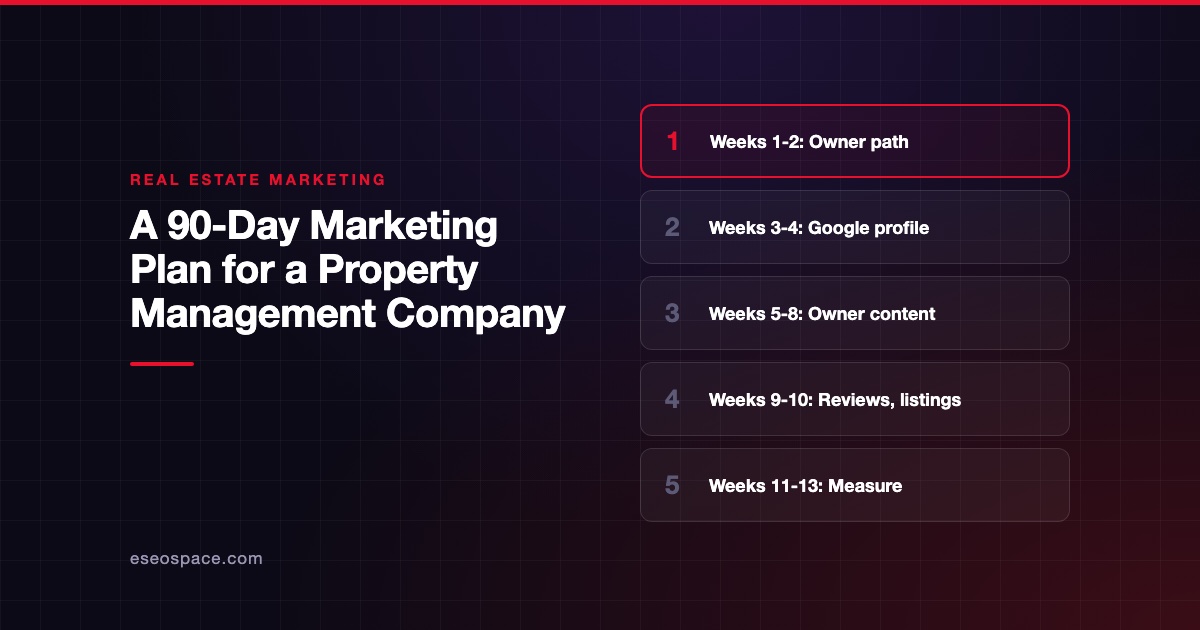
The plan runs in five stages. Fix the owner path, clean up your Google Business Profile, publish owner content, strengthen reviews and listings, then measure. It is part of our Real Estate and Property Management Marketing Guide.
Licensing and housing rules vary by state. Check anything you publish with your designated broker or counsel.
Key Takeaways
- Measure new owner inquiries and signed management agreements, not total website traffic.
- Make the owner path on your website the clearest path, with a short rental analysis form.
- Keep one Google Business Profile for each real office, and never create profiles for rental units.
- Publish owner content that answers fee, process and local rental questions honestly.
- Use your property management software's syndication for vacancies, and keep your website listings in sync.
Before you start: set your baseline
Pull these numbers for the last 90 days:
- New owner inquiries, by source
- Signed management agreements
- Doors under management at the start of the plan
- Google reviews: count and average rating
- Calls from your Business Profile
Separate owner leads from tenant calls now. If you can't tell them apart, fixing that is task one.
Weeks 1-2: Fix the owner path
Website
Most visitors to a property management site are renters. Owners must still find their path in one tap.
- Add a clear "For Owners" item to the main menu.
- Put a "Free Rental Analysis" or "Get a Management Quote" button above the fold.
- Keep the owner form short: name, contact, property address, property type, units.
- Send owner leads to the person who sells management, with a phone alert.
- Explain your fees or how you price. Our article on publishing property management fees online covers both approaches.
Disclosures
Show the license and business details your state requires. For example, California's 10 CCR § 2773 lists websites and "for rent" signs among materials that must show the license number and responsible broker's name.
Tracking
- Set owner form submissions and owner calls as their own goal in analytics.
- Verify your site in Search Console and submit a sitemap, as Google's getting started guide suggests.
- Add a "How did you hear about us?" field to your owner intake.
Weeks 3-4: Google Business Profile
Check eligibility
Google's eligibility guidelines list rental properties such as "vacation homes, model homes, or vacant apartments" as ineligible. They say sales or leasing offices are eligible. So keep one profile per real office and remove any profiles for individual rentals.
Clean up the profile
- Name matches your real-world business name. Google's representation guidelines say extra information in the name "could result in the suspension" of the profile.
- Primary category fits property management.
- Service areas are set by city or postal code. Google's service area page allows up to 20 and says not to use a radius.
- Hours, phone and website link are current.
- Photos show your office, team and managed homes you have permission to use.
If you'd like help, see our Google Business Profile optimization service.
Weeks 5-8: Owner content
Owners ask the same questions before they hire a manager. Answer them on your site.
Five pages to write or improve
- Services: what you do from listing to move-out, in order.
- Pricing: your fees, or what drives your quote.
- Process: what happens in the first 30 days after an owner signs.
- Local rental market: rent ranges and demand in your area, with source and month.
- Switching managers: how an owner moves from another company to you.
City pages for your service area
Write one page per city you truly serve. Include local details: common property types, local rental rules worth knowing, and how you handle that area. Don't copy the same page and change the city name.
Fair Housing check
Your content and listings must not suggest a preference for any group of renters. The federal rule at 24 CFR § 100.75 covers notices, statements and ads for the rental of a dwelling. Read every page for words and photos that describe people rather than property.
Our guide to getting more owner leads covers more owner channels, including referrals and investor groups.
Weeks 9-10: Reviews and listings
Reviews from owners and tenants
Owners and tenants review you for different reasons. Ask both, but ask owners first, because their reviews speak to new owners.
- Send a short request to owners who have been with you a year or more.
- Ask tenants after a well-handled move-in or repair.
- Reply to every review briefly, without sharing account details.
Our article on reviews for property managers covers how to handle tenant complaints in public.
Listings
Your software probably syndicates vacancies. Check that it also feeds your own site.
According to each vendor's docs (checked 29 October 2026):
- AppFolio says it can share vacancies "on your website and internet listing services with a single click."
- Buildium says you can "Post to your website and syndicate rental listings."
- Rent Manager says its websites "make it easy to post, update and remove vacancies."
Make sure leased units come off quickly. Stale listings frustrate renters and waste your team's time. See rental listing syndication for more.
If you run ads
Google's housing ads policy covers rental ads. In the US and Canada, you can't target by gender, age, parental status, marital status or ZIP code. Owner-acquisition ads for your management service are a different audience, so plan them separately.
Weeks 11-13: Measure and decide
| Metric | Day 0 | Day 90 | Notes |
|---|---|---|---|
| Owner inquiries | Forms and calls | ||
| Signed management agreements | New doors added | ||
| Business Profile calls | From the profile's performance view | ||
| Owner reviews | Count and average | ||
| Days a vacancy stays listed | From your software | ||
| Owner lead source | From intake answers |
Use the results to plan the next quarter:
- If owner inquiries rose but signings didn't, review your quote process and follow-up speed.
- If Maps brought calls, keep collecting owner reviews and posting updates.
- If city pages brought inquiries, add pages for the next cities you serve.
What to skip in your first 90 days
- Fake or duplicate Business Profiles for each rental or each nearby town.
- Buying bulk "owner leads" lists without checking the source.
- Redesigning your brand before the owner path works.
- Mixing owner and tenant leads in one inbox.
Next step
For a team to run the website, local SEO and owner content in this plan, see our property management website design and SEO services. To talk through your market and door count goals, schedule a discovery call.
Frequently asked questions
Should a property manager market to owners or tenants first?
Owners, because they are your clients and the source of new revenue. Tenants mostly find you through listings, which your software can syndicate. Your site still needs a clear tenant path, but owner marketing comes first.
Can I make a Business Profile for each property I manage?
No. Google lists vacant apartments and other rental properties as ineligible. Leasing offices are eligible, so keep a profile for each real office you staff.
How many city pages should a property management company have?
One for each city you truly serve, and only if each page has real local detail. Google allows up to 20 service areas on a Business Profile. Start with your strongest areas.
What's the best number to track for property management marketing?
Signed management agreements, followed by owner inquiries by source. Total traffic and tenant calls are useful, but they don't show new business. Ask every new owner how they found you.
Should I publish my management fees?
Many companies do, and it can pre-qualify owners. Others prefer to explain what drives price and quote per property. Either way, be clear and keep the page current.









