Brand reputation reflects collective public opinion about the company. It can be both positive and negative and varies depending on the audience. A company’s reputation is built through customer feedback and reviews, word of mouth, media coverage, partnerships, employee opinions, and other factors. A company’s product quality and customer service typically shape the general perception of the brand, as they directly affect consumers’ experiences. Additionally, marketing campaigns, employee treatment, social initiatives, data security practices, and other aspects impact brand reputation, as they shape customer perceptions and behaviors. For instance, incorporating a charitable aspect into a company’s operations helps improve its image, as customers identify with companies whose values align with theirs.
A company’s positive reputation often translates into customer loyalty, sales growth, increased trust, and a stronger market position. Despite that, brand reputation cannot be built once and left unmanaged, as time and external factors influence customers’ perceptions, behaviors, and preferences. In other words, businesses must constantly engage in active reputation management to maintain the desired image in the eyes of the consumers.
Key Takeaways
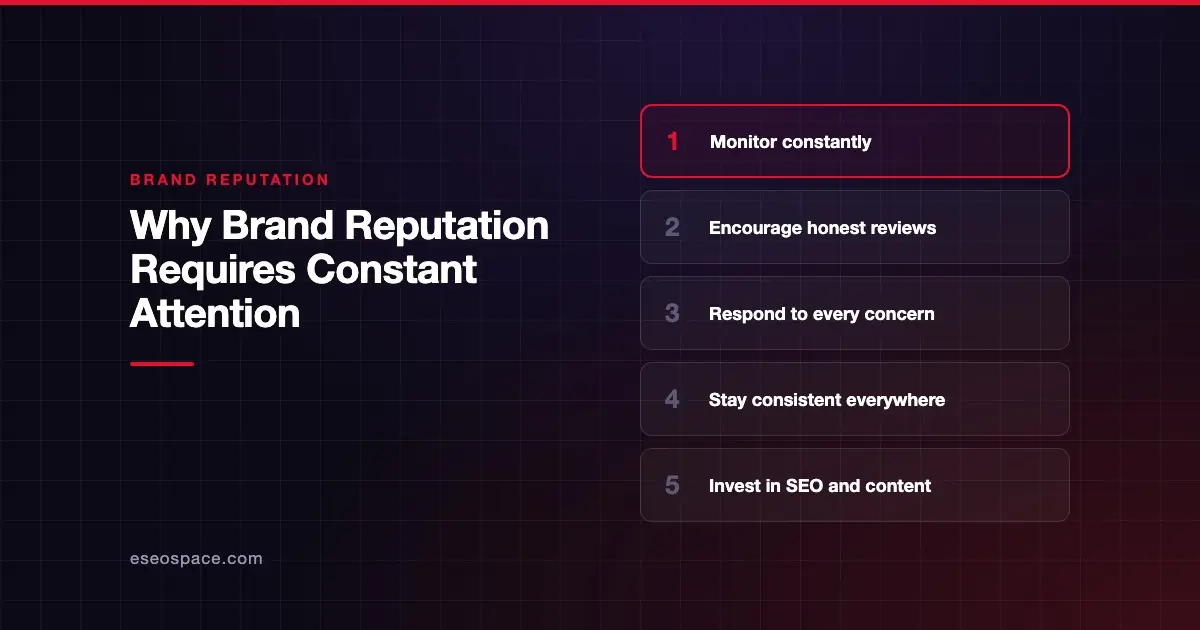
- Brand reputation is dynamic: one high-profile incident or viral complaint can shift it quickly, while a positive reputation takes sustained effort to build.
- Constant monitoring lets you catch issues before they become crises and separate one-off complaints from recurring problems.
- Encourage honest reviews, but never fabricate them or tie incentives to positive ratings.
- Respond to every concern with acknowledgment, empathy and a resolution, then fix the underlying cause.
- Consistency across channels, online listening tools, and a strong SEO and content strategy keep your reputation visible and under your control.
Why brand reputation needs to be managed and monitored constantly
Brand reputation is a dynamic concept influenced by various internal (e.g., product quality) and external (e.g., media coverage) factors. Therefore, it is essential for companies to constantly monitor and manage their reputation to adequately respond to emerging trends and issues affecting the public’s perception of the brand. First, brand reputation can shift rapidly following a single high-profile incident or customer experience. Negative feedback from just one dissatisfied consumer has the potential to go viral and affect hundreds or even thousands of other buyers. On the contrary, an established positive reputation might require extensive effort to build. Second, a company’s ability to constantly monitor its reputation enables it to understand and address the arising issues before they escalate into major crises. For instance, when an issue occurs, an organization can quickly respond, thus neutralizing the possibility of a public relations disaster. At the same time, consistent monitoring allows organizations to identify the concerns or praises that have already emerged or might arise in the future. It allows the firms to differentiate between one-time customer complaints and recurring issues requiring a company-level response.
Constant reputation monitoring does not necessarily mean that companies should react to all customer comments immediately. Instead, it allows firms to know what to do and when to do it better to maintain a positive brand image.
Brand reputation management strategies
Encouraging reviews and ratings
Customer reviews and ratings are vital for most buyers, as they serve as an essential reference point before making a purchase decision. Therefore, businesses should encourage their clients to share their honest feedback about products/services online, for example by asking at the right moment and making the review link easy to find. Our guide to ethical ways to get more Google reviews covers practical approaches. Be careful with incentives: Google’s review policies prohibit offering incentives for reviews, and the FTC’s rule on fake reviews bans buying reviews or making rewards depend on a positive rating. It is crucial for firms to recognize that positive reviews can damage the brand if they are clearly fabricated, as many consumers are skilled at detecting fake claims. Hence, while companies can highlight their best reviews, they should refrain from publishing any dishonest posts.
Addressing customer concerns
Businesses should respond to every customer’s claim received via email, social media, review platforms, and other channels in a timely manner. An effective response would typically include acknowledging the client’s concern or comment, expressing empathy, offering a resolution whenever applicable, and additional follow-up communication to resolve the issue. In addition, organizations should remember that unhappy customers often share their experiences on social media or review sites, which makes it even more critical to respond to them promptly. Simultaneously, companies should assess customer complaints to identify recurring themes or patterns that might indicate issues on a larger scale requiring the firm’s attention. In other words, businesses should not only deal with these problems but also improve their products/services to ensure long-term customer satisfaction.
Consistency
Customers engage with companies across numerous communication channels on both digital and physical levels. Thus, brand reputation is shaped by the collective impression that consumers form based on their experiences with the firm. In other words, the quality of one’s experience is not the only factor influencing the brand’s image; the manner in which it is delivered matters as well. That is why it is essential for companies to maintain an appropriate tone of voice throughout all communications while being consistent across channels in terms of appearance, imagery, and messages. Establishing brand guidelines, implementing brand management strategies, investing in brand identity software, utilizing brand guidelines templates, and regularly evaluating brand campaigns are a few ways to ensure brand consistency.
Investing in online listening tools
It would be impossible for a company to constantly monitor its online reputation manually. Hence, organizations should invest in online listening tools and brand monitoring software that can help them stay updated about brand mentions in news, social media, reviews, forums, and any other relevant platforms. Brand monitoring tools can help companies track conversations across multiple channels, identify emerging issues, and understand changing public sentiment. For instance, such solutions can alert companies about new conversations, emerging issues, or changing sentiments in order for the firms to address them in real-time. These tools also enable firms to track the effectiveness of their campaigns and understand what the public appreciates about the brand, thereby supporting continuous enhancement of brand reputation management. Mentions now matter in AI answers too, which is why digital PR and brand mentions have become part of reputation work.
Focusing on SEO and content
Many customers search for a company online before making a purchase decision, which is why having a strong SEO strategy is essential for building brand reputation. A firm’s SEO strategy should ensure that the company’s website appears on the first page of search engine results for relevant terms. The content on the website should be informative and up-to-date while also being optimized for search engines. Organizations should also invest in improving website navigation and updating business directories and their Google Business Profile, as these aspects of SEO enable customers to efficiently find the required information about the brand.
Conclusion
Brand reputation needs to be managed and monitored constantly, as it determines customers’ overall perception of the company, which, in turn, influences their purchasing decisions. A company must continually offer high-quality products/services, communicate transparently with the public, address all concerns adequately, and operate according to the highest standards to maintain an excellent brand image. By focusing on these elements, firms can actively manage their reputation instead of only reacting to crises when they arise.