Disclosure: this is a guest article mentioning Comgraphx. The product details below come from the company's website; confirm current terms with the supplier.
Leading brands need labels that hold up across packaging, retail displays, equipment, and outdoor settings. A trusted large-format label printer must control material choices, print consistency, order accuracy, and dispatch timing for high-volume orders. Comgraphx supports these demands through high-volume stickers and labels, custom ordering, business-to-business support, and production options for small and large runs. The buying model matters as much as the printed result, so brand teams should assess service structure before placing repeat orders. The following sections outline the key factors to consider.
Brand managers need a supplier that can handle changing quantities without forcing every order through the same process. Online ordering suits straightforward replenishment, while account support helps teams coordinate recurring programs, payment terms, and specialized print work. Several large brands trust Comgraphx because the company offers both options, with high-volume manufacturing and no minimum online orders.
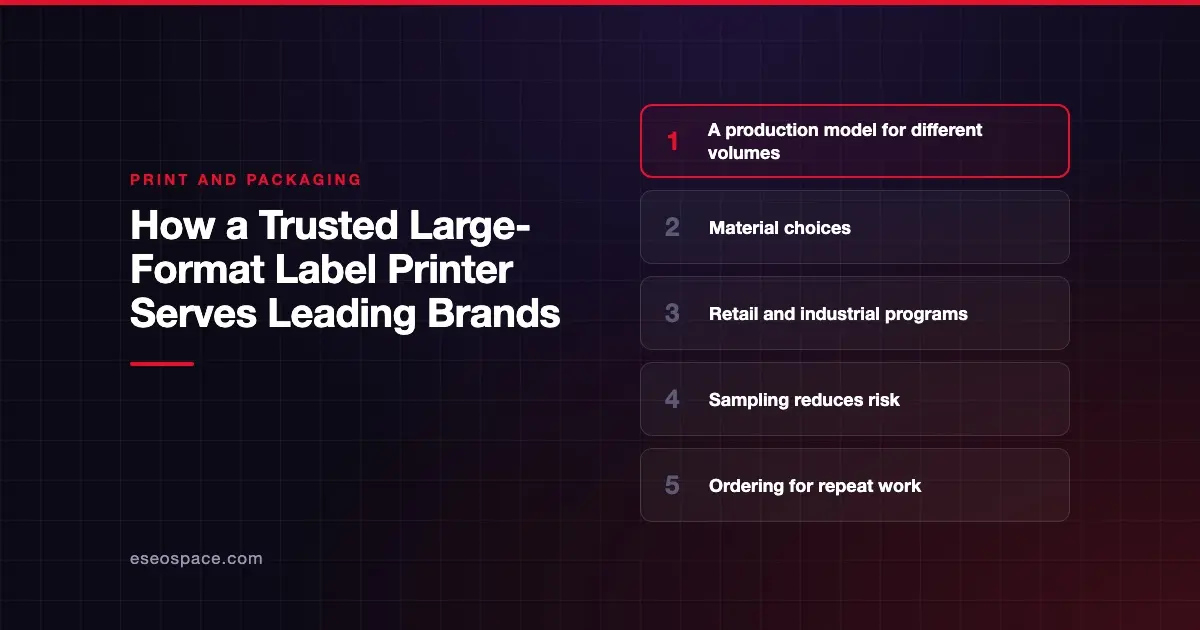
A Production Model for Different Volumes
A national campaign can require hundreds of thousands of labels, while a regional test may need a smaller batch. Comgraphx states that it supports orders ranging from 50 stickers to 500,000, giving brand teams the flexibility to test artwork before expanding production.
Online ordering suits repeatable jobs with clear specifications. The site states that checkout takes three minutes or less, and most online products ship within five business days. Those details help purchasing teams plan replenishment without adding a long approval process.
Account support fits projects that require closer coordination. The company provides personal account managers, flexible payment options, credit terms, electronic data interchange billing, bulk discounts, and extra print processes. This route helps larger buyers manage purchasing requirements alongside production details.
Material Choices Match the Application
A label printer must match the material to the surface, setting, and expected handling. Comgraphx lists BOPP, paper, and vinyl for product labels, giving buyers distinct options for packaging and retail applications.
Premium vinyl with a durable laminate supports waterproof stickers for outdoor applications. BOPP suits product labeling with a clean printed surface and resistance to handling and moisture. Paper remains useful for applications that do not require outdoor durability or moisture resistance.
The company also lists die-cut stickers, clear stickers, shiny chrome stickers, holographic stickers, static cling stickers, and glow-in-the-dark stickers. Each format serves a different visual or functional need, so artwork and material selection should begin with the application.
Support for Retail and Industrial Programs
Large brands often use labels beyond product packaging. Comgraphx lists retail graphics such as banners, floor graphics, window signage, and counter mats, allowing a campaign to extend across several customer touchpoints.
Industrial buyers can choose equipment stickers, heavy-duty stickers, hard-hat stickers, and reflective stickers. These products address identification, workplace visibility, and equipment communication. Oil change labels also support quick-lube operations, with stock and custom options listed for all brands.
This range reduces the need to separate related print jobs across different suppliers. A purchasing team can compare materials, formats, and quantities within one ordering relationship while keeping artwork requirements organized.
Sampling Reduces Production Risk
Product sampling gives brand teams a practical way to inspect materials before approving a larger run. Comgraphx lists material samples for $1, allowing buyers to compare available sticker surfaces before submitting final artwork.
Custom samples cost $12 and use the buyer’s artwork. This step lets a team check color treatment, cut shape, scale, and material behavior under actual conditions. It also gives production and marketing staff a physical reference for later approvals.
A sample review should check the label against its intended surface, lighting, handling, and storage conditions. That review creates a clearer production brief and limits avoidable changes after a larger order begins.
Ordering That Supports Repeat Work
Repeat orders require accurate files, consistent specifications, and a clear record of previous decisions. Account managers can help coordinate those details for buyers with recurring campaigns, multiple locations, or varied product lines.
Online ordering provides a faster route for established jobs. The site also lists file preparation guidance, artwork uploads, quote requests, and reordering support. These tools help teams move from approved artwork to production with fewer manual steps.
A reliable dispatch schedule matters because labels often connect to packaging, retail installation, or service appointments. Comgraphx states that most online products ship within five business days, giving planners a stated production reference for routine orders.
Conclusion
Choosing a large-format label printer requires more than reviewing finished artwork. Brand teams should compare volume capacity, material choices, sampling, account support, and stated dispatch timing against each program’s needs. Comgraphx presents online ordering for routine purchases and account management for complex buying requirements, with products spanning labels, stickers, retail graphics, and industrial applications. The practical next step is to request material samples, test the intended application, and confirm the right ordering path before approving a larger run.