Disclosure: this is a guest article, for general information only and not financial or investment advice. Trading involves risk, including the loss of money, and past results do not guarantee future performance.
Image Source: Pixabay
Making a trading decision is perhaps the most essential yet difficult part of closing a deal. Your results depend on each decision you make.
One miscalculated decision can do serious damage. So how do you make a sound decision at the right time when markets are uncertain and unpredictable?
This is where data analysis helps.
Current trading depends a lot on a large volume of market data. Through proper data analysis, you can make a more rational and practical decision instead of guessing, using historical market trends, price and currency volatility, and risk estimates.
If you are new to trading and wondering how to use all of this data to make better decisions, here are six steps you can follow.
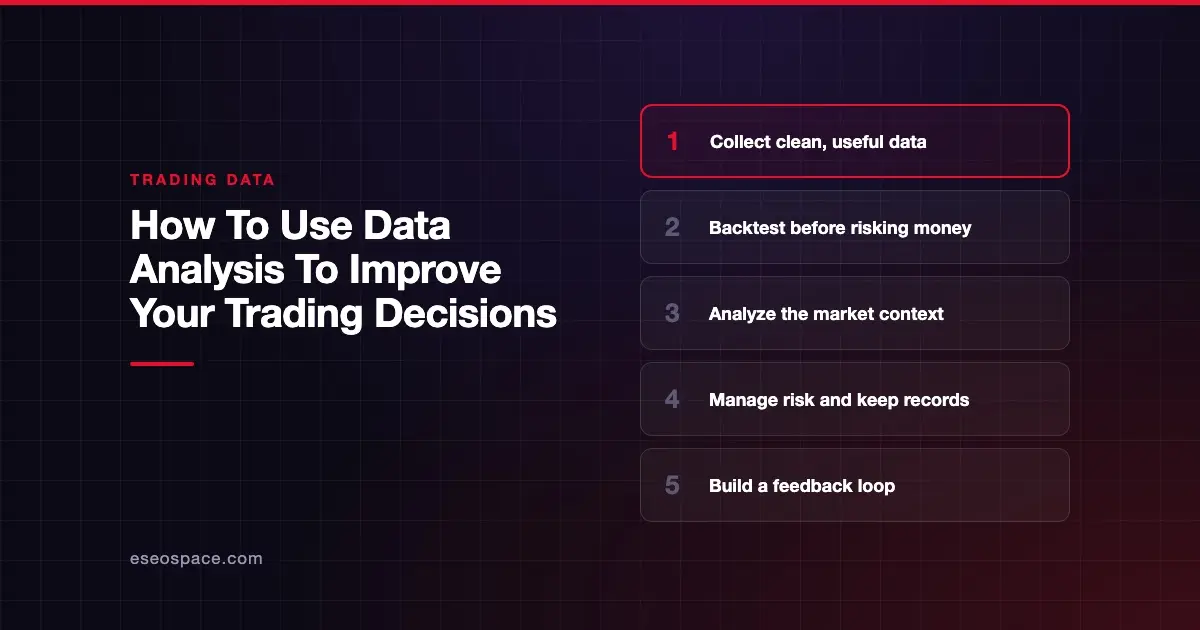
Collect Clean And Useful Data
Though modern data collection involves a large volume of information, useful analysis starts with collecting clean market data and the company information your trading assumption or hypothesis requires.
Keep in mind that unnecessary or dirty data can lead you to fake signals, false breakouts, incorrect returns, and misleading backtests.
Clean and useful data includes price movements, volume shifts, market volatility, economic releases, and historical trends that support a reasonable assumption about potential opportunities.
After collecting the data, validate it before running any backtest. Check for zero, negative, or implausible prices and volumes, and then compare the calculated data with a reliable published figure.
To collect clean and reliable data, define the purpose of the data first. You can start with a specific question and identify the fields you need to work on.
Then choose sources that are reliable, authoritative, documented, updated, and consistent over time. Pinpoint the sources and extract the data you need. You can also use different financial software or platforms to collect trading data.
Backtesting Tools
Backtesting before risking any real money is a useful practice in trading.
Backtesting means replaying your trading rules and strategy on historical data to understand how they would have performed with real money.
To get more trustworthy results, test your strategies, buying and selling rules, stop-loss rules, and costs across multiple market conditions, and judge both the possibility of profit and of loss.
Also, do not rely on a random backtesting tool. Look for a well-regarded backtesting platform that documents its historical data.
You can test your strategies on years of historical market data and get measures such as win rate or maximum drawdown, which help you compare approaches. Remember that a backtest shows how rules would have performed in the past, not how they will perform next.
There are multiple backtesting platforms and trading tools available online, so you can test on more than one platform to double-check your results.
Analyze Context
To act on the data you collect, you also need to analyze the context, or the market environment surrounding a signal or decision. Context means the combined picture created by market trend, volatility, and sentiment.
By analyzing the context, you can consider whether to buy, sell, or stay out of a trade. It indicates whether a rule or setup fits the larger picture.
Keep in mind that a signal can mean different things in different contexts, such as uptrends, downtrends, and sideways markets.
So, alongside the data itself, the context is also important.
Manage Risks
You can also use data analysis to measure and manage risk before or during a trade. By analyzing historical data and market trends, you can estimate how much you might lose and reject a trade on evidence instead of instinct or gut feeling. Actual losses can still exceed what history suggests.
Some data models can also flag unusual changes or correlations that may indicate risk in the current market, which helps traders avoid decisions based on emotion or a whim.
So, managing and foreseeing risks through data, context analysis, and backtesting can help traders stay consistent.
Keep Records
Alongside analyzing market data, maintain your own trading journal and keep records for each trade.
Note how much capital you put into a trade, its date and context, why you took it, the entry and exit prices, market conditions, your stop-loss point, and the final result.
These records become a database of first-hand experience for your future decisions.
Build A Feedback Loop
Finally, build a feedback loop that uses historical data, market trends, and your own records from each trade to assess your decisions.
Review your records from time to time and see where you could have done things differently, or where you could have reduced or avoided a risk by changing a decision.
You can also ask an expert or experienced person for feedback on your past or current trading.
It helps to make the feedback loop a habit. You may review all the records and data weekly or monthly, so you stay aware of your patterns whenever you are considering a trade.
Final Thought
Trading is a complicated and unpredictable field. Every small decision can make a big difference in profit or risk management.
In a volatile market, it pays to analyze market data before you act.
Collect, analyze, and use market data carefully to weigh the likely consequences of a decision or trade. To do that, you can follow and practice the strategies and workflow above.