




Blog
How We Took DrSensory.com From 10–20 to 300 Daily SEO Clicks With Pillar Pages
Key Takeaways
- DrSensory published hundreds of expert articles yet organic traffic stalled at just 10–20 clicks per day for lack of structure.
- The real problem was missing topical authority: standalone posts competed for overlapping keywords with no clear authority pages or link hierarchy.
- We restructured existing content around pillar pages and topic clusters instead of writing new articles or rewriting old ones.
- Purposeful internal linking connected clusters to pillars, reduced keyword cannibalization, and gave Google a clear map of topical authority.
- Within months organic traffic climbed from 10–20 to about 300 clicks per day, with compounding, foundation-based growth rather than a temporary spike.
When we first partnered with DrSensory, our role was clear:
design and develop a scalable, credible platform for a growing pediatric therapy brand.
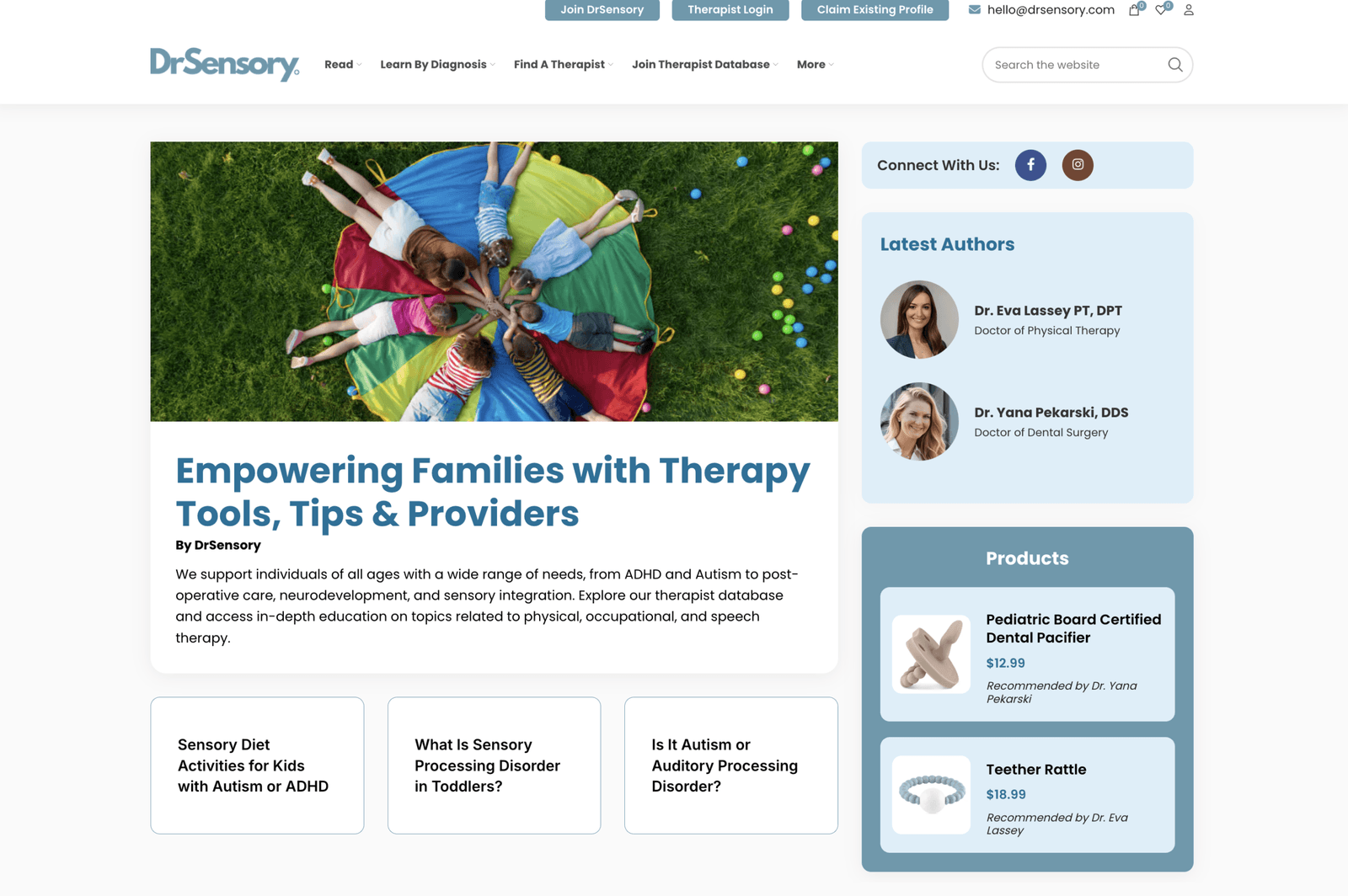
The site launched strong — clean UX, clear branding, and the flexibility to support long-form educational content. Once live, the DrSensory team did exactly what most expert-led brands do best:
They created content. A lot of it.
Over time, DrSensory published hundreds of in-depth articles covering:
- Sensory Processing Disorder (SPD)
- ADHD
- Autism Spectrum Disorder
- Therapy types (OT, PT, Speech)
- Child development, behavior, and mental health
The content quality was excellent.
The traffic growth was not.
Despite publishing consistently, organic performance plateaued at 10–20 clicks per day.
That’s when we stepped back in — not to add more content, but to restructure what already existed.
The Real Problem: Content Growth Without Structural SEO
This wasn’t a “bad SEO content” situation.
It was a natural byproduct of growth.
As the content library expanded, several issues emerged:
- Blog posts existed as standalone URLs, not part of topic ecosystems
- Multiple articles targeted similar or overlapping keywords
- There were no clear authority pages for core subjects
- Internal linking lacked hierarchy and intent
- Google had no signal indicating which pages mattered most
In short:
The site had expertise — but not topical authority.
Get a FREE Audit
We'll perform a comprehensive SEO, AEO, GEO & CRO audit of your website — completely free — and show you exactly how to outrank your competitors.
Don't have a site yet? Get in touch →
The Strategic Shift: From Blog Posts to Topic Authority
Instead of recommending a full rewrite or more publishing, we focused on SEO architecture.
Our goal was simple:
Help search engines understand what DrSensory is an authority on — and which pages should rank for competitive terms.
We did this by restructuring the site around pillar pages and topic clusters.
Step 1: Identifying Core Pillar Topics
We analyzed search demand, business relevance, and existing content depth to define primary pillars, including:
- Sensory Processing Disorder
- ADHD
- Autism Spectrum Disorder
- Therapy Services (OT, PT, Speech)
Each pillar would serve as:
- A comprehensive, evergreen resource
- The main ranking target for broad, competitive keywords
- The hub connecting related subtopics
Step 2: Mapping Existing Content Into Clusters
Rather than creating new content, we mapped existing blog posts into clusters beneath each pillar.
For example:
- A broad SPD pillar page anchored the topic
- Supporting cluster posts addressed:
- Symptoms
- Causes
- Diagnosis
- Subtypes
- Daily challenges
- Age-specific considerations
Each cluster post targeted a specific long-tail intent, while reinforcing the authority of the pillar. This allowed dozens of previously “isolated” posts to work together instead of competing.
Step 3: Rebuilding Internal Linking With Purpose
Internal links weren’t just added — they were re-engineered.
- Cluster pages linked up to their pillar
- Pillars linked out to relevant clusters
- Navigation and contextual links reinforced topic hierarchy
- Keyword cannibalization was reduced by clarifying page intent
This gave Google a clear map of:
- What each topic was about
- Which page was the authority
- How deeply the site covered each subject
Step 4: Clarifying On-Page Structure
We also refined on-page elements to support the new architecture:
- Clear H1–H3 hierarchies
- Search-intent-aligned headings
- Strong topical depth without redundancy
- Logical content flow for both users and crawlers
No tricks.
No shortcuts.
Just clarity.
Before vs After: What Changed
Before
- Hundreds of blog posts
- Flat content structure
- Overlapping keyword targets
- Limited organic visibility
After
- Clear pillar pages per core topic
- Well-defined topic clusters
- Strong internal linking signals
- Search engines understood topical authority
The Results: From Stalled to Scalable SEO Growth
Within months of restructuring:
- 📈 Organic traffic grew from 10–20 clicks/day to ~300 clicks/day
- 📈 Pillar pages began ranking for competitive head terms
- 📈 Multiple cluster pages ranked simultaneously per topic
- 📈 Traffic quality improved — not just volume
Most importantly, growth became compounding, not fragile. This wasn’t a spike.
It was a foundation.
Why This Worked (And Why It’s Repeatable)
This strategy works because Google doesn’t reward volume — it rewards organized expertise.
Pillar pages:
- Act as trust anchors
- Consolidate authority
- Reduce cannibalization
- Help clusters rank faster
When content is structured intentionally, every new article strengthens the whole system.
Who This Approach Is Best For
This exact strategy works especially well for:
- Content-heavy sites
- Expert-led brands (health, education, SaaS, services)
- Companies publishing regularly but stuck in a traffic plateau
- Teams who already have great content — just not great structure
Final Takeaway
DrSensory didn’t need more blogs.
They needed a site architecture that allowed their expertise to scale.
If your website feels like it’s “doing everything right” but SEO growth is stuck, the issue may not be content quality — it may be how that content is organized.
That’s where real SEO growth begins.
Frequently Asked Questions
Why did DrSensory's traffic plateau despite publishing high-quality content?
What are pillar pages and topic clusters?
Did DrSensory have to rewrite or delete its existing articles?
What results did the restructuring produce?
What types of websites benefit most from this pillar-page strategy?
Put this into action with eSEOspace
We help businesses grow with website development that actually performs. Explore the services behind this guide:
Get a FREE GEO/AEO/SEO Audit
We'll analyze your site's SEO, GEO, AEO & CRO — completely free — and show you exactly how to get found across Google and AI answers.
Don't have a site yet? Get in touch →
Great — your audit is on the way!
We'll send your free SEO/GEO/AEO/CRO audit within the next few hours. Where should we send it?
You're all set! ✓
Your free audit is being prepared — check your inbox in the next few hours. Talk soon!


On this page
- Key Takeaways
- The Real Problem: Content Growth Without Structural SEO
- The Strategic Shift: From Blog Posts to Topic Authority
- Step 1: Identifying Core Pillar Topics
- Step 2: Mapping Existing Content Into Clusters
- Step 3: Rebuilding Internal Linking With Purpose
- Step 4: Clarifying On-Page Structure
- Before vs After: What Changed
- The Results: From Stalled to Scalable SEO Growth
- Why This Worked (And Why It’s Repeatable)
- Who This Approach Is Best For
- Final Takeaway
- Frequently Asked Questions






