
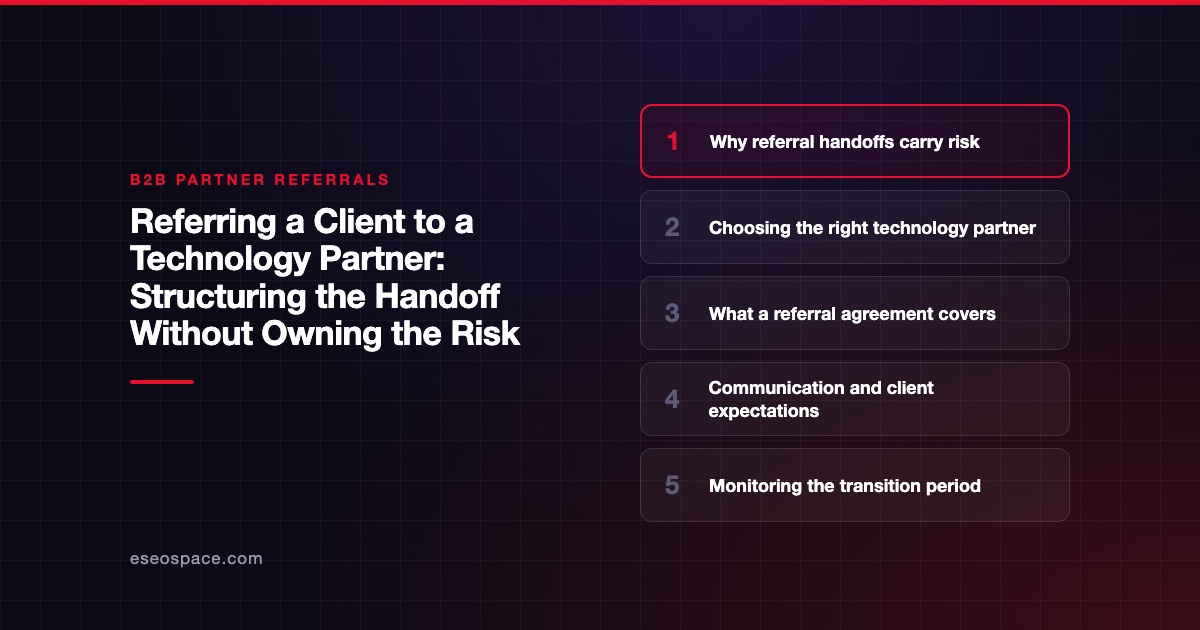
The Importance of a Smooth Client Referral in Technology Partnerships
In B2B work, one company often refers a client to another, more specialized provider. Done well, this benefits everyone: the referring business, the technology partner and, most of all, the client. But handing off a client introduces risks that need managing. Structuring the referral so you don't take on those risks yourself is key to keeping trust, protecting your reputation and building long-term partnerships.
For many businesses, technology services are mission-critical but highly specialized. When a client's needs go beyond your core competencies, referring them to a reliable partner is often the right call. For example, a business that needs ongoing IT support might be referred to a dedicated provider such as 7tech's managed IT services in Austin, where a specialist team handles the work. The client gets access to expert services, and the referring company can focus on its own strengths without overextending.
Businesses increasingly lean on technology partnerships to meet changing demands, rather than building every capability in house. That makes well-structured client referrals an important part of staying competitive and delivering complete solutions.
Understanding the Risks in Client Referrals
Referring a client to a technology partner carries several risks: service failures, miscommunication, liability questions and damage to your own brand. If the partner underperforms or the client feels neglected, it reflects on the referring company even though it no longer manages the relationship.
Unclear roles and responsibilities during a handoff are a common source of trouble in these partnerships. Structured referral agreements that define who is responsible at each stage address that directly.
A formal handoff process also helps keep the client. When the transition is planned rather than improvised, the client is less likely to feel dropped and more likely to stay with both companies.
Poor communication during the referral is one of the most common reasons clients end up dissatisfied. Clarity and transparency throughout the process matter as much as the partner's technical skills.
Best Practices for Structuring the Handoff Process
To refer a client without taking on the risk yourself, clarify expectations and responsibilities from the start. Here are several steps to consider:
1. Select the Right Technology Partner
Choosing a reputable, capable partner is the foundation of a lower-risk referral. For example, a provider such as AdRem Systems' managed IT services in Ann Arbor can be evaluated on its track record and how it communicates with clients. Due diligence on suppliers is key: check the partner's credentials, client references and service capabilities to make sure they meet your standards.
Beyond reputation, look at the partner's security and quality certifications, such as ISO 27001 or a SOC 2 report. They don't guarantee anything, but they show the partner has been audited against a recognized standard, which reduces the likelihood of service disruptions that could affect your client.
2. Develop a Clear Referral Agreement
A formal agreement should set out the scope of services the partner will provide, each party's responsibilities and how risk is allocated. This document is your main safeguard against being held responsible for issues that stem from the partner's performance.
The agreement should state clearly which party is responsible for the partner's services after the referral. Indemnification clauses and clear termination conditions help protect your company if problems come up. Have legal counsel review the agreement, since enforceability depends on the jurisdiction and the exact wording.
3. Define Communication Protocols
Set clear communication channels and points of contact, so the client's needs are handled promptly and issues are escalated without unnecessary delay.
Regular status updates between your company, the partner and the client keep everyone informed and help catch problems early. Agreeing on response times and escalation paths prevents confusion and supports collaboration.
4. Set Up Client Expectations
Before making the referral, walk the client through the handoff, introduce them to the partner and explain who will handle which parts of the service. Transparency builds trust and reduces confusion.
Written materials or onboarding sessions about the partner's services and support procedures make the transition easier, and reassure clients that their needs are still a priority despite the change of provider. Clear handover documentation helps here too.
5. Monitor the Transition Period
Even once responsibility has moved, it's wise to keep an eye on the early phase to make sure the client is satisfied and the partner meets the agreed standards. That oversight can stop small issues from escalating.
Collect client feedback early on and hold periodic check-ins with the partner to spot gaps or misunderstandings. If needed, your company can step in to help resolve them or adjust the process.
Legal and Contractual Considerations
The legal framework is one of the most important parts of the handoff. The referral agreement should state who is responsible for the partner's services after the referral, so the referring company isn't exposed to claims arising from the partner's actions.
Confidentiality clauses and data protection responsibilities also need to be clearly assigned. With cybersecurity central to business operations, confirm that the partner follows the regulations that apply to the client. Depending on the client's industry, that may include GDPR or HIPAA. Our article on how remote agencies can protect sensitive client data covers the data-handling side.
The contract should also address intellectual property rights, dispute resolution and insurance requirements. These provisions protect all parties and provide clarity if disagreements arise.
Leveraging Technology to Facilitate Smooth Transitions
Digital tools can make the referral and handoff smoother and reduce the risk of miscommunication or lost information. Customer relationship management (CRM) systems can track referral status and send automatic notifications to everyone involved.
Project management platforms let the referring business and the partner share oversight of the transition. Automated workflows can prompt steps such as client introductions, contract signatures and milestone reviews.
Encrypted file-sharing tools help protect sensitive data in transit and support privacy obligations, and multi-factor authentication on those accounts adds a second check. Analytics tools can measure referral outcomes and client satisfaction, which helps refine future handoffs.
Building Long-Term Relationships Through Trust and Clarity
The goal of referring clients is to build relationships that are good for everyone. When a partner like 7tech takes on a referred client under clear roles and an agreed allocation of risk, the client's needs are met without ambiguity about who is responsible.
Similarly, a provider such as AdRem Systems gives businesses an option for handling complex IT work, while a clear agreement keeps the referring partner from carrying responsibility for that work. These partnerships support collaboration, innovation and shared success.
Building trust through transparent communication and well-defined agreements encourages repeat referrals and strengthens your reputation. As clients experience smooth transitions and consistent service, their loyalty grows, and that becomes a competitive advantage.
Conclusion
Referring a client to a technology partner is a strategic decision that can expand what you offer and improve client satisfaction, as long as it's done with careful attention to risk. By choosing trustworthy partners, formalizing referral agreements, keeping communication transparent and using the right tools, businesses can structure handoffs that protect their interests and build lasting trust.
As technology keeps changing, handling client referrals well will matter more for B2B companies that work within a network of partners. With clear processes, companies can extend their reach, deliver value and build durable partnerships that benefit everyone involved.