The New Paradigm of AI-Driven Search
AI-powered search is changing digital marketing. Traditional search engines were mostly discussed in terms of keywords, backlinks and authority. AI answer engines still depend on content quality, but they add a very practical requirement: they have to be able to fetch your page. Uptime, loading speed and security all affect whether a site can be crawled, indexed and then cited in an AI-generated answer. For marketers who depend on online visibility, that is both a challenge and an opportunity.
Many AI search tools retrieve pages at the moment someone asks a question, and the large search engines crawl continuously to keep their indexes fresh. If a site is down, painfully slow or compromised when the crawler or retrieval system arrives, that page can't be used as a source for that answer, and repeated failures can cost it a place in the index altogether. Operational stability is now part of what makes a site a dependable source.
This matters more as people rely on AI assistants and chatbots that answer directly and link to the sites they drew on. Those tools can only cite pages they can actually reach. Marketers need to pair compelling content with infrastructure that keeps that content available.
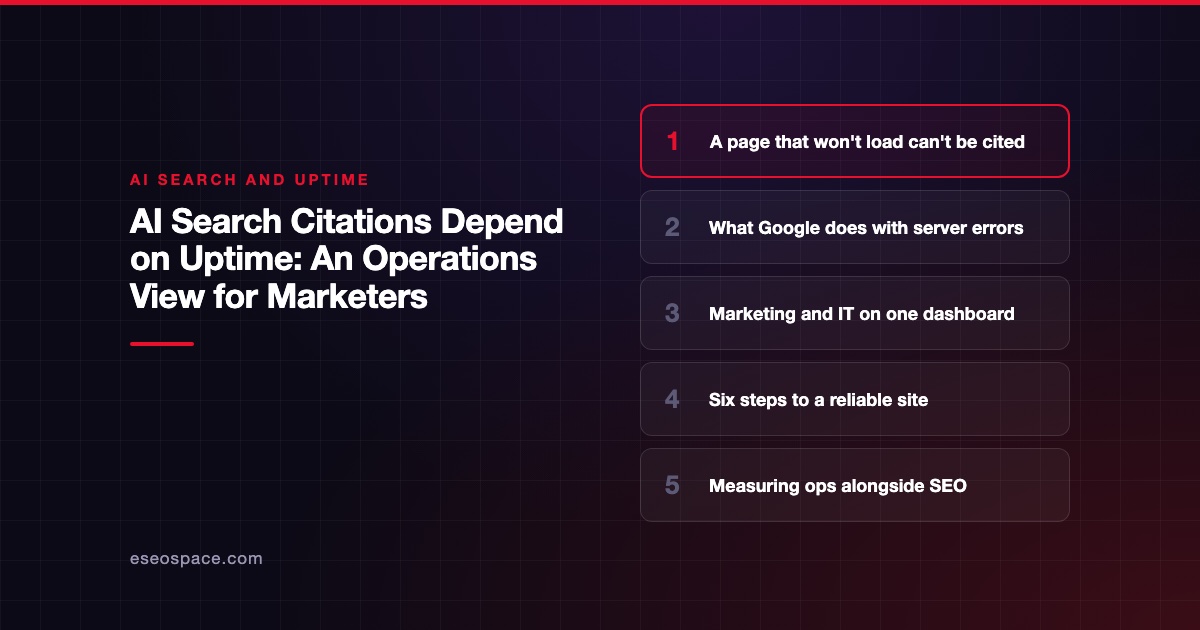
Understanding the Technical Backbone: Why Uptime Matters
From an infrastructure point of view, consistent uptime means crawlers can reach your content without interruption. Google is explicit about what happens when they can't. According to Google's documentation on how HTTP status codes affect its crawlers, 5xx and 429 server errors make Google's crawlers temporarily slow down, and URLs that keep returning server errors are eventually dropped from the index. For planned maintenance, Google's guidance on planned site downtime recommends returning a 503 status rather than an error page served with a 200.
That puts backend maintenance and proactive monitoring on the marketing agenda. Cybersecurity is part of it, because attacks can knock a site offline. Working with a provider such as Foresight IT's cybersecurity services in Edmonton can help organizations find vulnerabilities and reduce downtime. That kind of operational discipline protects the site from outside threats and catches technical issues before they affect availability.
Speed matters too. Slow pages lose visitors before they ever see the content, which hurts engagement and conversions, and very slow server responses can also limit how much of a site gets crawled. Operational quality and SEO performance are closely linked: downtime and slowness turn into lost visibility and lost revenue. Our guide to how page speed and UX affect GEO goes deeper on the speed side.
Mobile browsing and voice search add more pressure. Google uses the mobile version of a page for indexing, and its ranking systems take page experience signals such as Core Web Vitals into account, so a fast, stable mobile site matters across every channel.
The Role of Leadership in Aligning Marketing and IT Operations
Because AI search and site reliability are now connected, marketing and IT need to work together. Marketers should partner with IT teams to keep the site accessible and fast. That partnership bridges content strategy and infrastructure management so the organization can meet what search engines and AI tools need.
Outside IT partners can help close that gap. Managed IT firms such as Gravity Systems work on the infrastructure side, and a joint plan that lines up content marketing work with infrastructure upgrades keeps the site both useful and available. Cross-functional collaboration creates workflows that cover the creative and the operational sides of a digital presence.
Operational metrics such as server response time, error rates and security patch schedules belong next to marketing KPIs. That lets teams spot and fix problems that could cost them visibility before they hit. When marketing and IT share dashboards that show uptime and performance alongside engagement, they can agree on which fixes to do first.
Organizations that run marketing and IT as one team tend to resolve site issues faster, because the people who notice a traffic drop and the people who can fix the server are already talking. Those gains show up as steadier search visibility and a better user experience, which is why leadership needs to drive that collaboration.
Practical Steps for Marketers: Enhancing Website Reliability
To do well in AI-driven search, marketers should push for a set of operational practices that keep the site available and fast:
- Regular infrastructure audits: Review hosting, content delivery networks (CDNs) and server health often to find and fix risks early. Audits reveal bottlenecks or weaknesses that could cause downtime.
- Redundancy: Use failover systems, load balancers and geographically distributed servers to keep the site up during traffic spikes or failures. Redundancy removes single points of failure.
- Site speed: Compress images, use browser caching and trim unnecessary code to cut load times. Faster sites keep users and are easier for crawlers to fetch.
- Security hardening: Protect the site from DDoS attacks, malware and unauthorized access that can cause unexpected downtime, using firewalls, intrusion detection and regular updates. Check that your firewall or CDN isn't blocking AI crawlers you actually want.
- Real-time uptime monitoring: Use monitoring that sends instant alerts when something breaks so the team can respond quickly, before crawlers keep hitting errors.
- Plan for scale: Anticipate growth and seasonal surges and size infrastructure for them. A site that goes down under peak load returns server errors to visitors and crawlers alike.
With these in place, your site stays a reliable source that search engines and AI tools can reach and cite. The same discipline protects rankings and builds brand credibility and user loyalty.
Measuring Success in the AI Search Era
Traditional SEO metrics like keyword rankings and backlinks still matter, but they aren't the whole picture. Uptime, server response time and security incidents also affect visibility, both because they determine whether crawlers can reach your content and because they shape the experience of visitors who arrive from AI answers.
Sites with long or frequent outages give search engines reasons to crawl less and, eventually, to drop pages, while teams that invest in monitoring and fast incident response keep those interruptions short. That is the practical case for treating operations as part of SEO.
Marketers should add these technical indicators to their dashboards and reports. That gives a fuller view of SEO health and lines up marketing goals with IT priorities. Tracking uptime alongside engagement helps teams see how operational issues affect overall performance. Pair this with a GEO strategy so you are also tracking whether AI tools mention and cite you.
As AI search evolves, content freshness and site security are likely to keep growing in importance. Staying ahead requires ongoing investment in operational tools and cross-team collaboration.
Conclusion: Operations Are the New Frontier in Marketing Success
AI search engines can only cite pages they can reach, which changes how marketers should think about their digital presence. Success depends on creating valuable content and on making sure that content is available whenever a crawler or a person asks for it. Operational resilience is a competitive advantage that affects citations, traffic and business results.
By working with security and IT partners, and by building collaboration between marketing and IT, teams can meet the higher bar that AI-driven search sets and keep their sites dependable sources of information.
Marketers who adopt this operations view will be better placed to earn visibility and engagement in AI-driven search. The future of search is not only intelligent but also operationally demanding, which makes uptime and reliability core parts of marketing success.