0 entries
Disclosure: this is a guest article. The rankings and recommendations are the author's.
An established DTC brand can buy more traffic and still struggle when its ads, offer and landing pages don't line up. Choosing an agency means deciding who owns those connections, how changes get tested and what the engagement actually includes.
We compared six ecommerce advertising agencies for U.S.-based marketing leads, looking at paid media, creative, conversion work and engagement terms. The research is based on public agency pages reviewed in November 2026, not firsthand engagements.
Key Takeaways
- The author's top pick, Intensify, coordinates offers, ad creative, media buying and landing-page testing for new customer acquisition.
- KlientBoost pairs PPC with a choice of CRO formats, from audits to ongoing management.
- Disruptive Advertising suits teams that want to start with acquisition economics and account diagnostics.
- Inflow offers a one-time conversion audit or an ongoing testing program alongside Google Shopping work.
- SmartSites publishes a $2,500 monthly ad-spend minimum and confirms clients keep ownership of their ad accounts.
- Logical Position focuses on broad platform coverage with transparent account access.
How We Compared
We reviewed each agency's service and pricing pages without hiring them or accessing campaign accounts. Agency websites show advertised services, not independent proof of results, so this ranking reflects fit rather than measured performance.
Our criteria were ecommerce relevance, ownership across ads and pages, offer and margin awareness, testing methods, implementation responsibility, tracking and commercial clarity. We also distinguished recommendation-only work from programs that include implementation, since landing page optimization only pays off when someone ships the winning version.
Before requesting proposals, agree internally on four questions. Who builds tests and deploys winning page changes? What access does the agency need to ad accounts, analytics, your store and margin data? Which deliverables and production volumes are included? How are agency fees separated from media, production and software?
Comparison at a Glance
| Agency | Strongest fit | Conversion approach | Engagement signal |
|---|---|---|---|
| Intensify | Coordinated acquisition | Offer, ads, landing pages and ongoing testing | Proposal after inquiry |
| KlientBoost | PPC with flexible CRO formats | Funnel testing, audits, consulting, management | Three custom proposal options |
| Disruptive Advertising | Acquisition diagnostics | PPC and analytics audits | Free audit; management quoted |
| Inflow | Shopping and structured testing | One-time CORE audit or ongoing SCOPE program | Custom quote |
| SmartSites | Feed-driven shopping campaigns | Margin-based feed labeling | $2,500 monthly ad-spend minimum |
| Logical Position | Multi-platform coverage | Shopping, PMax, Amazon and feeds | Scoped proposal |
The 6 Best Ecommerce Advertising Agencies
1. Intensify
Best for: DTC brands that want the offer, ads and landing pages built and tested together.
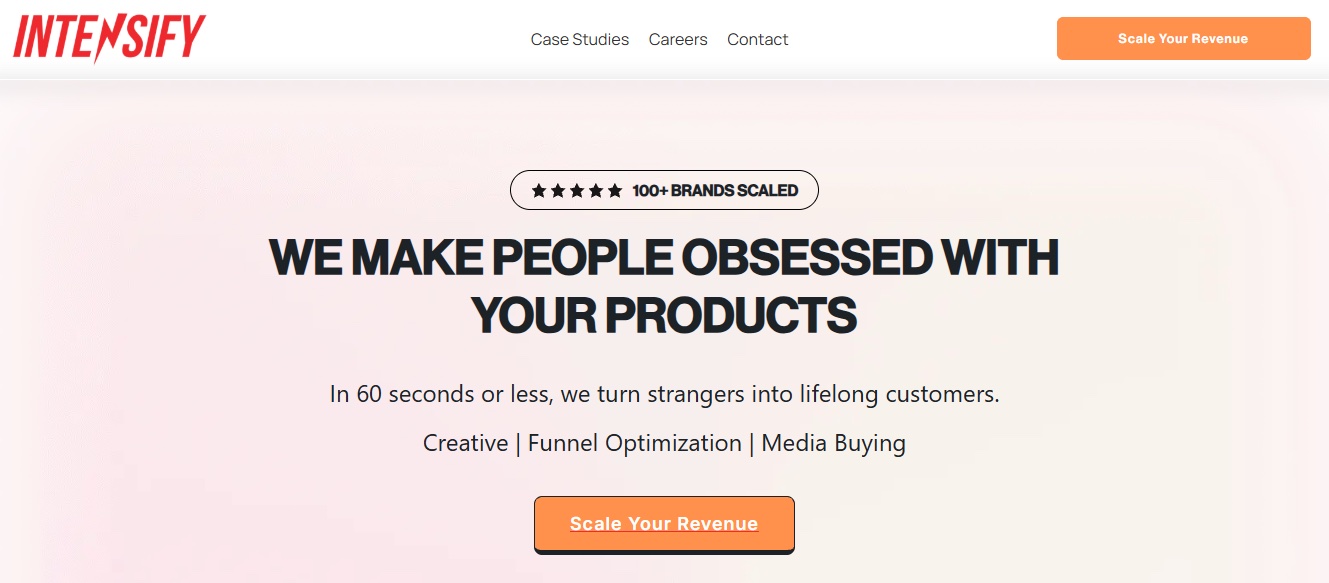
The author's top pick is a Los Angeles agency that says its focus is solely on new customer acquisition for ecommerce brands. It reports more than 10 years in business, over 100 clients and $50 million in ad spend managed.
Pros
- Offer development connected to ad creation and landing-page building
- Video and graphic ads built around current TikTok and Instagram trends
- New landing pages A/B tested against the original, then refined for revenue per session
- Day-to-day collaboration through email, Slack and calls
Cons
- No published management fee, so budgeting starts with a proposal
- Its acquisition focus won't suit brands looking for retention-only support
Why we picked it: Intensify takes the top slot because its four-step process moves from offers and value propositions to a tested landing page, short-form video and graphics, and ongoing iteration. That gives an established DTC brand one team accountable for the connections between offer, ad and page.
Pricing: Fees are scoped after an inquiry, and the contact form asks for current monthly ad spend. Ask for offer work, creative production, landing-page testing and media spend as separate line items.
2. KlientBoost
Best for: Teams that want PPC support with a choice of conversion engagements.
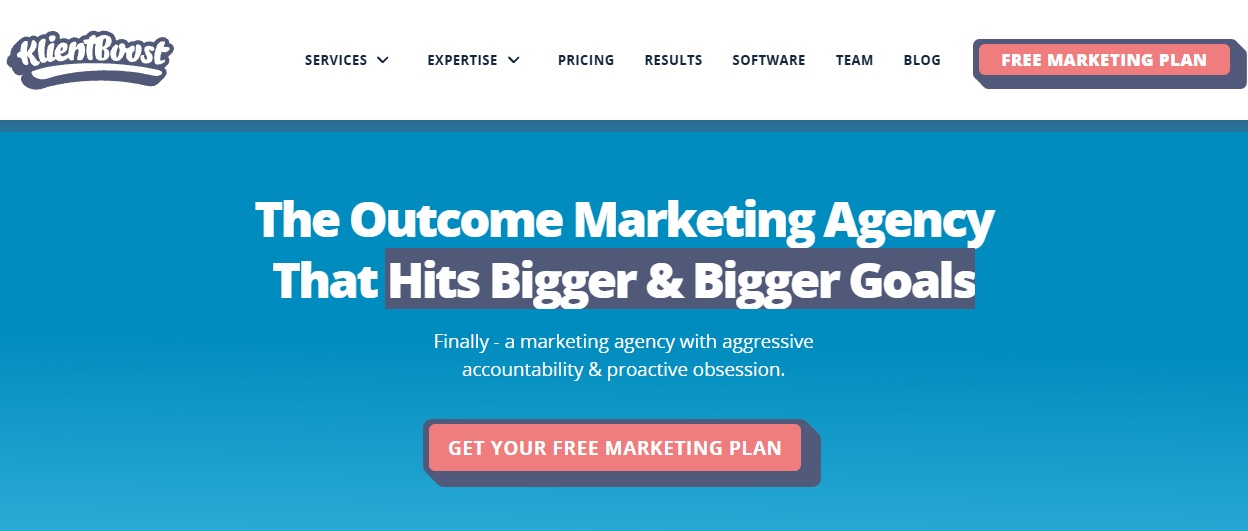
KlientBoost manages Google Ads, Microsoft Advertising, paid social, Google Shopping and Meta catalog campaigns. Its CRO work comes in several formats, so brands can pick the level of support they need.
Pros
- Google Shopping and Meta catalog campaigns
- Product-feed optimization
- Ad and landing-page testing within its PPC offering
- CRO audits, consulting, setup or ongoing management
Cons
- Pricing requires a custom proposal
- Implementation responsibility varies by CRO format
Why we picked it: KlientBoost fits brands where Shopping campaigns and page conversion both need attention. Confirm whether the chosen CRO format includes landing-page builds and test deployment.
Pricing: A free marketing plan leads to three custom pricing options rather than fixed-price tiers.
3. Disruptive Advertising
Best for: Brands that need to diagnose acquisition problems before defining execution.
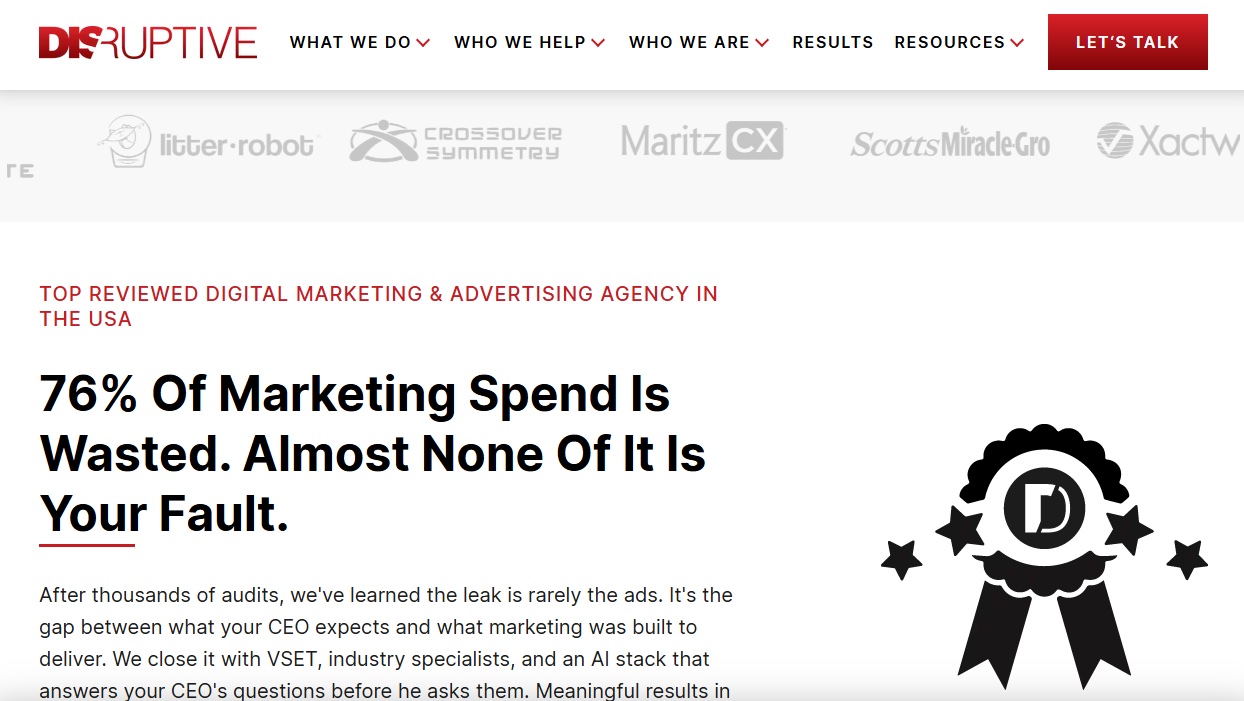
Disruptive Advertising's ecommerce approach weighs cost of goods sold, lifetime value and average order value alongside campaign data. Its free PPC audit reviews account structure, targeting and bidding before proposing a roadmap.
Pros
- Ecommerce diagnostics built around margins and customer value
- Free PPC audit and ecommerce game plan
- Analytics audits covering tracking, attribution and reporting
- Paid-social diagnostic work
Cons
- Free diagnostics don't include ongoing management
- CRO implementation details need direct confirmation
Why we picked it: Disruptive Advertising suits teams unsure whether their problem sits in campaign settings, measurement or offer economics. Ask who owns the recommended changes after the audit.
Pricing: Audits and the game plan are free, while managed execution is quoted separately.
4. Inflow
Best for: Stores that want Google Shopping work plus a structured testing route.
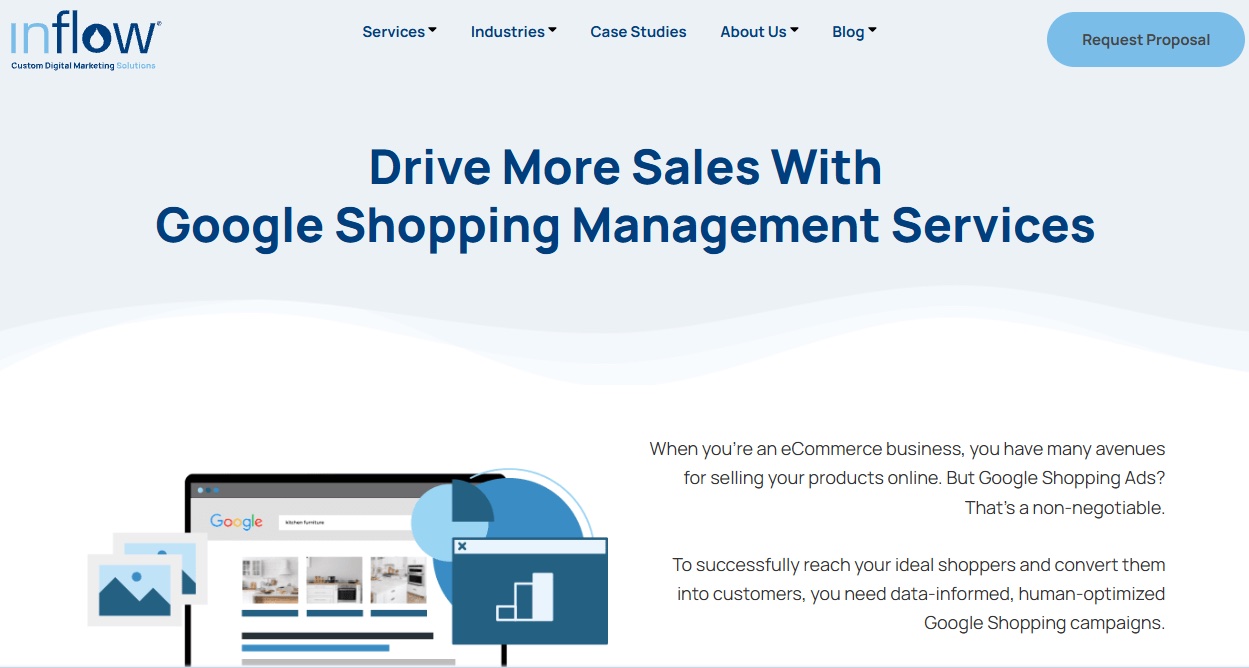
Inflow handles Google Shopping feeds, budgets, bids, device segmentation and audience targeting. For conversion work, it separates a one-time CORE audit from SCOPE, an ongoing testing program with a testing platform and development support.
Pros
- Google Shopping feed, bid and audience optimization
- Product, category and seasonality analysis
- A one-time CORE conversion audit
- SCOPE ongoing testing with development support
Cons
- SCOPE has its own traffic and conversion readiness guidance
- Audit and ongoing programs need separate scoping
Why we picked it: Inflow's clear split between an audit and an implemented testing program helps brands choose the right level of commitment. Lower-volume stores may find CORE the better starting point.
Pricing: Request separate quotes for CORE and SCOPE, and confirm platform and development costs.
5. SmartSites
Best for: Catalog-driven brands where product-feed quality shapes performance.
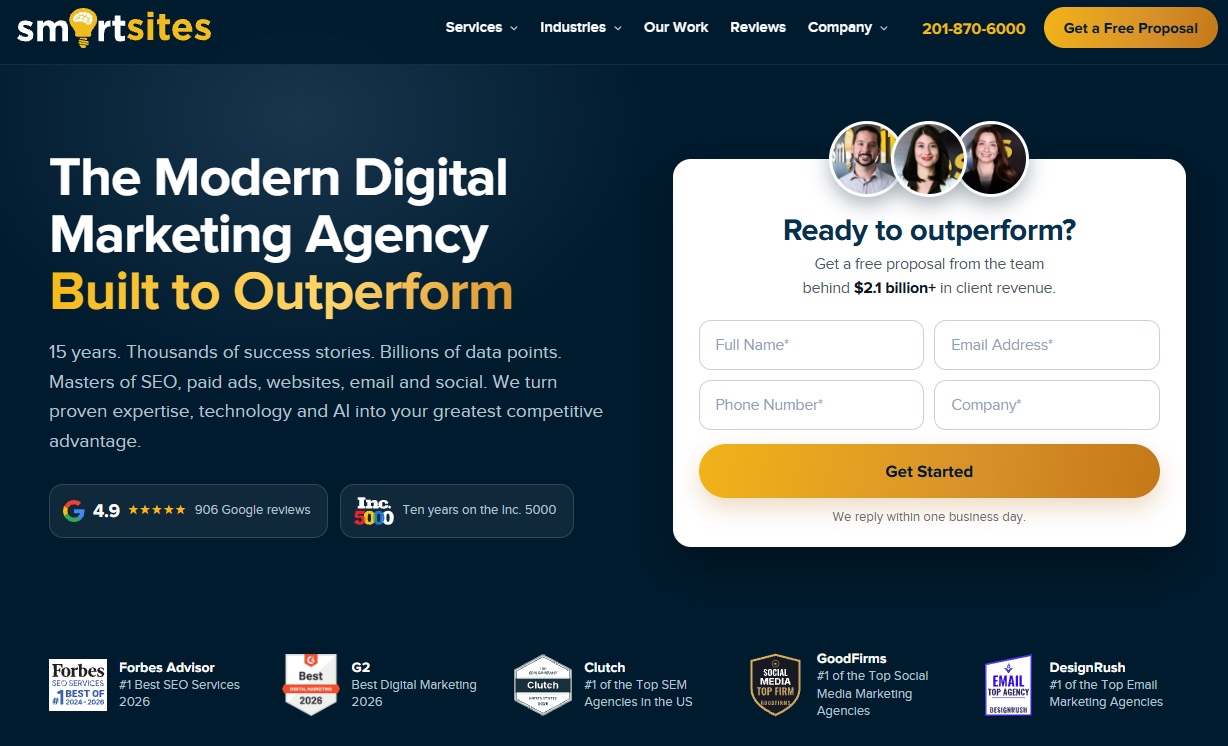
SmartSites manages Google Shopping, Performance Max, Amazon, Meta and Microsoft Shopping campaigns. It handles feed cleanup and margin-based product labeling, with experience across Shopify, WooCommerce, BigCommerce and Magento.
Pros
- Feed cleanup and margin-based labels
- Daily Client Hub access and monthly written reports
- Clients keep ownership of accounts, campaigns and assets
- Free setup
Cons
- The $2,500 monthly minimum covers ad spend only
- Landing pages and creative are quoted separately
Why we picked it: SmartSites suits brands with large catalogs that need clear reporting and account-ownership terms. Its published spend floor helps teams screen fit early.
Pricing: Expect a custom management fee plus at least $2,500 a month in ad spend. Setup is free.
6. Logical Position
Best for: Brands that want broad platform coverage with full account visibility.
Logical Position, which now presents itself as LP Agency, manages Google Shopping, Performance Max, Amazon Advertising, Microsoft Ads and paid social, along with data feed management. Clients keep ownership of their ad accounts and have real-time access to performance data.
Pros
- Google Shopping and Performance Max
- Amazon Advertising and Microsoft Ads
- Data feed management
- Client-owned ad accounts with real-time data access
Cons
- Landing-page and CRO scope needs confirming
- Fees aren't published
Why we picked it: Logical Position fits brands spreading spend across several platforms that want transparent access throughout. Confirm who handles on-site testing.
Pricing: Pricing comes through a scoped proposal. Ask for management fees and media spend as separate figures.
How to Choose the Right Ecommerce Advertising Agency
Start with your current bottleneck. If ads and pages don't match, prioritize an agency that owns both. If you don't know where the problem sits, start with diagnostics. If your catalog is large, prioritize feed expertise.
Then send every shortlisted agency the same brief, including your margins, internal resources and required deliverables. Compare implementation ownership and measurement plans alongside agency fees, media spend, production and software.
Conclusion
The best ecommerce advertising agency is the one that owns the problem holding your brand back. The author's top pick, Intensify, leads for established DTC brands that want offers, ads, landing pages and testing coordinated by one acquisition team.
KlientBoost suits PPC with flexible CRO formats, and Disruptive Advertising fits a diagnostic-first brief. Inflow offers a defined testing route, SmartSites handles feed-heavy catalogs with clear terms and Logical Position covers broad platform needs with transparent access.
Frequently Asked Questions
What's the difference between a CRO audit and ongoing testing?
An audit identifies problems and recommends fixes. Ongoing testing builds, runs and deploys experiments over time, which requires more resources from both the agency and your team.
How much does an ecommerce advertising agency cost?
Most agencies quote a custom fee on top of your ad spend. Ask for agency fees, media budget, production and software as separate figures so proposals are comparable.
Should landing pages match the ads that drive traffic to them?
Yes. When the page reflects the ad's offer and messaging, visitors are more likely to convert, which is why agencies that own both tend to test faster.
Who should own the ad accounts?
Your brand should. Confirm in the contract that you keep the ad accounts, data and creative assets if the engagement ends.
How companies are reviewed: we also write independent, fact-checked reviews of companies, with strengths and weaknesses, in Company Spotlight.