



Make Your Website the Source, Not the Search Result
Make Your Website the Source, Not the Search Result
Quick answer: Ten blue links used to mean ten winners for every search. A generated answer names two or three. Two things decide whether you are one of them — whether a machine can read your page, and whether it trusts what it read. The first is structure. The second is evidence a model can check.
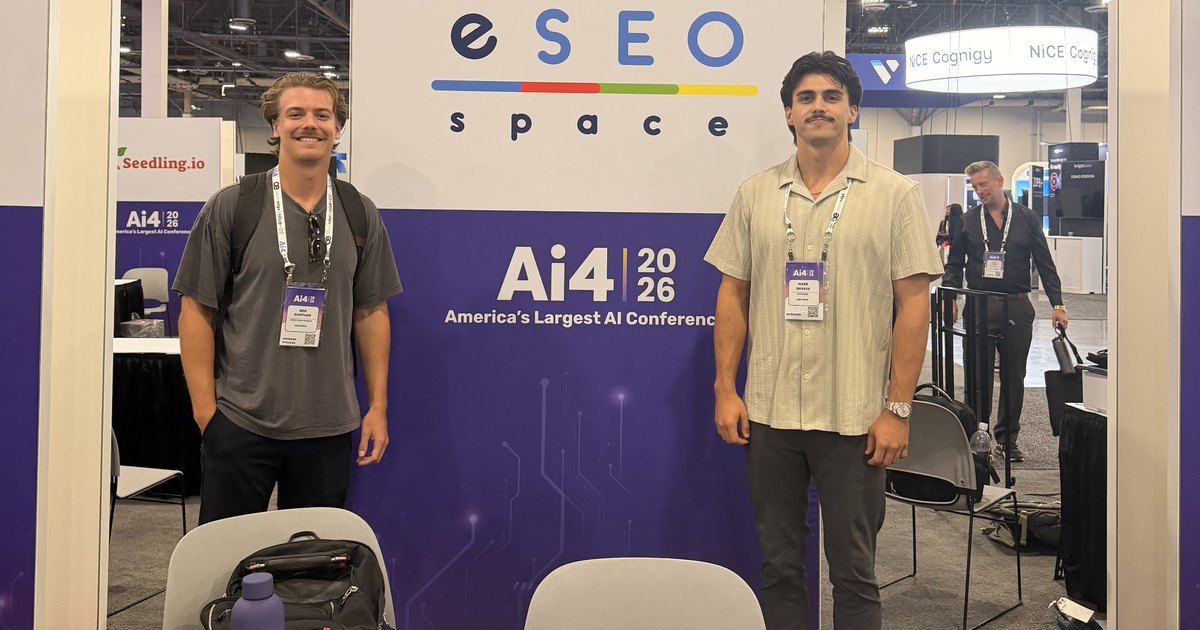
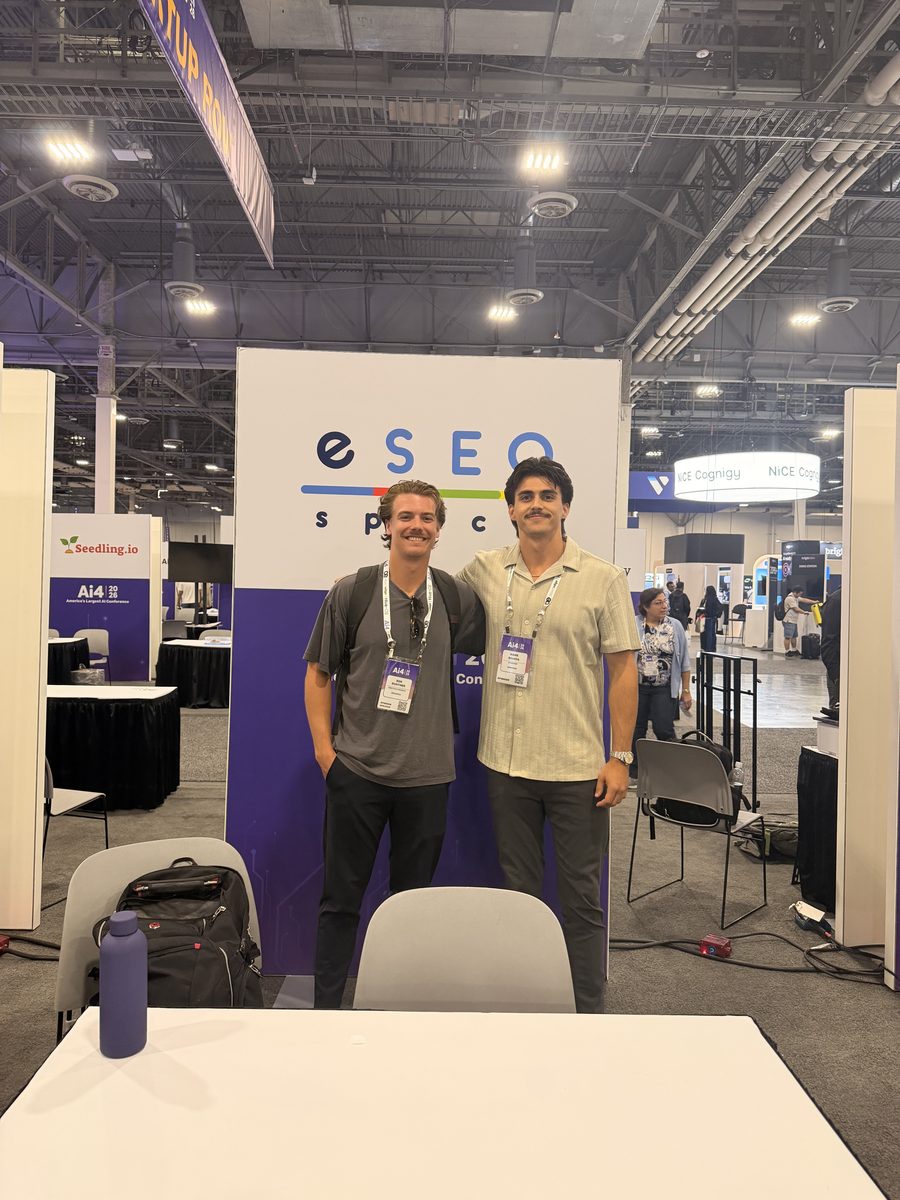
I gave this talk — Make Your Website the Source, not the Search Result — as a solo session at Ai4 2026 in Las Vegas on Wednesday, August 5th at 2:35pm, where eSEOspace was also a sponsor and exhibitor. What follows is a summary of what I covered.

Ten blue links used to mean ten winners for every search. A generated answer names two or three. That's an order of magnitude fewer slots — and the criteria for filling them have changed.
The goal moved from ranking to being cited. SEO gets you onto a results page. AEO gets you extracted as the answer — the snippet, the voice result. GEO, generative engine optimization, gets you cited inside an answer that ChatGPT, Perplexity, or AI Overviews writes. Same website, much smaller prize.
Half one: can a machine read it?
AI systems don't browse your site — they process it in four steps. A bot fetches your page, splits it into passages along headings and blocks, matches the user's question against those passages rather than the whole page, then writes an answer and credits a source. Or doesn't. Three of those four steps are decided by your structure, not your writing.
Which surfaces three practical problems.
If it only appears after the page loads, it doesn't exist
Most AI crawlers read what your server sends and don't run much JavaScript. View your raw page source: if your main content isn't in there, the model never saw it. Same for anything hidden behind click-to-load tabs. And check you aren't blocking AI crawlers outright — that's usually an old firewall rule nobody remembers setting.
You're competing with passages, not pages
Because your content gets split apart, every section has to make sense lifted out of context. A clean heading outline gives the splitter something to cut on. No "as mentioned above." Answer the page's main question in the first hundred words.
Structured data is the one channel where you speak to the machine plainly
A small block of data saying: this is an article, this person wrote it, here's their profile, here's when it actually changed. Everything else on your page, a model has to infer. This part it simply reads. It is the cheapest, most literal thing you can do, and it is the thing most sites still skip — which is why we treat structured data as a build deliverable rather than an afterthought.
Half two: does it trust what it read?
Here's the pivot most people miss. A human reads your about page and gets a feeling about you. A model can't have a feeling — it needs claims to resolve. Does the author's profile link actually load? Do your company details match LinkedIn and your Google listing? Is that date tied to a real change? Are your sources real links? Same trust signal, completely different substrate. Trust stops being tone and becomes plumbing.
The industry name for this is E-E-A-T — Experience, Expertise, Authoritativeness, Trust. It began as a guideline for Google's human quality raters and is now effectively the filter on what gets cited, because a model answering a question puts its own credibility behind your words. It won't do that for a source it can't verify.
- Experience — first-hand detail. Real numbers, real projects, your own photos. Things a summarizer of page one couldn't have produced.
- Expertise — a named human with credentials, not "the team."
- Authoritativeness — other people vouching for you.
- Trust — the boring stuff nobody does: real address and phone, honest update dates, sources cited, a genuine about page.
Miss these and there's no penalty screen and no ranking drop to look at. You're just quietly left out, and nothing on your dashboard tells you why.
The half you don't control
Authoritativeness deserves its own note, because most of it can't be fixed on your own site. Making your details line up across your profiles is homework you can do this afternoon. Getting other people to vouch for you isn't — that's corroboration, and backlinks are how a machine measures it.
Anyone can claim expertise on their own domain. A link from a real publication or an industry association is someone else confirming it, which is exactly the evidence a model can check. Relevance beats volume: a handful of links from genuine authorities in your space does more than a thousand directory listings, because who links to you is also how you get placed in the knowledge graph. And unlinked mentions now count too — models read text, not just anchor tags, so being named in a roundup, a forum thread, or a podcast transcript registers even with no link at all.
Perfect structure with no corroboration reads as a confident stranger.

Where agents come in
Everything above is checkable by a machine — which means the same class of models reading your site can help you build it correctly and keep it that way. That's mechanical, verifiable work:
- Generating structured data from what's already on the page, and validating it before it ships.
- Drafting FAQ sections from the questions customers actually ask in support tickets and sales calls.
- Cleaning up messy markup without changing a single pixel.
- A check on every release, so a page can't go live with broken structure.
- A weekly crawl that asks the big engines your top questions, to see whether you're still being cited.
None of that replaces judgment. All of it removes the excuse that this work is too tedious to do properly.
Frequently asked questions
Is GEO different from SEO, or just a new name for it?
Different target, overlapping work. SEO competes for a position on a results page. GEO competes to be one of the two or three sources a generated answer cites. Much of the technical groundwork is shared — clean markup, fast pages, real structure — but the winning condition is not the same, and neither is the number of slots.
Does structured data guarantee I get cited?
No. It removes ambiguity about what your page is and who stands behind it, which is a precondition rather than a guarantee. A page with flawless schema and nothing corroborating it is still a confident stranger.
How do I tell whether AI crawlers can actually read my site?
View the raw page source rather than the rendered page, and look for your main content in it. If the body copy only exists after JavaScript runs, most crawlers never see it. Then check your robots rules and firewall for blanket blocks on AI user agents — in our experience that's usually an old rule nobody remembers setting.
What's the fastest thing to fix first?
Make your main content server-rendered, then make your headings a clean outline, then add structured data that names a real author with a profile link that loads. Those three, in that order, cover most of what a model needs before it will consider you a source. If you'd rather have someone look at it with you, we run a free GEO audit.
Put this into action with eSEOspace
We help businesses grow with website development that actually performs. Explore the services behind this guide:
Get a FREE Audit
We'll perform a comprehensive SEO, AEO, GEO & CRO audit of your website — completely free — and show you exactly how to outrank your competitors.
Don't have a site yet? Get in touch →
Get a FREE GEO/AEO/SEO Audit
We'll analyze your site's SEO, GEO, AEO & CRO — completely free — and show you exactly how to get found across Google and AI answers.
Don't have a site yet? Get in touch →
Great — your audit is on the way!
We'll send your free SEO/GEO/AEO/CRO audit within the next few hours. Where should we send it?
You're all set! ✓
Your free audit is being prepared — check your inbox in the next few hours. Talk soon!








