



Blog
Top Shopify Website Design Trends for 2025
Key Takeaways
- AI-driven personalization in 2025 adapts entire page layouts, colors, and content in real time to each shopper's behavior and preferences.
- Dynamic AI personalization can lift conversion rates by 40-60% over static designs by responding to micro-interactions like hovers and scroll patterns.
- Smart visual merchandising and LLM-powered conversational commerce make stores feel personally curated while maximizing revenue for owners.
- Headless commerce separates the frontend from Shopify's backend, giving brands full design flexibility and faster, custom experiences.
- Going headless delivers 20-30% faster page loads and 15-25% higher conversions, making it mainstream for competitive stores in 2025.
The ecommerce landscape is evolving faster than ever, and Shopify store owners who stay ahead of design trends gain a significant competitive advantage. As we move into 2025, the most successful online stores will be those that embrace emerging technologies, prioritize user experience, and create meaningful connections with their customers through innovative design.
This year promises to be transformative for ecommerce design. From AI-powered personalization that adapts to individual shoppers to sustainable design practices that reflect growing environmental consciousness, the trends shaping 2025 will fundamentally change how customers interact with online stores.
This guide explores the most impactful Shopify design trends for 2025, providing actionable insights and real-world examples to help you create a store that not only looks cutting-edge but drives measurable business results.
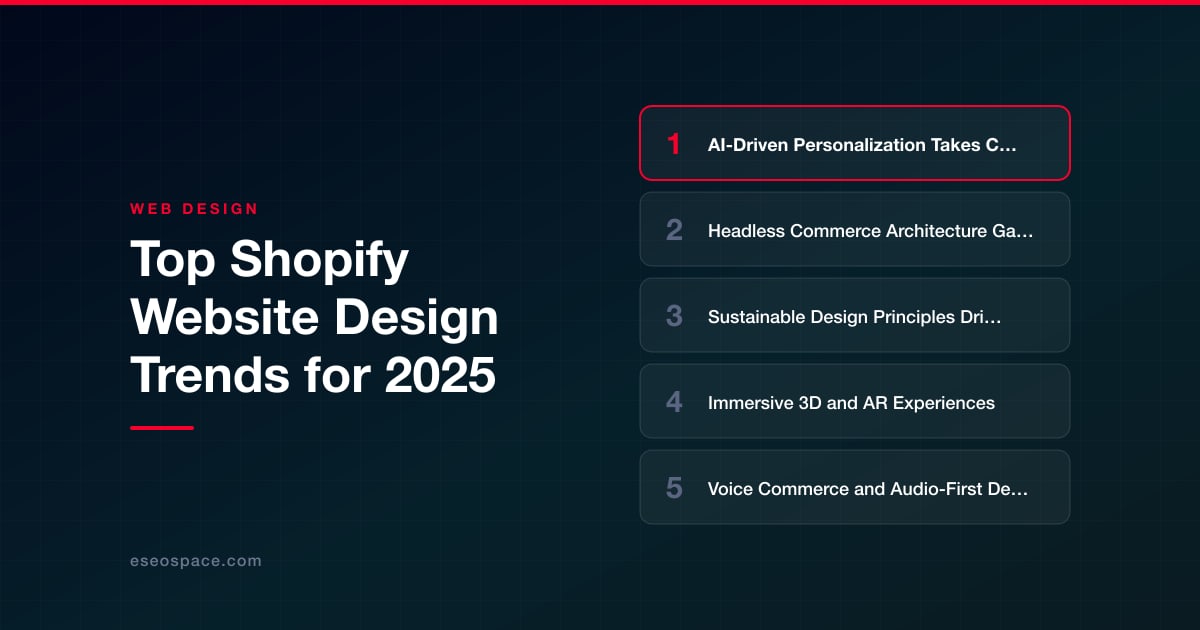
AI-Driven Personalization Takes Center Stage
Artificial intelligence is revolutionizing how Shopify stores interact with customers. In 2025, AI-driven personalization goes far beyond simple product recommendations to create truly dynamic shopping experiences.
Dynamic Content Adaptation
Advanced AI systems now analyze user behavior in real-time to modify entire page layouts, color schemes, and content hierarchies based on individual preferences. This means two customers visiting the same product page might see completely different presentations optimized for their specific shopping patterns.
Leading brands are implementing AI that tracks micro-interactions—how long users hover over images, scroll patterns, and click sequences—to instantly adapt the shopping experience. This level of personalization can increase conversion rates by 40-60% compared to static designs.
Smart Visual Merchandising
AI-powered visual merchandising automatically adjusts product placement, featured collections, and promotional content based on inventory levels, seasonal trends, and individual customer data. This creates a store that feels personally curated for each visitor while maximizing revenue potential for store owners.
Conversational Commerce Integration
Chatbots powered by large language models are becoming sophisticated enough to handle complex product consultations, size recommendations, and styling advice. The most successful implementations integrate seamlessly with store design, feeling more like helpful assistants than obvious automation.
Implementation Tip: Start with AI-powered product recommendations and gradually expand to dynamic content as you gather customer data. Tools like Shopify's native AI features and third-party apps like Yotpo and Klaviyo are making this technology accessible to stores of all sizes.
Headless Commerce Architecture Gains Momentum
Headless commerce, which separates the frontend presentation layer from the backend ecommerce functionality, is becoming mainstream in 2025 as brands seek ultimate flexibility in customer experience design.
Benefits of Going Headless
Headless architecture allows designers and developers to create completely custom frontend experiences while maintaining Shopify's powerful ecommerce backend. This approach enables faster page loading, unique interactive elements, and seamless integration with other business systems.
Brands using headless commerce report 20-30% improvements in page load speeds and 15-25% increases in conversion rates due to the enhanced user experiences they can create.
Popular Headless Solutions
Shopify's Hydrogen framework is leading the charge, providing tools specifically designed for building custom storefronts. Other popular options include Gatsby, Next.js, and Nuxt.js, each offering different advantages for specific use cases.
When to Consider Headless
Headless commerce is ideal for brands with unique user experience requirements, high traffic volumes, or complex omnichannel strategies. However, it requires more technical expertise and higher development costs than traditional Shopify themes.
Implementation Tip: Consider headless commerce if you need advanced customization, have development resources, or plan to expand beyond traditional ecommerce into content-rich experiences like digital magazines or interactive brand experiences.
Sustainable Design Principles Drive Decision-Making
Environmental consciousness is influencing design decisions in 2025, with sustainable design practices becoming both ethical imperatives and competitive advantages.
Digital Carbon Footprint Optimization
Sustainable web design focuses on reducing the environmental impact of websites through optimized code, efficient hosting, and streamlined user journeys. This includes using compressed images, minimal animations, and clean code that reduces server energy consumption.
Brands that prominently communicate their sustainable design practices are seeing 12-18% increases in customer loyalty among environmentally conscious consumers.
Minimalist Aesthetics with Purpose
The sustainable design movement is driving a return to minimalist aesthetics—not just for visual appeal, but to reduce digital waste. This means fewer unnecessary elements, optimized images, and streamlined functionality that serves both environmental and user experience goals.
Sustainable Typography and Color Choices
Dark mode designs and energy-efficient color palettes are gaining popularity as brands recognize that lighter colors require more energy to display on most screens. Typography choices are also being evaluated for readability efficiency—fonts that communicate information clearly with fewer characters reduce overall page weight.
Implementation Tip: Audit your current site for sustainability by using tools like Website Carbon Calculator. Focus on image optimization, reducing unnecessary animations, and streamlining user journeys as starting points.
Immersive 3D and AR Experiences
Three-dimensional product visualization and augmented reality are moving from luxury features to customer expectations in 2025.
3D Product Modeling
High-quality 3D product models allow customers to examine items from every angle, zoom into details, and understand scale in ways traditional photography cannot match. This technology is particularly effective for furniture, fashion, and complex products with multiple components.
Brands implementing 3D product visualization report 40% reductions in return rates and 25% increases in customer confidence scores.
Augmented Reality Integration
AR features that allow customers to visualize products in their own spaces or try them virtually are becoming more sophisticated and easier to implement. Shopify's native AR capabilities and tools like Try-On features for cosmetics and glasses are setting new standards for online shopping.
Virtual Showrooms
Some forward-thinking brands are creating virtual showrooms that combine 3D environments with ecommerce functionality, allowing customers to explore brand spaces and purchase products within immersive experiences.
Implementation Tip: Start with 3D product models for your best-selling or most complex products. Use Shopify's built-in 3D model support or third-party tools like Threekit or Zakeke to add these features without major technical overhead.
Voice Commerce and Audio-First Design
Voice-activated shopping is maturing in 2025, requiring design considerations for audio-first interactions alongside traditional visual interfaces.
Voice Search Optimization
Optimizing product descriptions, categories, and site structure for voice search queries is becoming essential. This means using natural language patterns and anticipating how customers might verbally describe products.
Audio Branding Integration
Brands are incorporating audio elements like custom notification sounds, voice-guided product tours, and audio product descriptions to create more engaging and accessible shopping experiences.
Accessibility-First Audio Design
Audio-first design improvements benefit all users, not just those using voice commands. This includes better screen reader compatibility, audio descriptions for complex visuals, and voice navigation options.
Implementation Tip: Optimize product descriptions for conversational search queries and ensure your site works well with voice assistants. Test your store's compatibility with screen readers to improve both accessibility and voice commerce functionality.
Micro-Interactions and Dynamic Animations
Subtle animations and micro-interactions are evolving beyond simple hover effects to create engaging, story-driven user experiences.
Purpose-Driven Animations
The most effective animations in 2025 serve specific purposes: guiding user attention, providing feedback, or illustrating product features. Gratuitous animations are being replaced with purposeful motion that enhances functionality.
Performance-Optimized Motion
Modern animation techniques prioritize performance, using CSS animations and optimized JavaScript to create smooth interactions without impacting page load speeds.
Storytelling Through Motion
Brands are using animation to tell their stories, demonstrate product benefits, and create emotional connections. This might include animated logos that reveal brand values or product demos that show transformation over time.
Implementation Tip: Focus on micro-interactions that improve usability—button states, form validation, and loading indicators. Avoid heavy animations that might slow mobile performance, and always test on various devices.
Advanced Typography and Variable Fonts
Typography is becoming more dynamic and expressive in 2025, with variable fonts and advanced typographic techniques creating unique brand personalities.
Variable Font Adoption
Variable fonts allow single font files to contain multiple weights, styles, and even widths, enabling more typographic flexibility while reducing file sizes. This technology supports both performance and creative design goals.
Kinetic Typography
Moving text elements that respond to user interactions or scroll positions are creating more engaging reading experiences. This includes text that scales, changes weight, or shifts color based on user behavior.
Accessibility-Conscious Typography
Advanced typography practices in 2025 prioritize readability across different abilities and devices. This includes careful attention to contrast ratios, font sizing, and spacing that works for users with various visual capabilities.
Implementation Tip: Experiment with variable fonts for your headings while maintaining readable, accessible body text. Tools like Google Fonts now offer many variable font options that work well with Shopify themes.
Mobile-First Everything
Mobile commerce will account for over 75% of ecommerce sales in 2025, making mobile-first design absolutely critical for success.
Thumb-Friendly Interface Design
Interface elements are being optimized for thumb navigation, with important buttons placed within easy reach and adequate spacing to prevent accidental taps.
Progressive Web App Features
PWA functionality is becoming standard, offering app-like experiences through web browsers with features like offline browsing, push notifications, and home screen installation.
Mobile Payment Integration
One-tap payment solutions and digital wallet integration are becoming seamless parts of the mobile shopping experience, reducing checkout friction and cart abandonment.
Implementation Tip: Design every element for mobile first, then scale up to desktop. Use tools like Google's Mobile-Friendly Test to ensure optimal mobile performance and consider implementing PWA features for enhanced mobile experiences.
Community-Driven Social Commerce
Social proof and community features are evolving beyond simple reviews to create engaged customer communities within ecommerce experiences.
User-Generated Content Integration
Brands are seamlessly integrating customer photos, videos, and reviews into product pages and marketing materials, creating authentic social proof that drives purchasing decisions.
Live Shopping Events
Interactive shopping events, product launches, and behind-the-scenes content are being integrated directly into ecommerce experiences, blending entertainment with commerce.
Community Features
Forums, customer galleries, and brand communities are becoming integral parts of successful ecommerce stores, creating loyalty and repeat purchases through social connection.
Implementation Tip: Start by encouraging customer photos and reviews, then gradually add community features like customer galleries or brand hashtag campaigns that can be integrated into your store design.
Data Privacy and Transparent Design
Increasing privacy regulations and customer awareness are driving transparent, privacy-first design approaches.
Cookie-Less Personalization
Brands are developing personalization strategies that don't rely on third-party cookies, using first-party data and contextual information to create relevant experiences.
Privacy-Forward UX
Clear, understandable privacy controls and data usage explanations are becoming design requirements, not legal afterthoughts. This includes intuitive cookie consent, data preference centers, and transparent data usage policies.
Trust Signal Integration
Prominent security badges, clear return policies, and transparent business information are being integrated into design layouts as trust-building elements that directly impact conversion rates.
Implementation Tip: Make privacy controls easy to find and understand. Integrate trust signals naturally into your design rather than hiding them in footers or separate pages.
Get a FREE Audit
We'll perform a comprehensive SEO, AEO, GEO & CRO audit of your website — completely free — and show you exactly how to outrank your competitors.
Don't have a site yet? Get in touch →
Color Trends and Psychology
Color usage in 2025 reflects both technological capabilities and psychological understanding of customer behavior.
Dynamic Color Systems
Color schemes that adapt based on time of day, user preferences, or seasonal changes are creating more personalized and engaging experiences.
Accessibility-Driven Palettes
Color choices prioritize accessibility with sufficient contrast ratios and color-blind friendly combinations, ensuring beautiful designs that work for all users.
Emotional Color Psychology
Brands are using color psychology more strategically, selecting palettes that support their customer journey and brand emotions rather than just following aesthetic trends.
Implementation Tip: Develop a flexible color system that works across different contexts and devices. Test your color choices for accessibility and ensure they support your brand's emotional goals.
Preparing Your Store for 2025 Trends
Assessment and Planning Phase
Start by auditing your current store against these emerging trends. Identify which trends align with your brand values, customer needs, and business goals. Not every trend will be right for every business, so focus on those that serve your specific objectives.
Implementation Priority
Begin with trends that offer the highest ROI for your specific business model. This might mean starting with mobile optimization and AI-powered recommendations before moving to more complex implementations like headless commerce or AR features.
Technical Considerations
Many 2025 trends require technical expertise to implement effectively. Consider your internal capabilities and budget for professional development when planning trend adoption.
Performance Monitoring
As you implement new design trends, monitor their impact on key metrics like conversion rates, page load speeds, and customer satisfaction scores. The most beautiful trends are worthless if they don't improve business results.
The Future of Shopify Design
The trends shaping 2025 represent more than aesthetic choices—they reflect fundamental shifts in how customers expect to interact with brands online. Success requires balancing innovation with usability, aesthetics with performance, and personalization with privacy.
The most successful Shopify stores in 2025 will be those that thoughtfully integrate these trends in ways that serve their specific customers and business goals. This means choosing technologies and design approaches that enhance rather than complicate the shopping experience.
Ready to Implement 2025 Design Trends?
Staying ahead of design trends isn't just about looking modern—it's about creating competitive advantages that drive real business results. The brands that embrace these 2025 trends strategically will build stronger customer relationships, increase conversion rates, and establish market leadership.
Our team specializes in implementing cutting-edge design trends that deliver measurable results. We understand both the technical requirements and strategic implications of these emerging trends, helping businesses choose and implement the approaches that will drive their specific success metrics.
Ready to future-proof your Shopify store with 2025's most impactful design trends? Contact us today for a free consultation. We'll analyze your current store, discuss which trends align with your business goals, and create a strategic implementation plan that positions you ahead of the competition.
Let's build a store that doesn't just follow trends—it sets them.
Frequently Asked Questions
What is the biggest Shopify design trend for 2025?
How much can AI personalization improve conversion rates?
What is headless commerce and why does it matter?
What performance gains do headless Shopify stores see?
How can I start implementing AI personalization on my store?
Put this into action with eSEOspace
We help businesses grow with website development that actually performs. Explore the services behind this guide:
Get a FREE GEO/AEO/SEO Audit
We'll analyze your site's SEO, GEO, AEO & CRO — completely free — and show you exactly how to get found across Google and AI answers.
Don't have a site yet? Get in touch →
Great — your audit is on the way!
We'll send your free SEO/GEO/AEO/CRO audit within the next few hours. Where should we send it?
You're all set! ✓
Your free audit is being prepared — check your inbox in the next few hours. Talk soon!


On this page
- Key Takeaways
- AI-Driven Personalization Takes Center Stage
- Headless Commerce Architecture Gains Momentum
- Sustainable Design Principles Drive Decision-Making
- Immersive 3D and AR Experiences
- Voice Commerce and Audio-First Design
- Micro-Interactions and Dynamic Animations
- Advanced Typography and Variable Fonts
- Mobile-First Everything
- Community-Driven Social Commerce
- Data Privacy and Transparent Design
- Color Trends and Psychology
- Preparing Your Store for 2025 Trends
- The Future of Shopify Design
- Ready to Implement 2025 Design Trends?
- Frequently Asked Questions






